
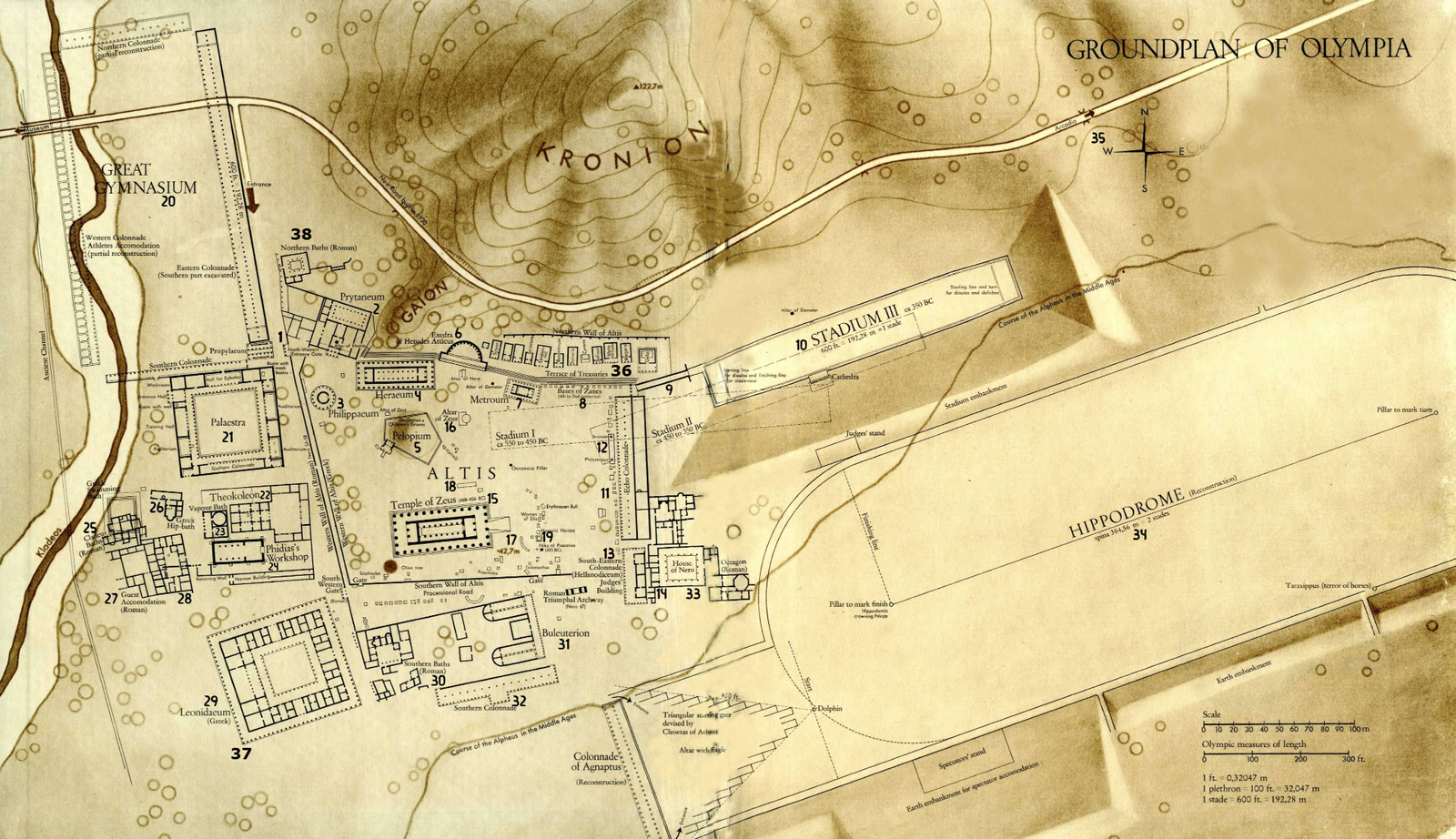
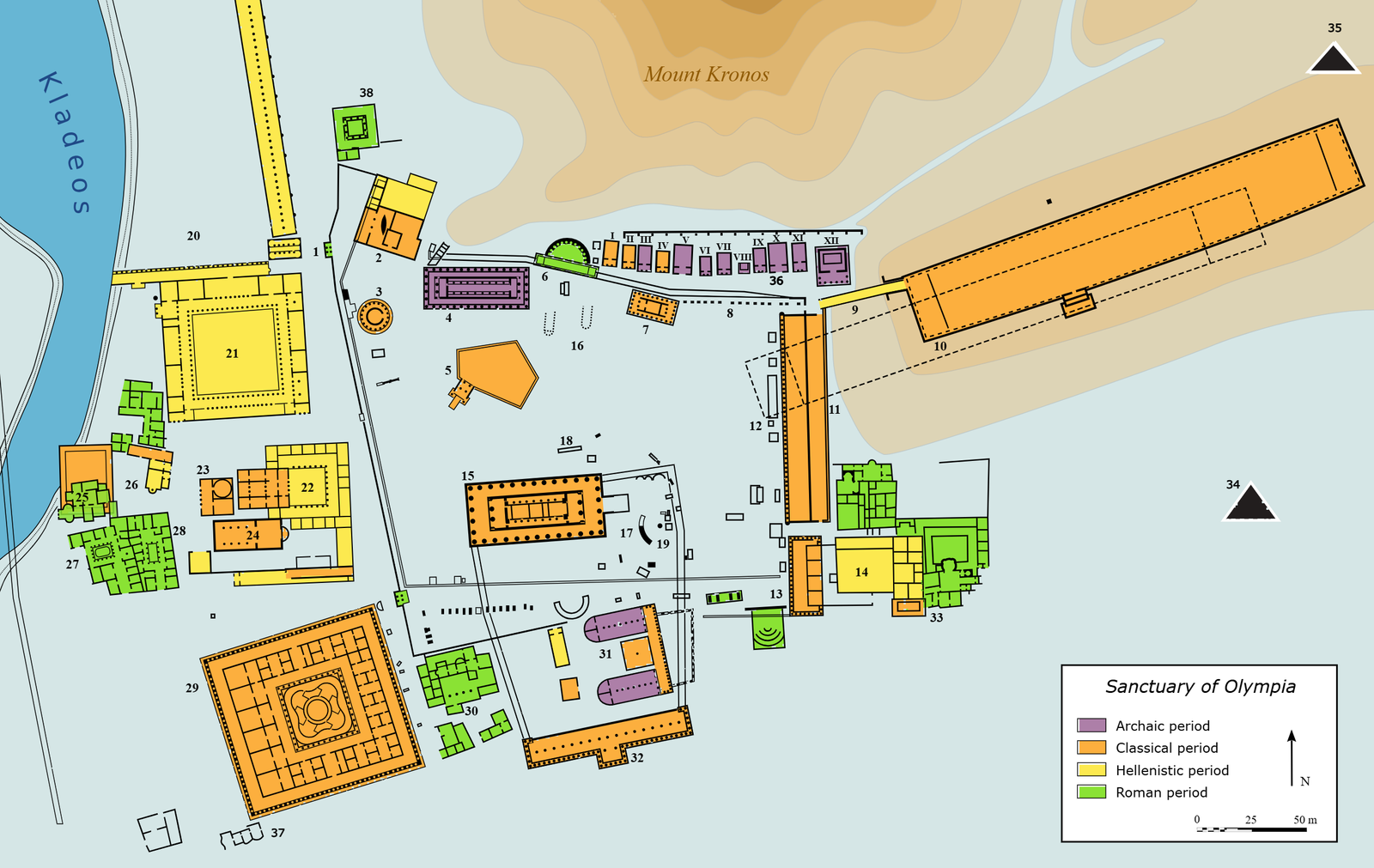
The core religious structures including temples, altars, hero-shrines, and victory dedications.
Temples: 4: Temple of Hera, 7: Metroon, 15: Temple of Zeus.
Altars & Shrines: 5: Sanctuary of Pelops (Pelopion), 16: Altar of Zeus, 23: Heroon.
Dedications: 3: Philippeion (Monument of Philip II), 8: Zanes, 12: Monument of Ptolemy II and Arsinoe, 17: Dedication of the Achaeans, 18: Dedication of Mikythos of Rhegion, 19: Nike of Paionios. 36. The Treasuries
The specialized spaces where athletes trained and the official competitions took place.
10: Stadium (For track and field events).
9: Crypte (The vaulted entrance for athletes).
20: Gymnasium (Large open space for track and field training).
21: Palaestra (The colonnaded courtyard for combat sports).
34: Hippodrome (The track for horse and chariot races).
These buildings were the civic and legal heart of Olympia.
2: Prytaneion (The seat of the magistrates and the location of the sacred hearth)
31: Bouleuterion (The Council House where athletes took their official oaths)
Essential facilities for hygiene, water management, and the physical transitions within the site.
1: Northeast Propylon (The ceremonial gateway to the sanctuary)
6: Nymphaeum of Herodes Atticus (The grand ornamental fountain and aqueduct terminus)
14: Hellenistic Building (General infrastructure structure)
25: Baths of Kladeos (Named after the nearby river)
26: Greek Baths (The oldest bathing facilities on site)
30: Southern Baths (Late Roman-style bathing complex)
These long, colonnaded halls provided shelter from the sun and rain, as well as space for commerce and social gathering.
11: Echo Stoa (Also known as the Poikile Stoa, famous for echoing a voice seven times)
13: Stoa of Hestia
32: South Stoa (The southern boundary of the sanctuary used for official arrivals)
The residential areas for athletes, distinguished guests, and even emperors.
22: Theokoleon, 24: Workshop of Phidias and Early Christian Basilica
27 and 28: Lodgings (Standard accommodation units)
29: Leonidaion (The largest building on site, serving as a luxury hotel for VIPs)
33: Villa of Nero (The private residence built for the Emperor’s visit in 67 AD)