
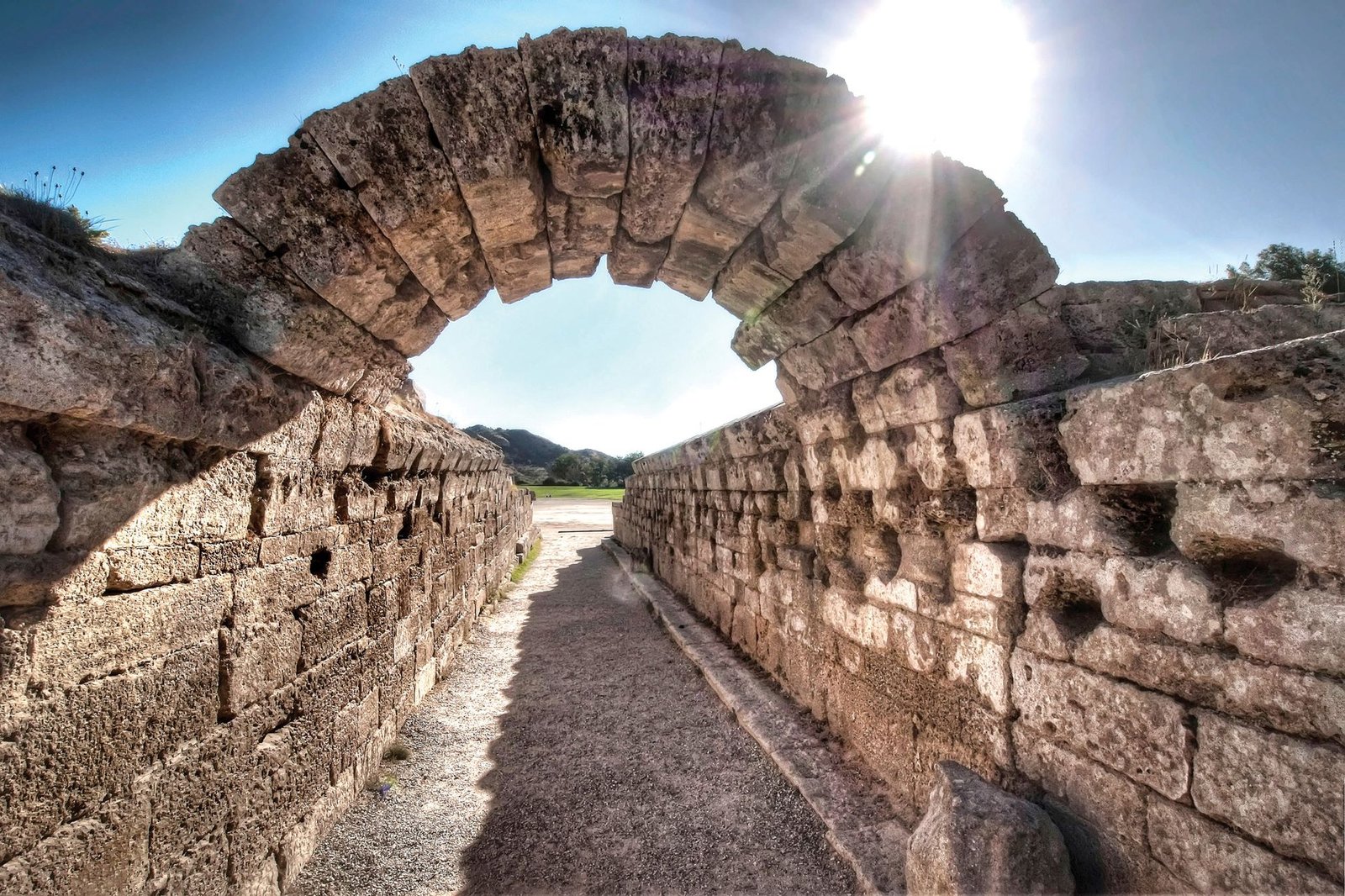
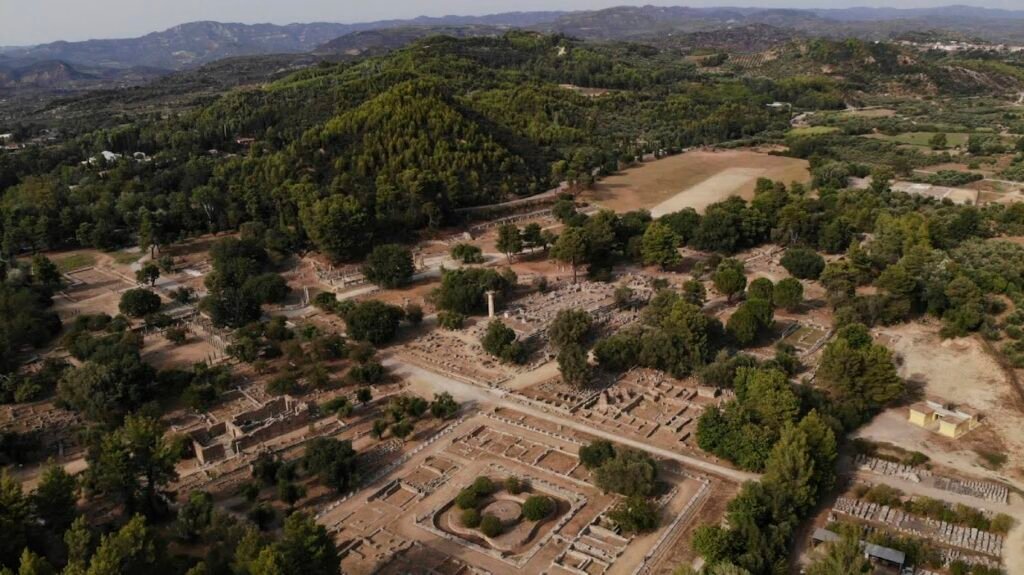
The sanctuary of Olympia, nestled in the fertile valley where the Alpheios and Kladeos rivers meet, constitutes one of the most important Sanctuaries of the ancient world. Known as the “navel of Hellenism,” it was the sacred site for the ancient Olympic Games, held from 776 B.C. until 393 A.D.. The site’s history spans over a millennium, beginning in the Final Neolithic Era (4th millennium B.C.).
The Altis, the sacred grove, began to take shape around the 10th-9th c. B.C., at which time the worship of Zeus was established.
The site transitioned from a residential area to a place of worship, where countless dedications, such as bronze tripods, were placed in the open air upon altars.
During the Archaic period (7th–6th c. B.C.), the first monumental buildings were erected, including the Temple of Hera (“Heraion,” the oldest structure), as well as the Prytaneion, the Bouleuterion, and the Treasuries, which were votive offerings from various city-states.
The cult of the local hero Pelops was established during this period at the Pelopion.
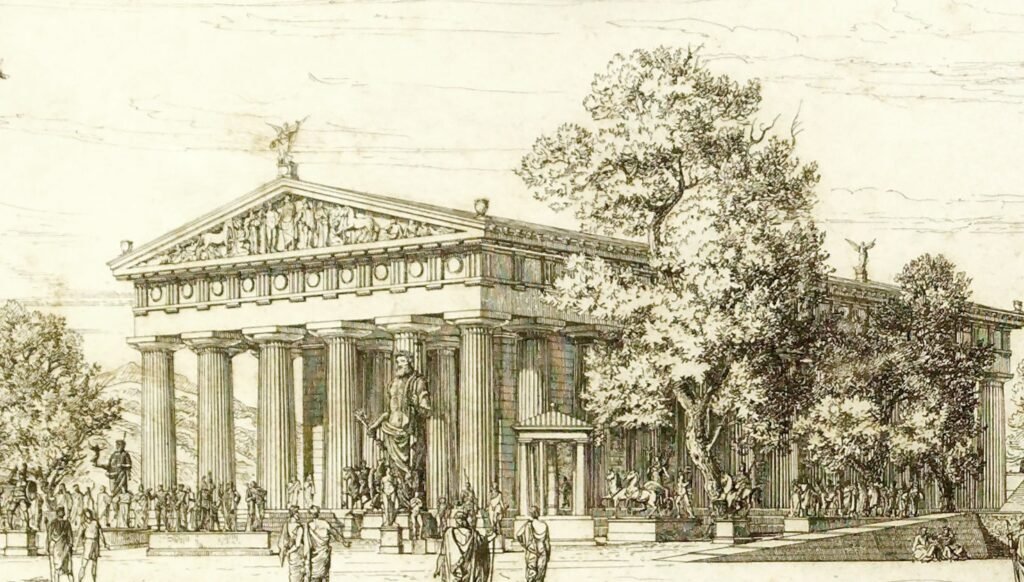
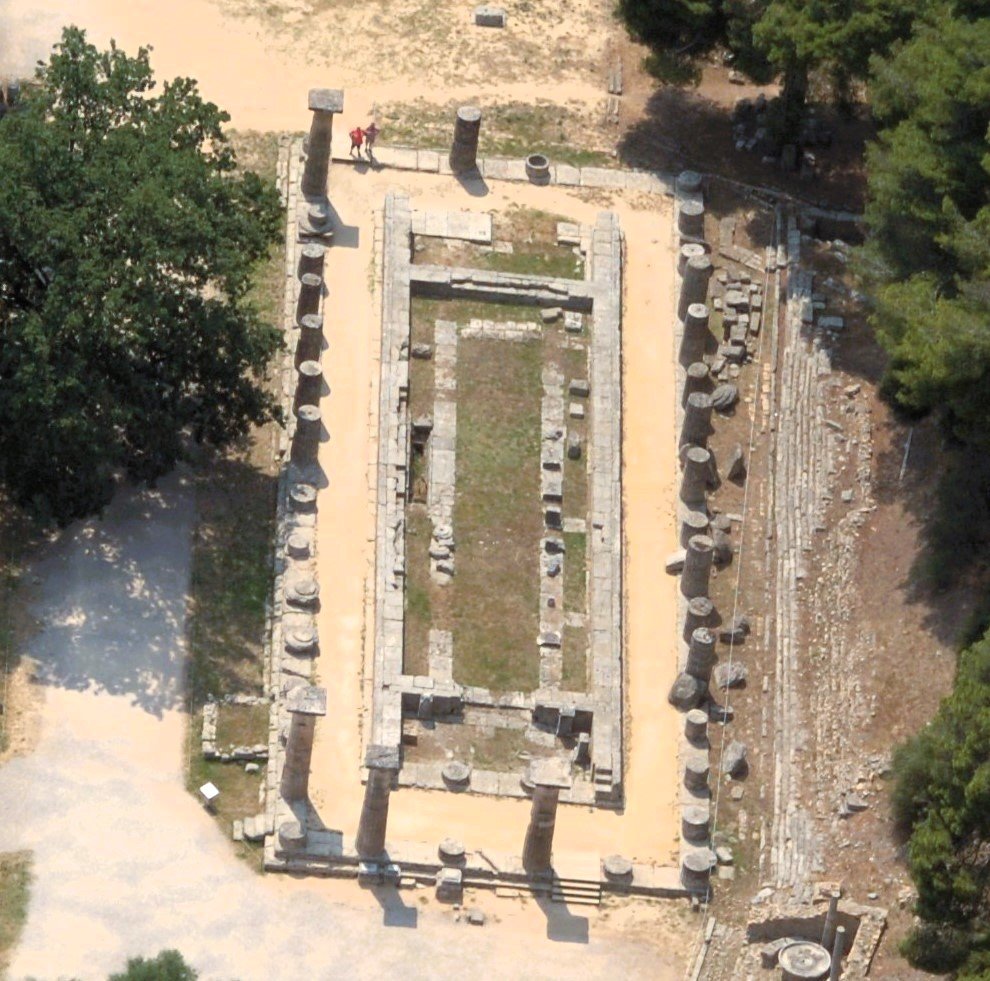
Olympia reached its height of glory during the 5th century B.C.. The magnificent Temple of Zeus, in the Doric order, was erected between 470–456 B.C.. Its sculptural decoration included the chariot race of Pelops and Oinomaos (East Pediment) and the Battle of the Lapiths and Centaurs (West Pediment) in the pediments, while the metopes were adorned with the twelve Labors of Heracles. The sanctuary served as a place for dedicating spoils of war, such as Miltiades’ helmet after the Battle of Marathon in 490 B.C..
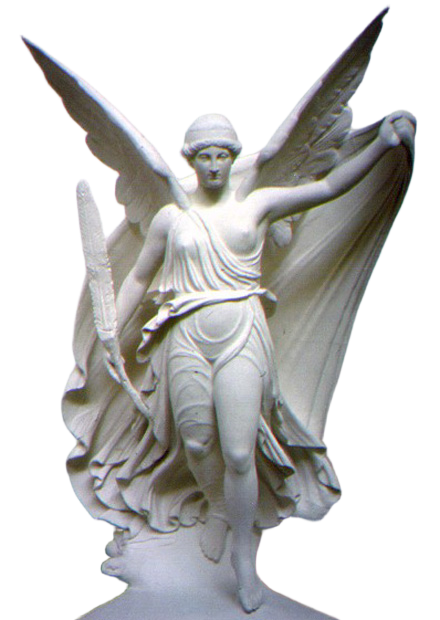
Twenty years after the temple’s erection, the chryselephantine Statue of Zeus (c. 430 B.C.), the work of Pheidias, was placed inside its cella, becoming one of the Seven Wonders of the Ancient World. Pheidias’s workshop was established west of the temple. Other important monuments of the era included the Zanes statues, bronze images of Zeus funded by fines paid by cheating athletes, and the Nike of Paionios (c. 421 B.C.), a monument dedicated by the Messenians.
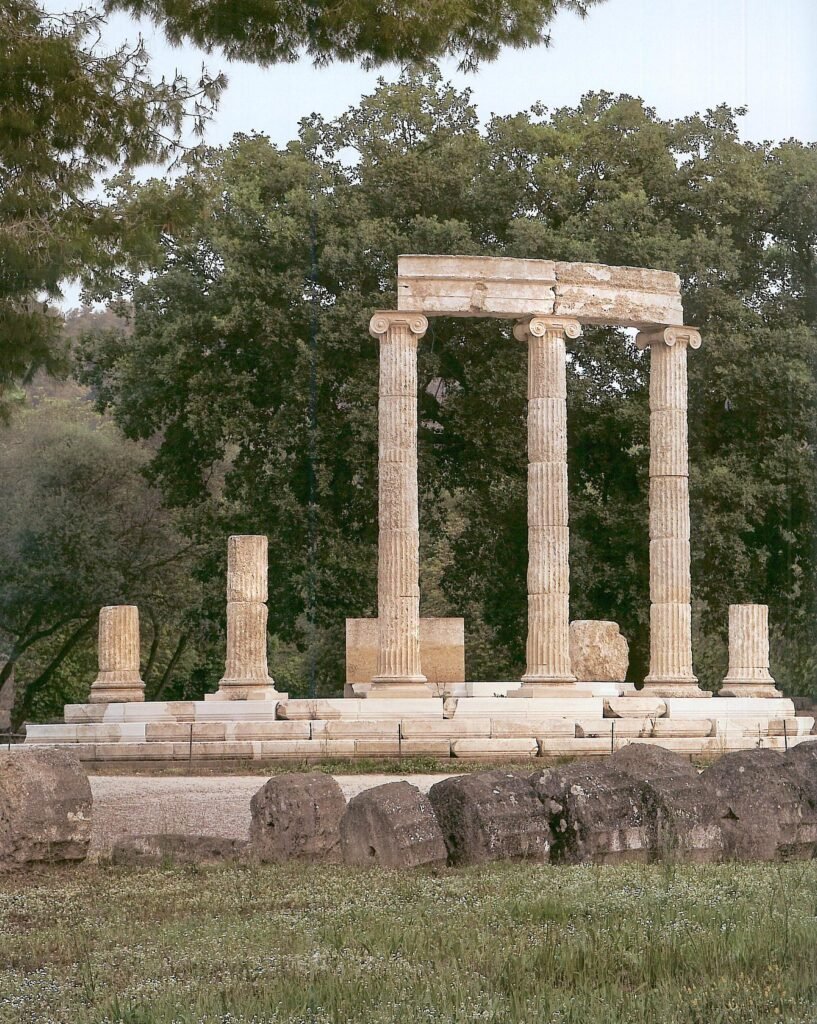
During the Hellenistic period, building activity expanded outside the Altis, with the erection of secular structures such as the Gymnasium and the Palaestra.
A key monument was the Philippeion (begun 338 B.C.), a circular building containing chryselephantine statues of the family of Philip II and Alexander the Great, signifying the introduction of political propaganda into the sacred space.
During the same period, the Leonidaion (330 B.C.), a guesthouse for officials, was constructed.
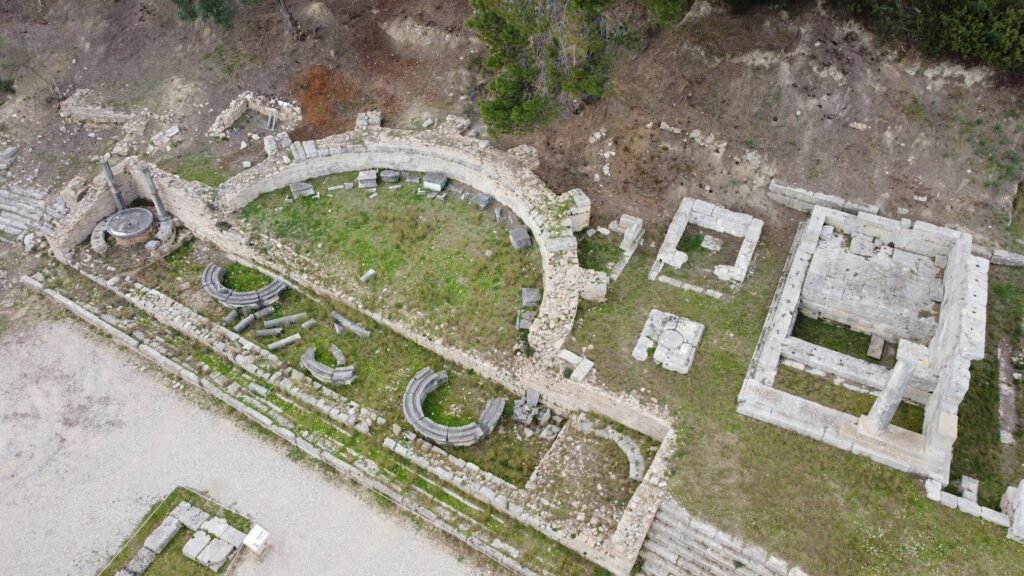
During the Roman period, the sanctuary continued its economic bloom. The Metroon was converted into a temple for the Imperial Cult (Sebasteion).
The Nymphaeum was erected by Herodes Atticus (c. 150 A.D.) for his wife Regilla, solving the sanctuary’s water supply problem.
The Games continued, achieving a universal character, until their eventual prohibition.
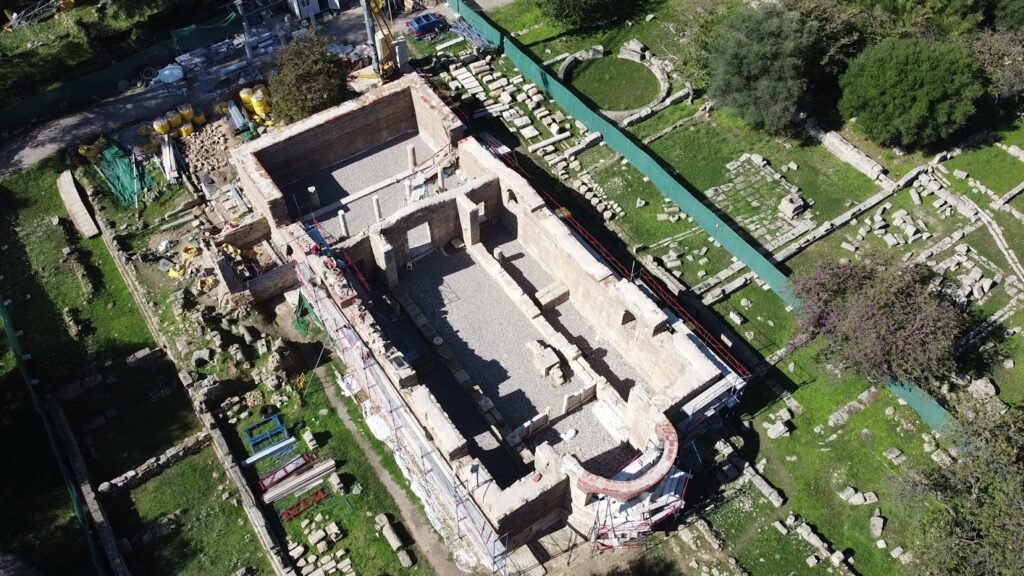
In 393 A.D., the decree of Emperor Theodosius I banned pagan cults and the Games.
The chryselephantine Statue of Zeus was transferred to Constantinople. In the mid-5th century A.D., the Workshop of Pheidias was converted into a triple-aisled Paleo-Christian basilica.
A Christian settlement subsequently emerged, reusing materials (spolia) from the ancient monuments for building houses.
Occupation ceased definitively by the early 7th century A.D., when the site was covered by the floods of the Alpheios and landslides from Kronios Hill