
The Shrine of Demeter Chamyne
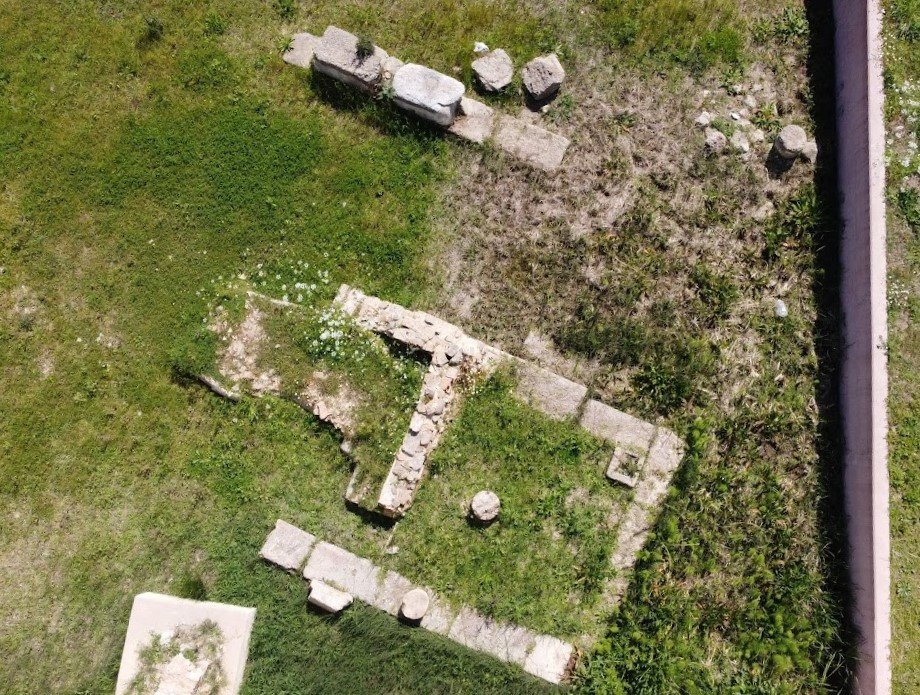
The Sanctuary of Demeter Chamyne Ancient Olympia, as the site of the Olympic Games, conceals significant ancient structures beneath modern infrastructure, many of which were previously known only through the descriptions of ancient travelers, such as Pausanias. One such point, previously unknown and inaccessible for decades, was the Sanctuary of Demeter Chamyne. Its discovery in […]
The Nymphaion
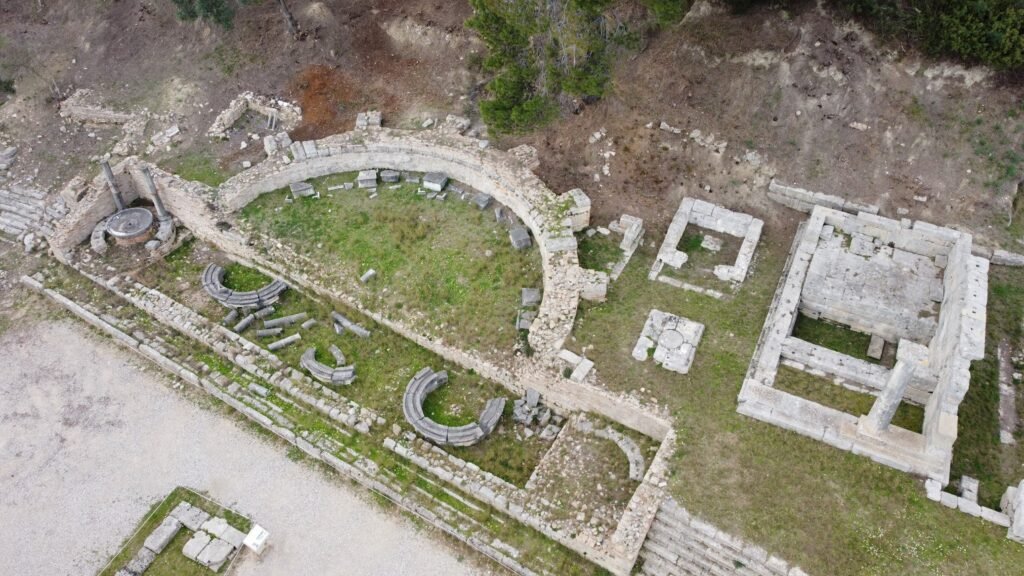
nymphaion The Nymphaion, donated by Herodes Atticus around 160 AD, was a spectacular monumental fountain that solved Olympia’s chronic water supply problems while creating impressive architectural display. The two-story semicircular structure featured niches with marble statues of the donor’s family and Roman emperors alternating with water basins and fountains. The Grand Benefaction: A Roman Solution […]
The Eco hall
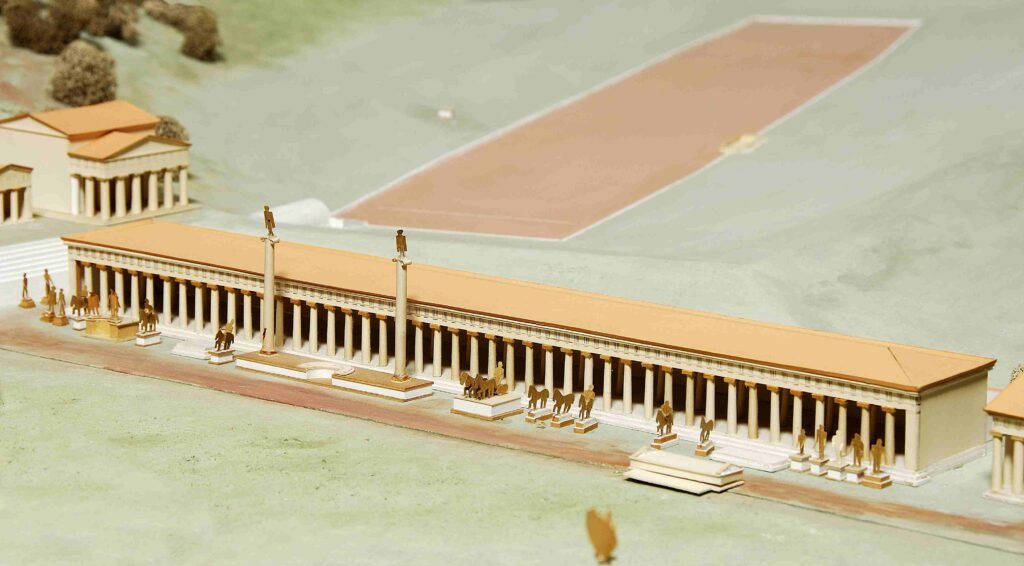
eco hall The Stoa of Eco, built in the 4th century BC, created an impressive architectural boundary between the sacred Altis and the Olympic stadium. This 98-meter-long colonnade featured double columns—Doric on the exterior and Ionic on the interior—creating elegant covered walkways that provided shade and comfort for visitors. The building’s name derives from its […]
The Stadium
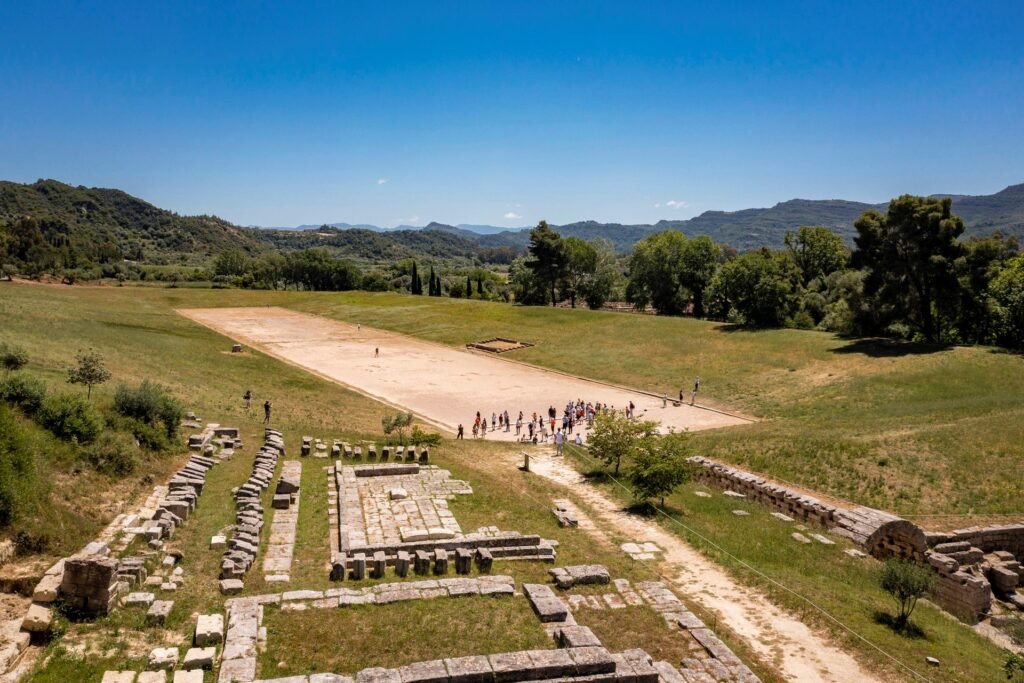
stadium Dating back to the 5th century BC, the stadium was the place where athletes competed before thousands of Greek spectators and the best of them crossed the threshold of eternity as Olympic champions, conquering their immense fame. Heart of Athletic Glory The Stadium of Olympia was for centuries the ultimate destination of recognition for […]
The Treasuries
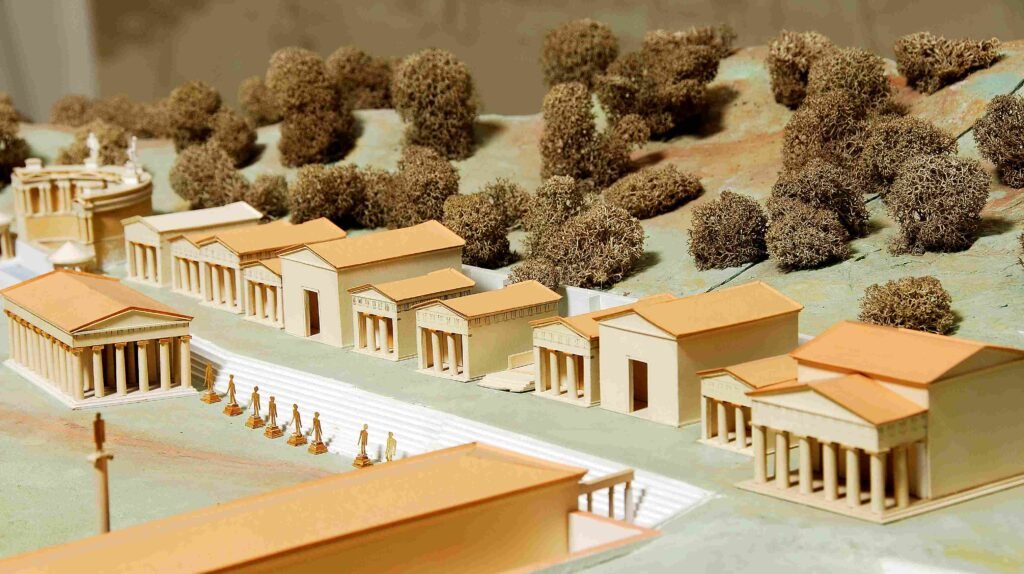
treasuries The Treasuries of Olympia lined the southern slope of the Kronios Hill, small temple-like buildings constructed by wealthy Greek city-states to house valuable dedications to Zeus and display their piety and prosperity. Dating primarily to the 6th and 5th centuries BC, each treasury was a miniature temple featuring columns and decorative elements reflecting the […]
The Pelopion
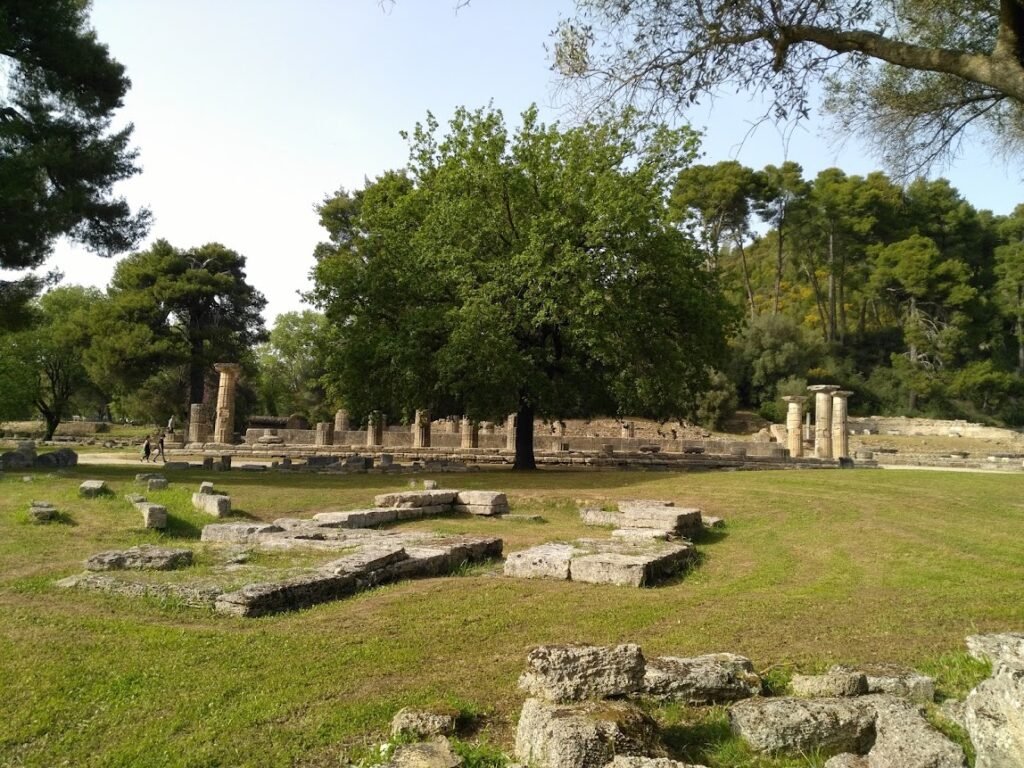
Pelopion The Pelopion, one of Olympia’s most sacred structures, housed the burial mound of the hero Pelops, mythical founder of the Olympic Games The Significance of the Pelopion The Pelopion stands as a profoundly significant archaeological monument within the Altis sanctuary at Olympia, primarily serving as a tomb or cenotaph (a memorial monument for a […]
The Prytaneion
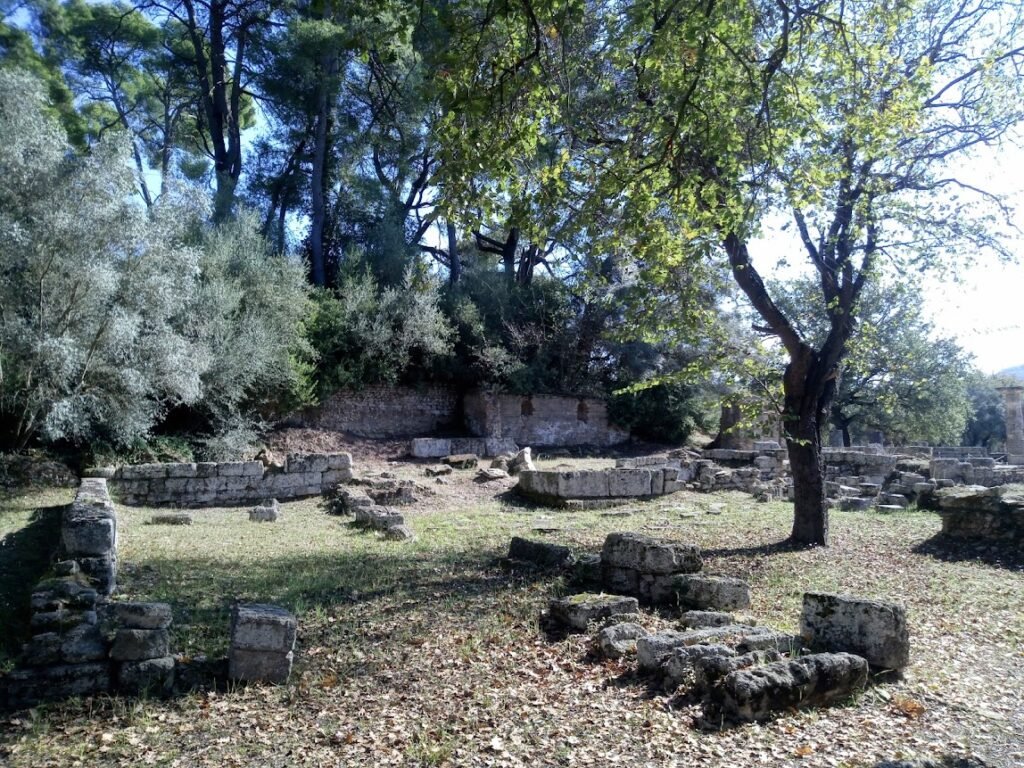
Prytaneion The Prytaneion served as the headquarters of Eleian officials who administered Ancient Olympia and housed the sacred hearth of Hestia, where an eternal flame burned continuously throughout antiquity Center of Administration of the sanctuary The Prytaneion, one of the oldest and most important structures within the Altis, stood as the official nerve center of […]
The Bouleuterion
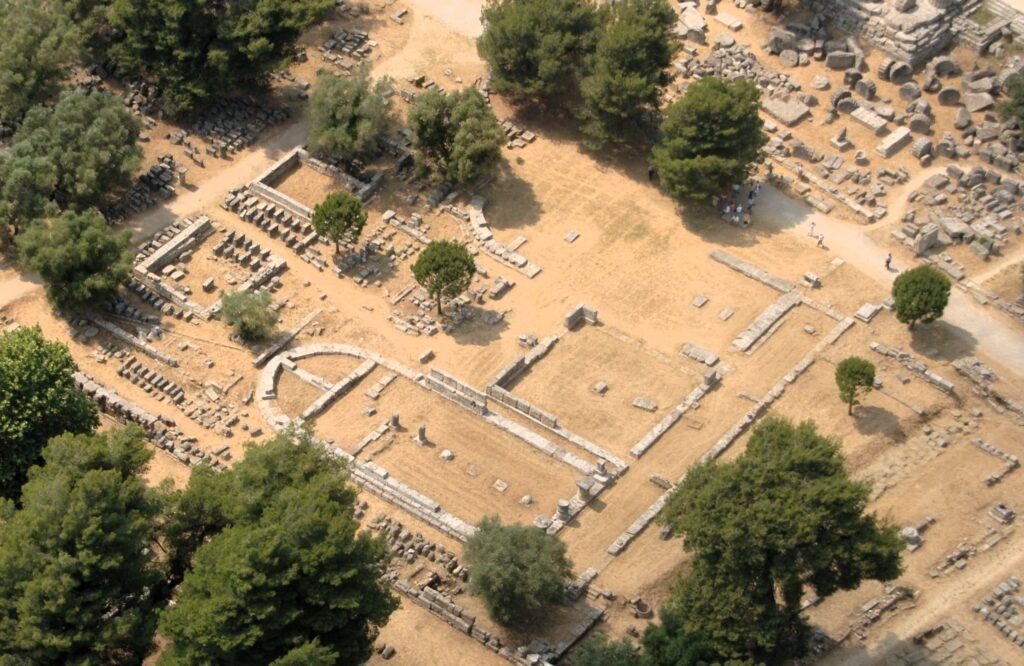
Bouleuterion The Bouleuterion of Olympia served as the meeting place of the Olympic Council, the governing body responsible for organizing and overseeing the Olympic Games. According to the custom, it was here, at the yard in front of the Bouleuterion where athletes and judges took their solemn oaths before competition. Governing the Sacred Festival The […]
The Leonidaion
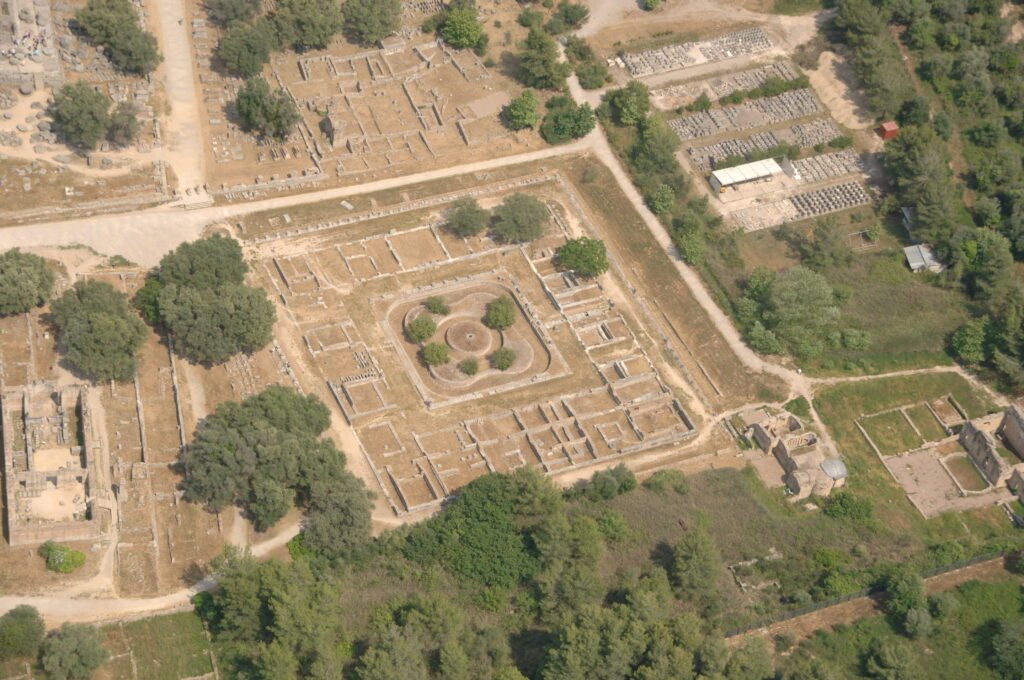
The Leonidaion The Leonidaion: A Distinguished Hostel at Ancient Olympia. The building provided private accommodations for important officials, ambassadors, and other elite guests attending the Olympic Games. Greek commitment to proper hospitality The Leonidaion was one of the most significant secular buildings in the Sanctuary of Olympia, serving a crucial function during the ancient Olympic […]
The Gymnasion
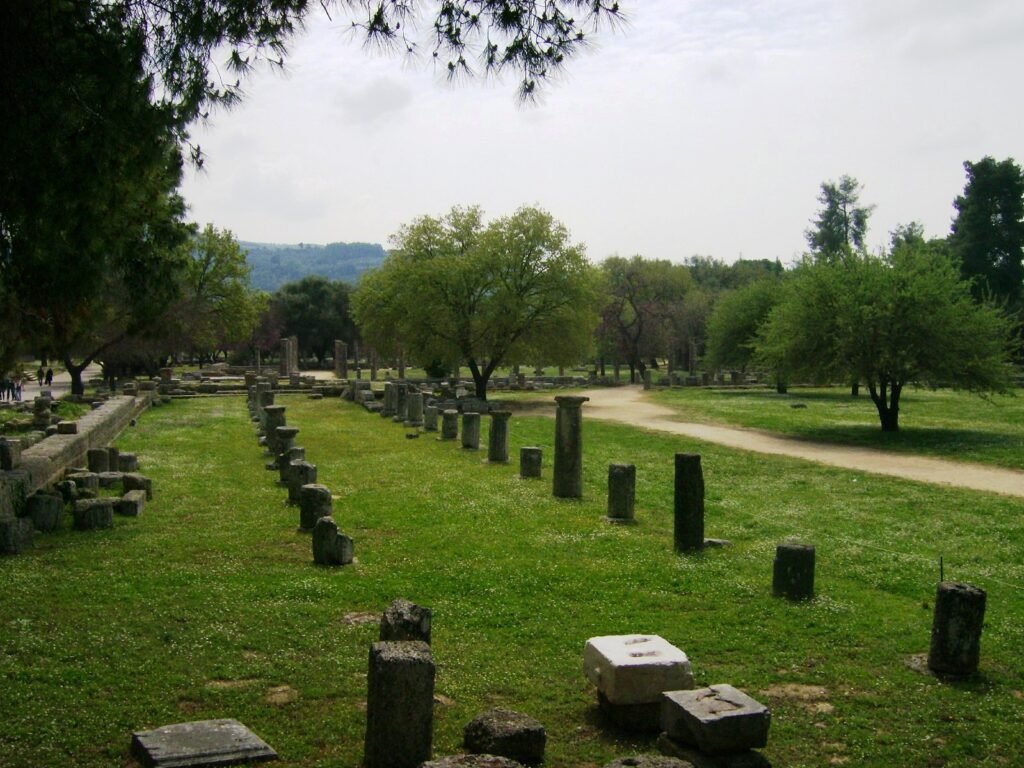
Gymnasion Erected during the Hellenistic period, specifically in the 2nd century BC, this vast, rectangular complex was purpose-built as the premier training ground for athletes preparing for the Olympic Games. a massive rectangular complex The Gymnasion of Ancient Olympia stands as one of the ancient world’s most significant and impressive athletic facilities. Erected during the […]