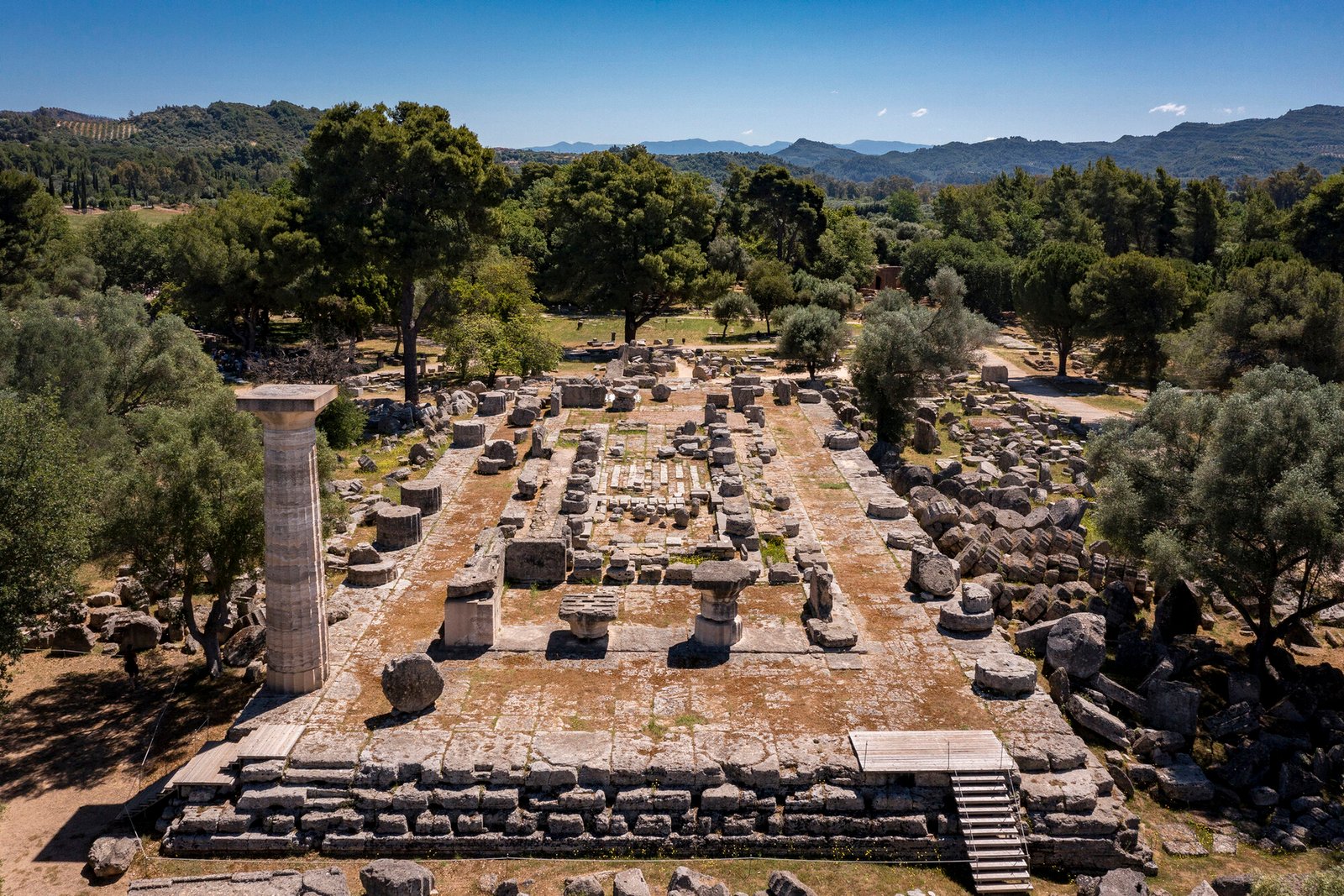
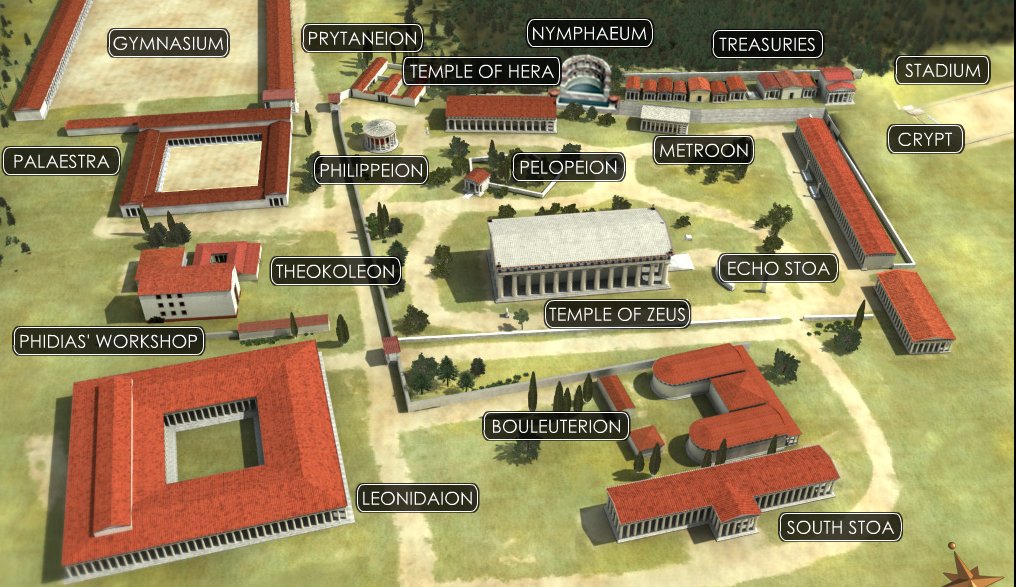
Monuments – Overview
“Beyond the clearing, Olympia, watchful, day and night, weaves for each of them a wreath of wild olive tree, of Greek peace, of the peace of the whole world.
Takis Doxas, “Light of Olympia”
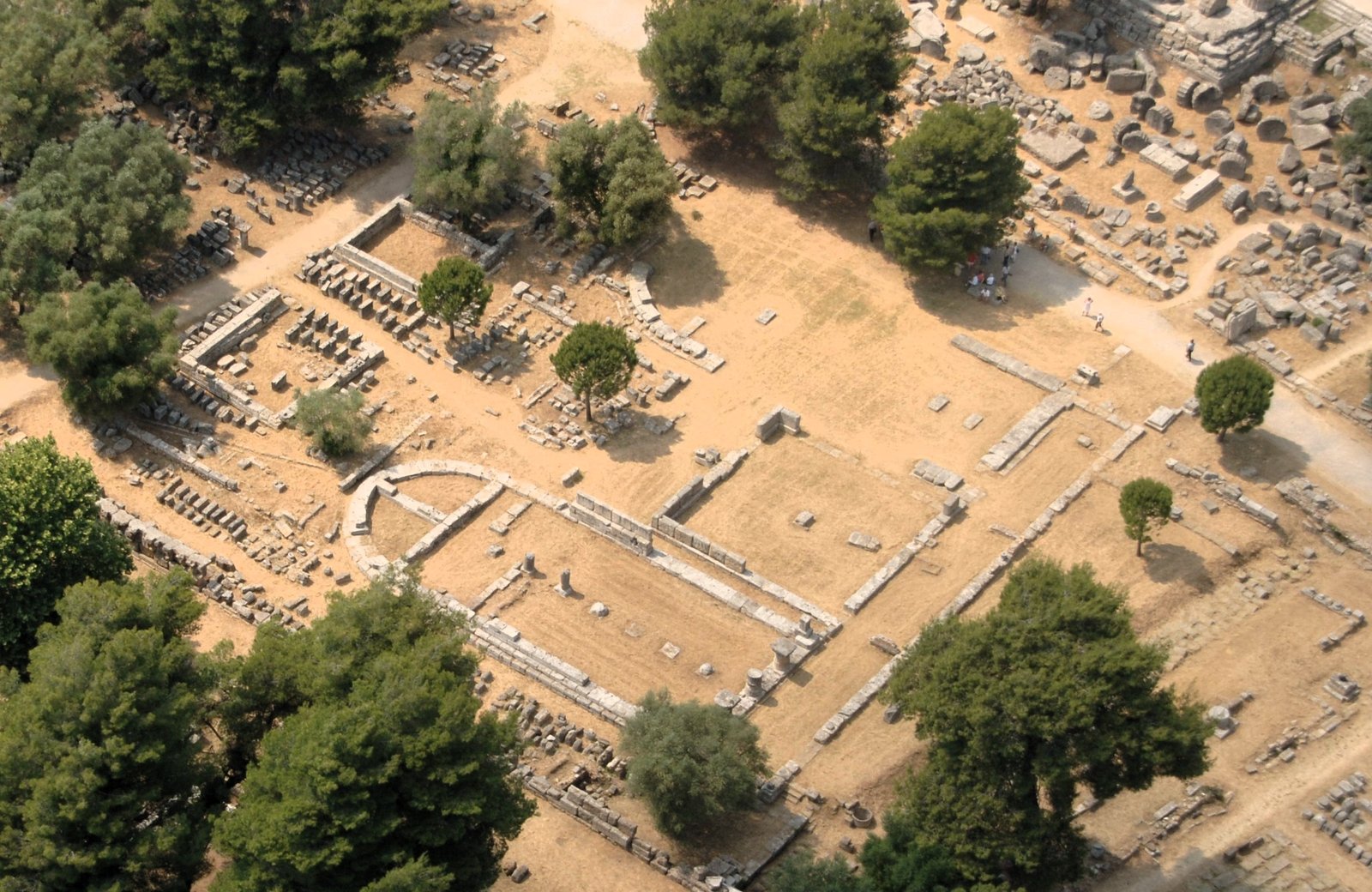
Eastern Thermae – Octagon The East Baths, also known as the “Octagon” due to their iconic central hall, constitute the most extensive and well-preserved Roman bath complex in the archaeological site of Olympia. They are located in the southeastern part of the sanctuary, immediately south of the Stadium and east of the Echo Stoa. Historical…
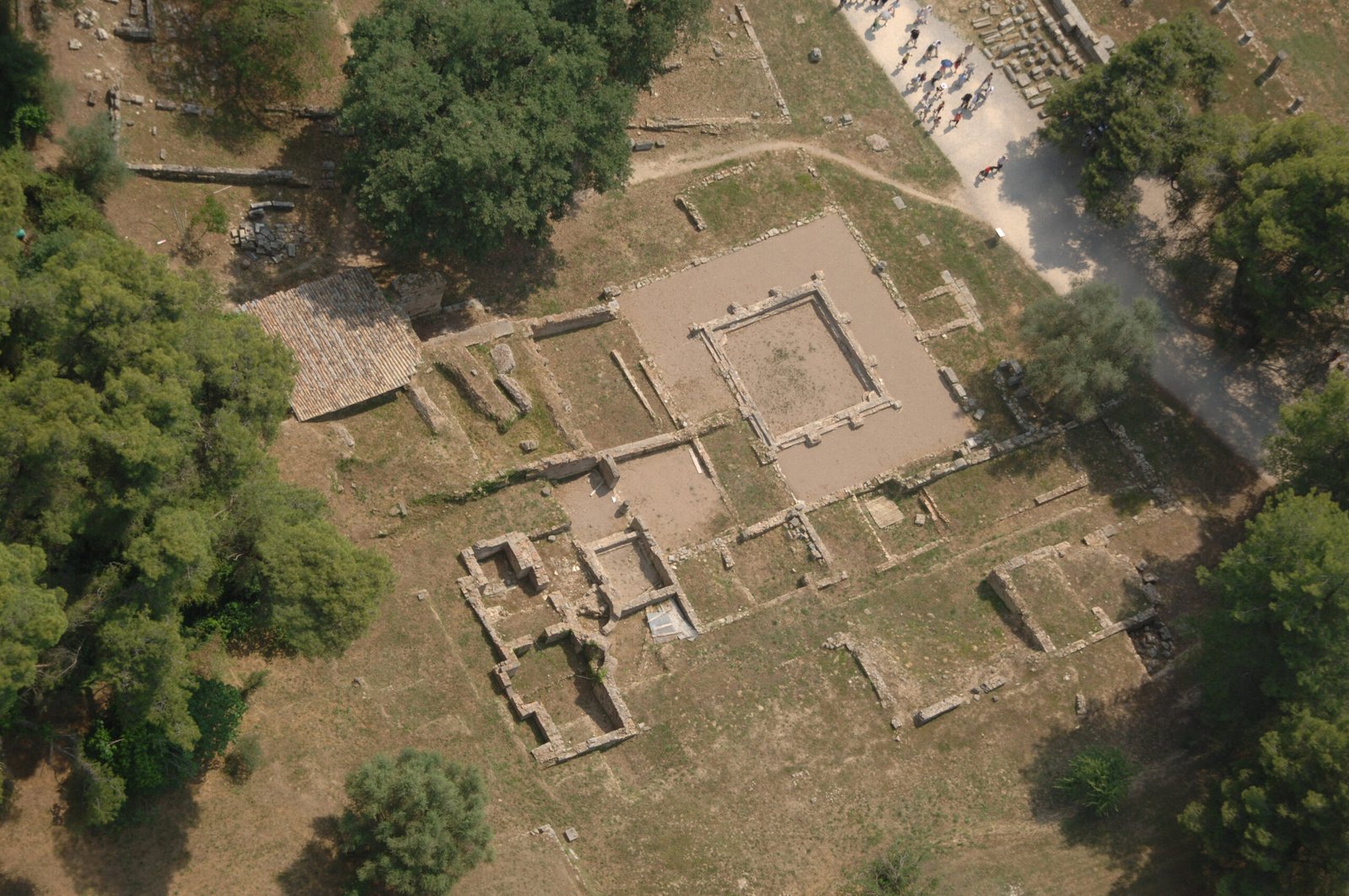
The Hippodrome The venue for equestrian competitions and races, the Hippodrome, was the facility with the largest dimensions to comfortably hold these spectacular events of the ancient Olympic Games. Unlike gymnastic events, horse and chariot races provided a platform for the display of wealth and power by those able to maintain expensive stables and teams,…

The Kronios Baths The Kronios Baths are situated in the northern sector of the archaeological site of Olympia, strategically positioned at the foot of Mount Kronios and north of the Prytaneion. Known also as the “Northern Baths,” the complex was constructed during Roman times over the remains of earlier structures to serve the needs of…
The Kladeos baths Located at the western edge of the sanctuary, on the east bank of the Kladeos River, they lie outside the sacred precinct of the Altis. The complex was constructed around 100 AD during the Roman period, built directly over the site of the 5th-century BC open-air swimming pool of the earlier Greek…
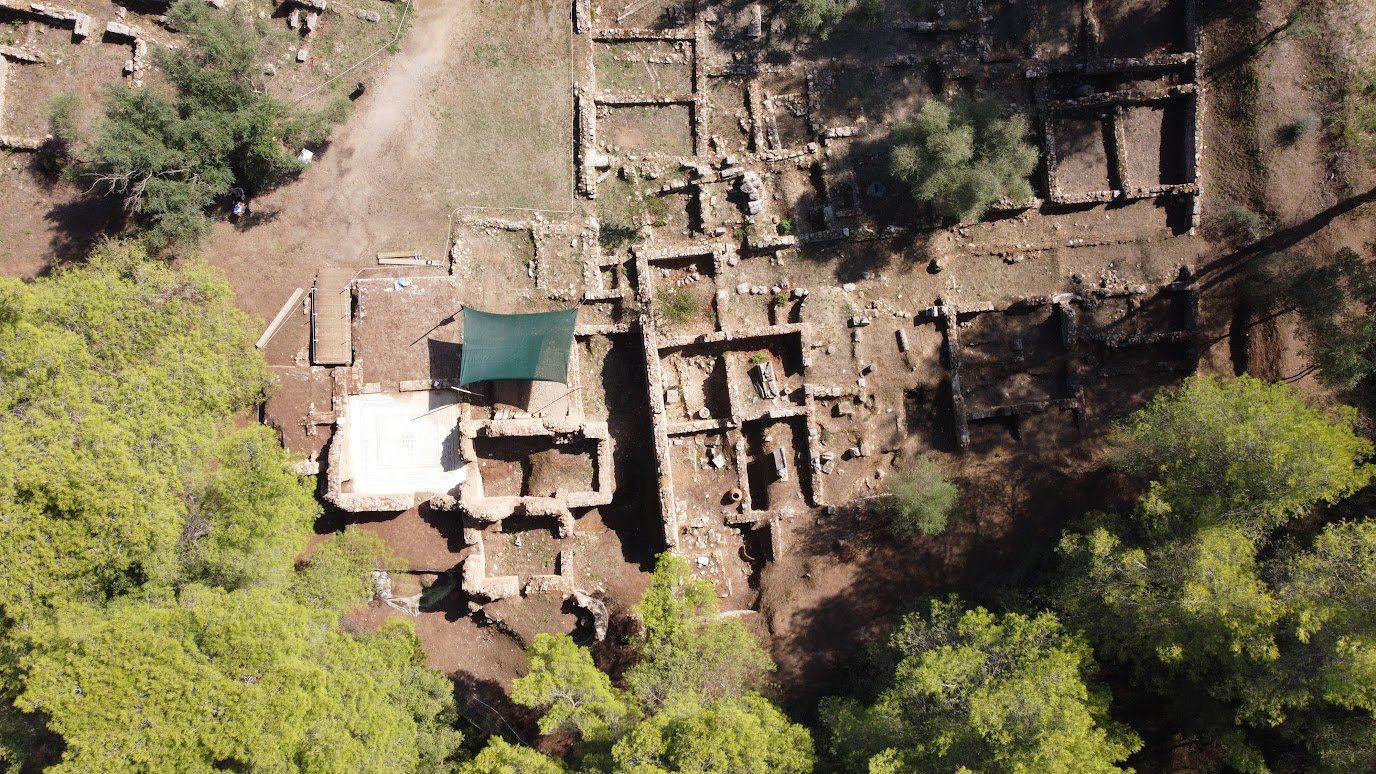
The Leonidaion Baths The so-called Baths of Leonidaion are located outside the southwest corner of the sacred precinct of Altes. They owe their name to the nearby Leonidaion (the guesthouse for distinguished officials), although the two buildings were not functionally related in antiquity. The bath complex was constructed in the 3rd century AD and remained…
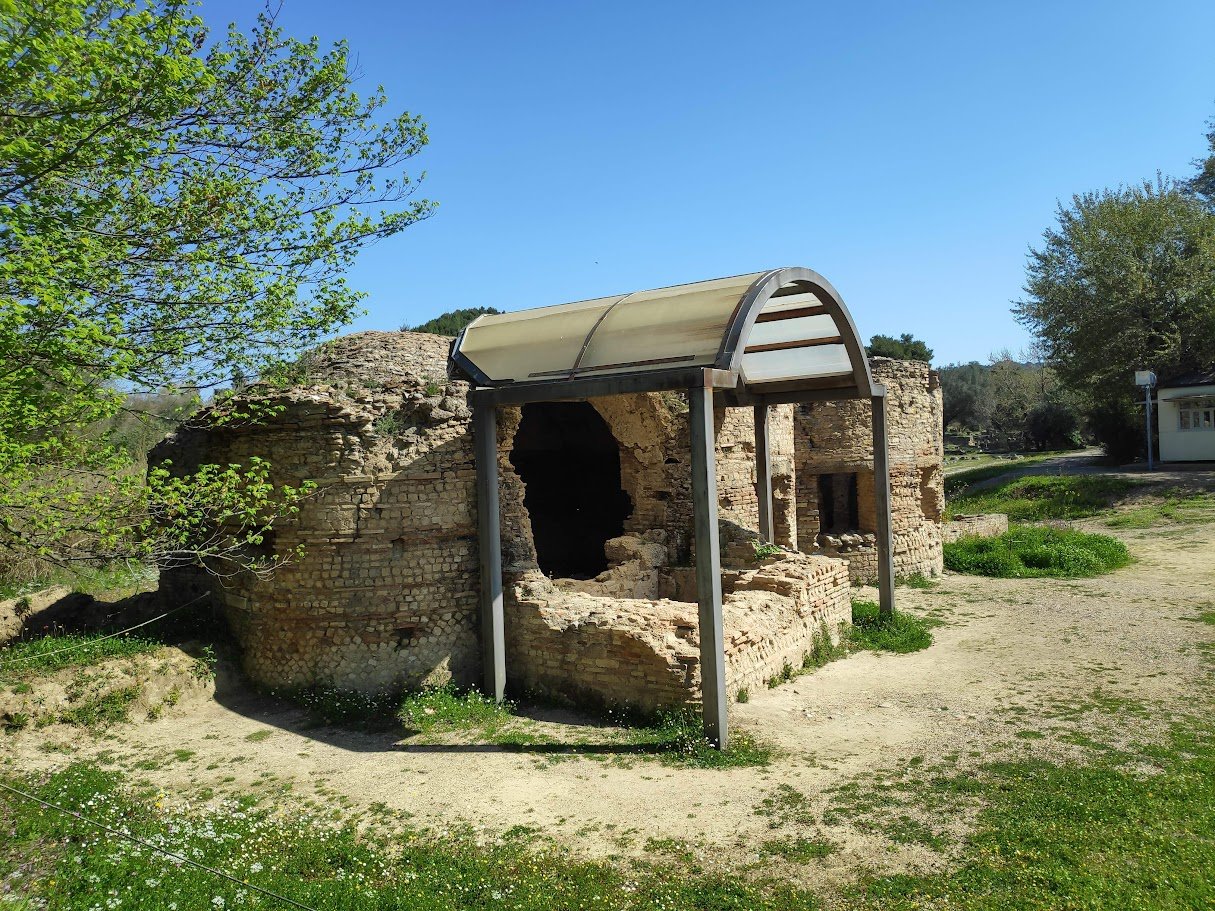
The South thermae The Southern Baths are an important Roman bath complex located in the southern part of the archaeological site of Olympia, a short distance from the Temple of Zeus and west of the Bouleuterion. Historical Development and Structure The complex of South Thermae covers an area of approximately 1.55 acres. The choice of…
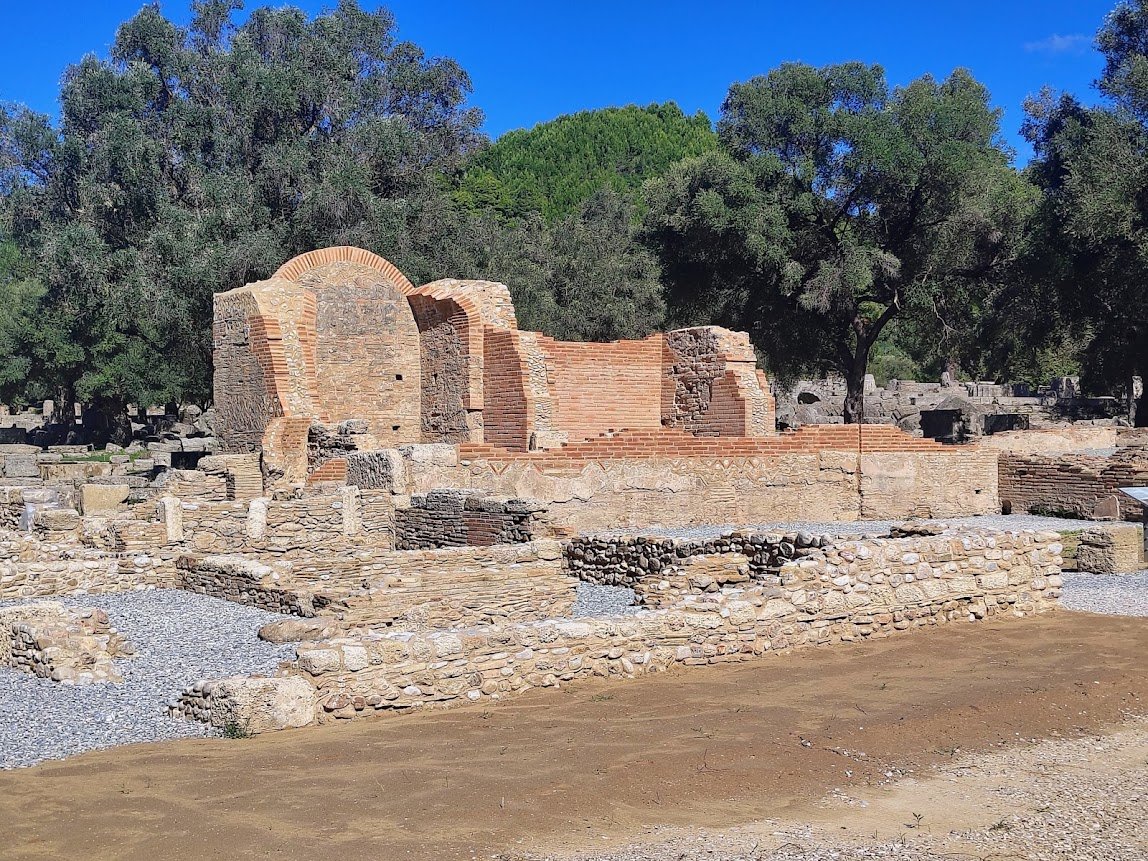
The workshop of Phidias a symbol of divine majesty The Workshop of Phidias is one of the most significant monuments at Olympia, directly linked to the creation of the chryselephantine statue of Zeus, one of the Seven Wonders of the Ancient World. The building is strategically located west of the sacred Altis enclosure, directly opposite…
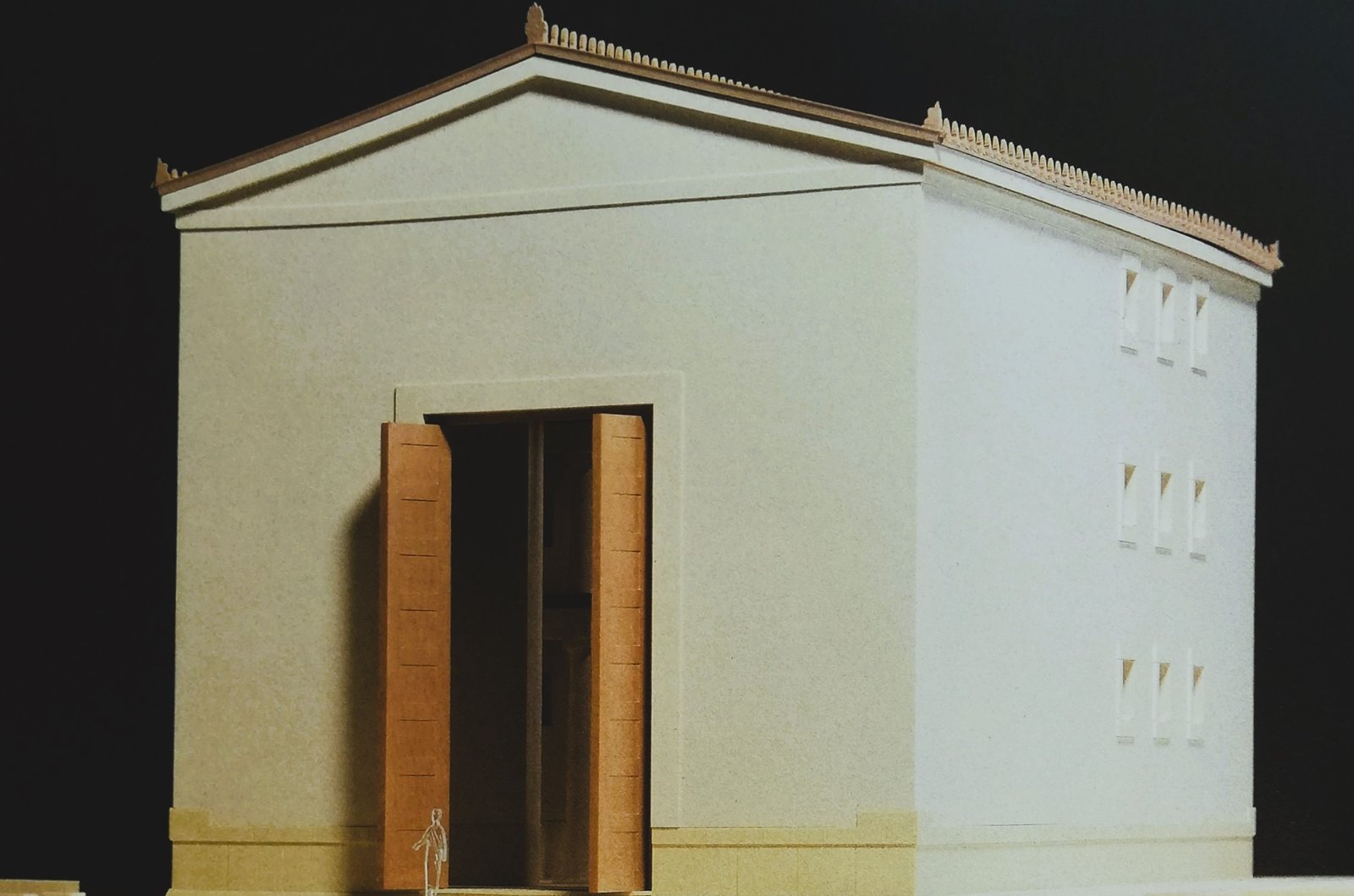
South Hall Gateway to the Sanctuary and Commercial Hub The remains of the building are found just south of the Bouleuterion and outside the precincts of the Altis, of which it formed the southern boundary. At the same time, it functioned as the main entrance to the Sanctuary of Zeus, from the side of the…
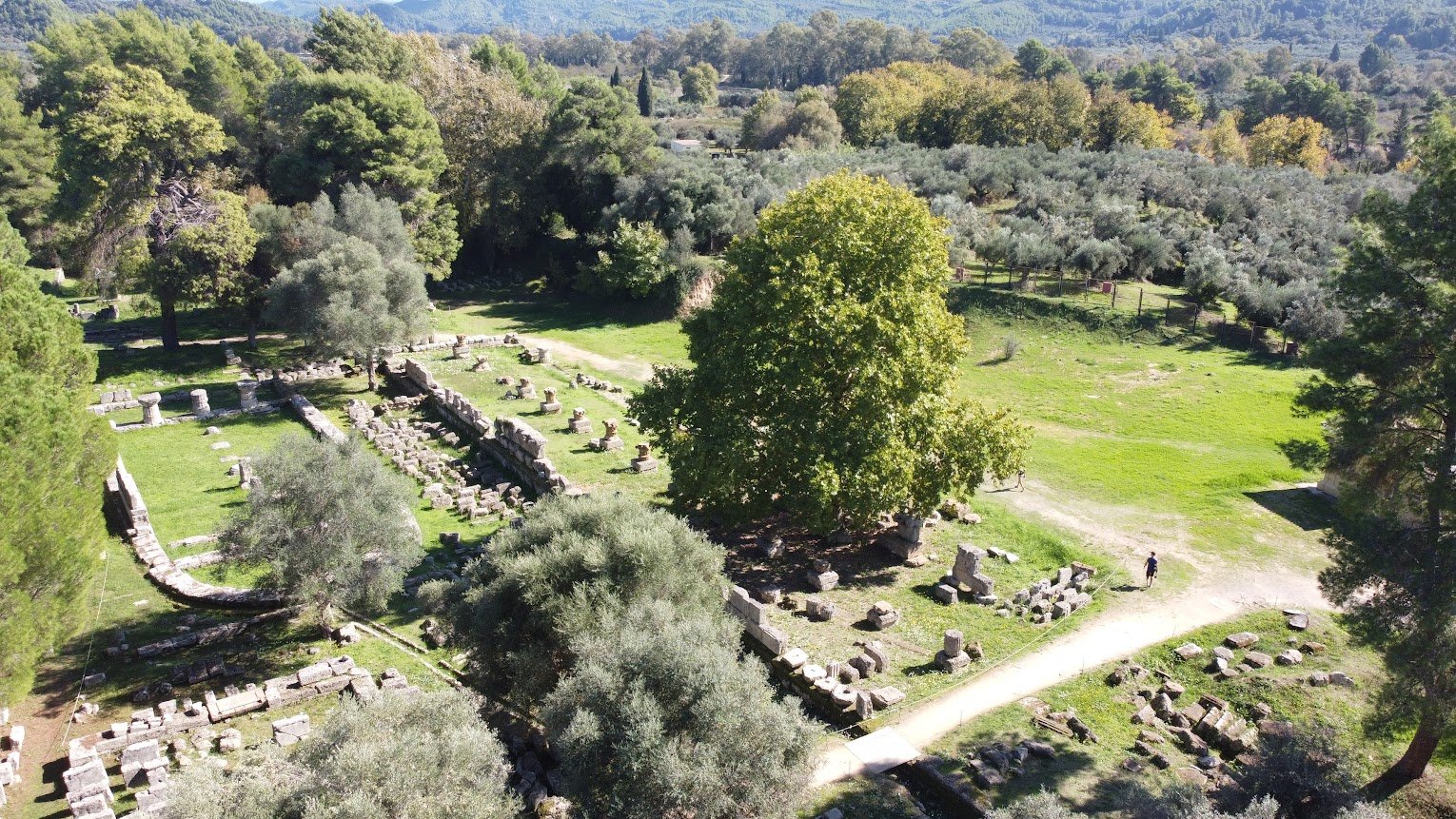
The theokoleon The seat of the priests of the Sanctuary of Olympia The edifive hosted the Theokoloi, those who serve the god. It was a functionally critical, though often overlooked, administrative structure within the vast Sanctuary of Zeus at Olympia. Located west of the sacred Altis enclosure and immediately north of the famed Workshop of…
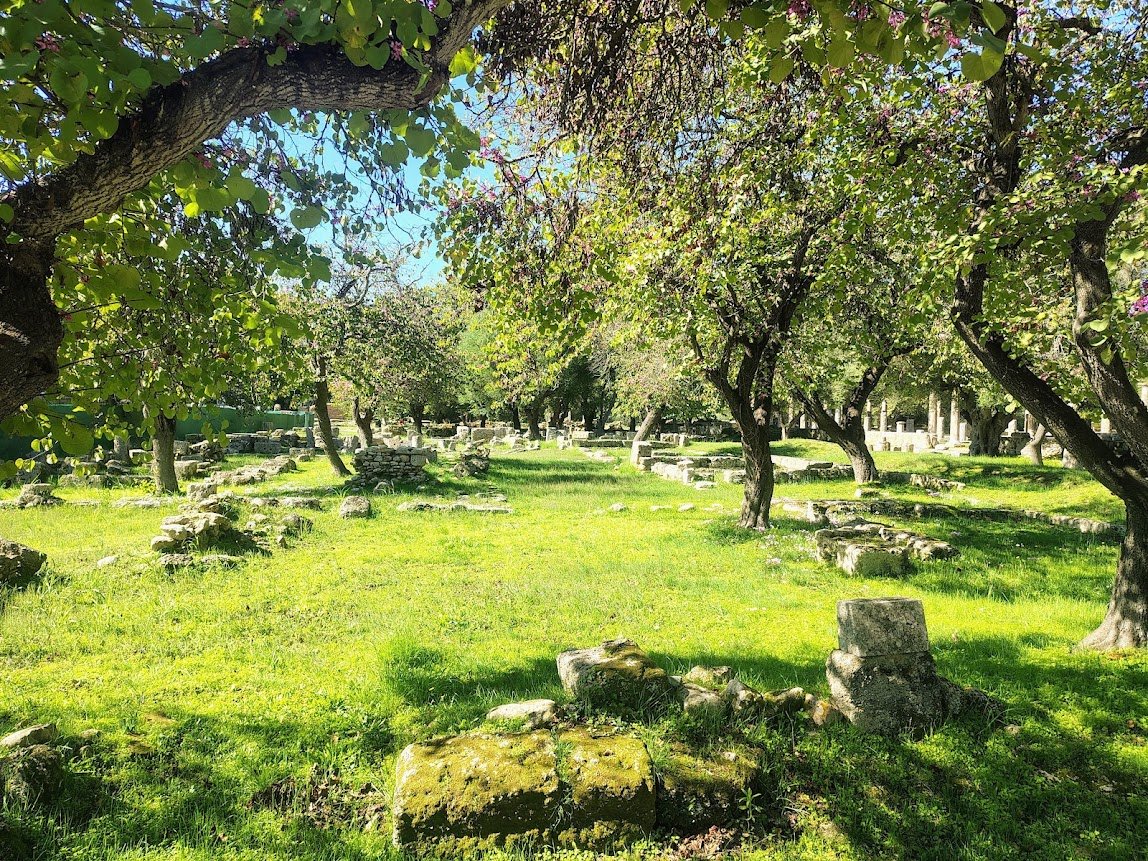
The Philippeion Οne of the finest examples of ancient Greek architecture and the only circular building (tholos) located inside the Altis, the sacred precinct of Olympia. Situated west of the Temple of Hera, at the west end of the Altis and near the Prytaneion, it was dedicated to Zeus by Philip II of Macedon following…
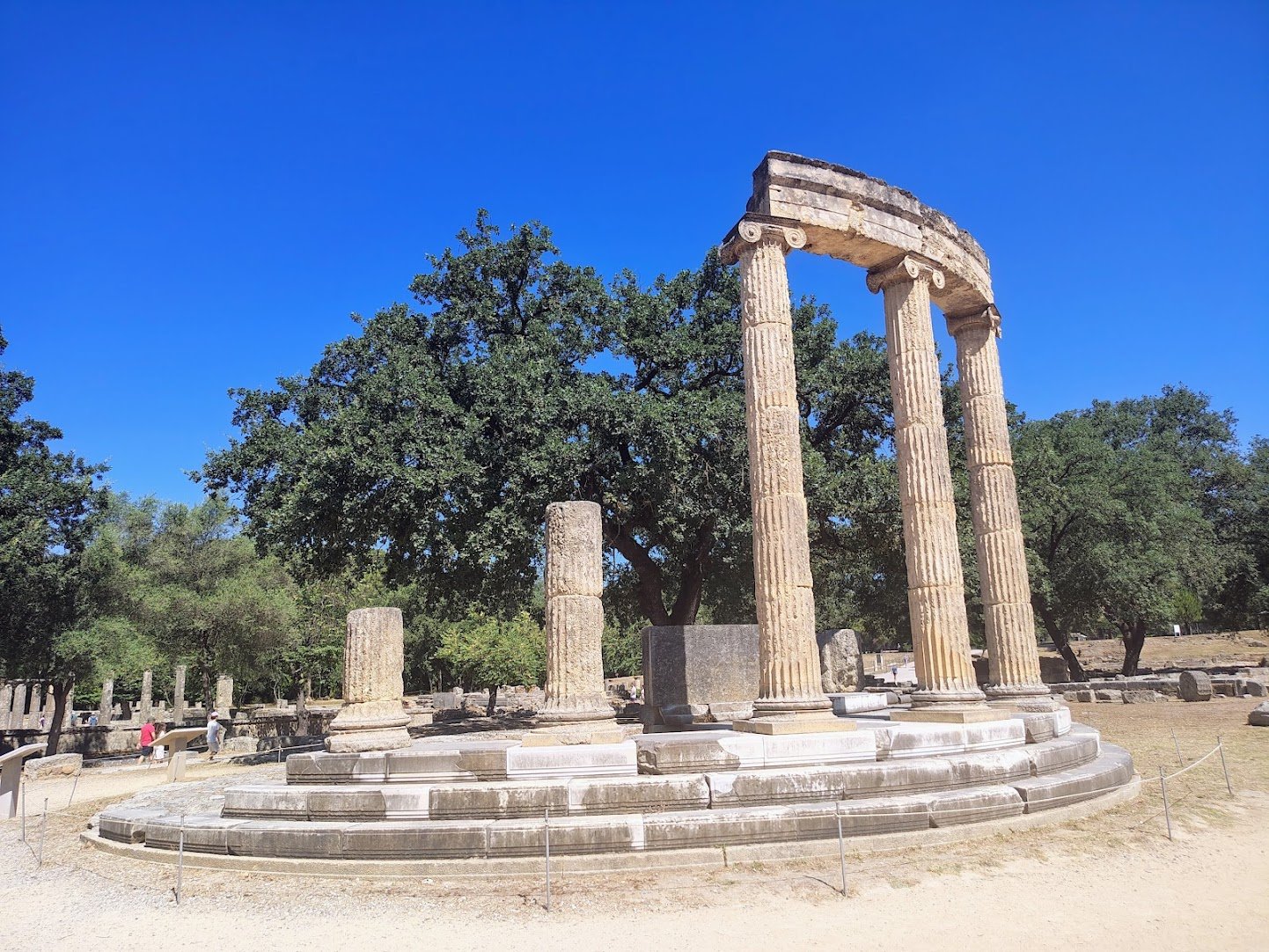
The Sanctuary of Demeter Chamyne Ancient Olympia, as the site of the Olympic Games, conceals significant ancient structures beneath modern infrastructure, many of which were previously known only through the descriptions of ancient travelers, such as Pausanias. One such point, previously unknown and inaccessible for decades, was the Sanctuary of Demeter Chamyne. Its discovery in…
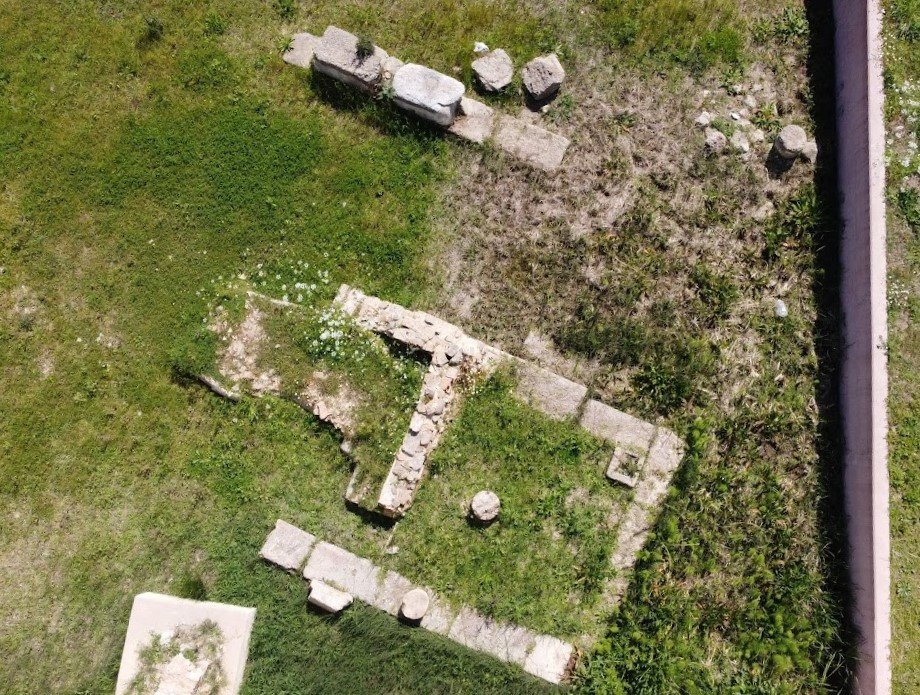
nymphaion The Nymphaion, donated by Herodes Atticus around 160 AD, was a spectacular monumental fountain that solved Olympia’s chronic water supply problems while creating impressive architectural display. The two-story semicircular structure featured niches with marble statues of the donor’s family and Roman emperors alternating with water basins and fountains. The Grand Benefaction: A Roman Solution…
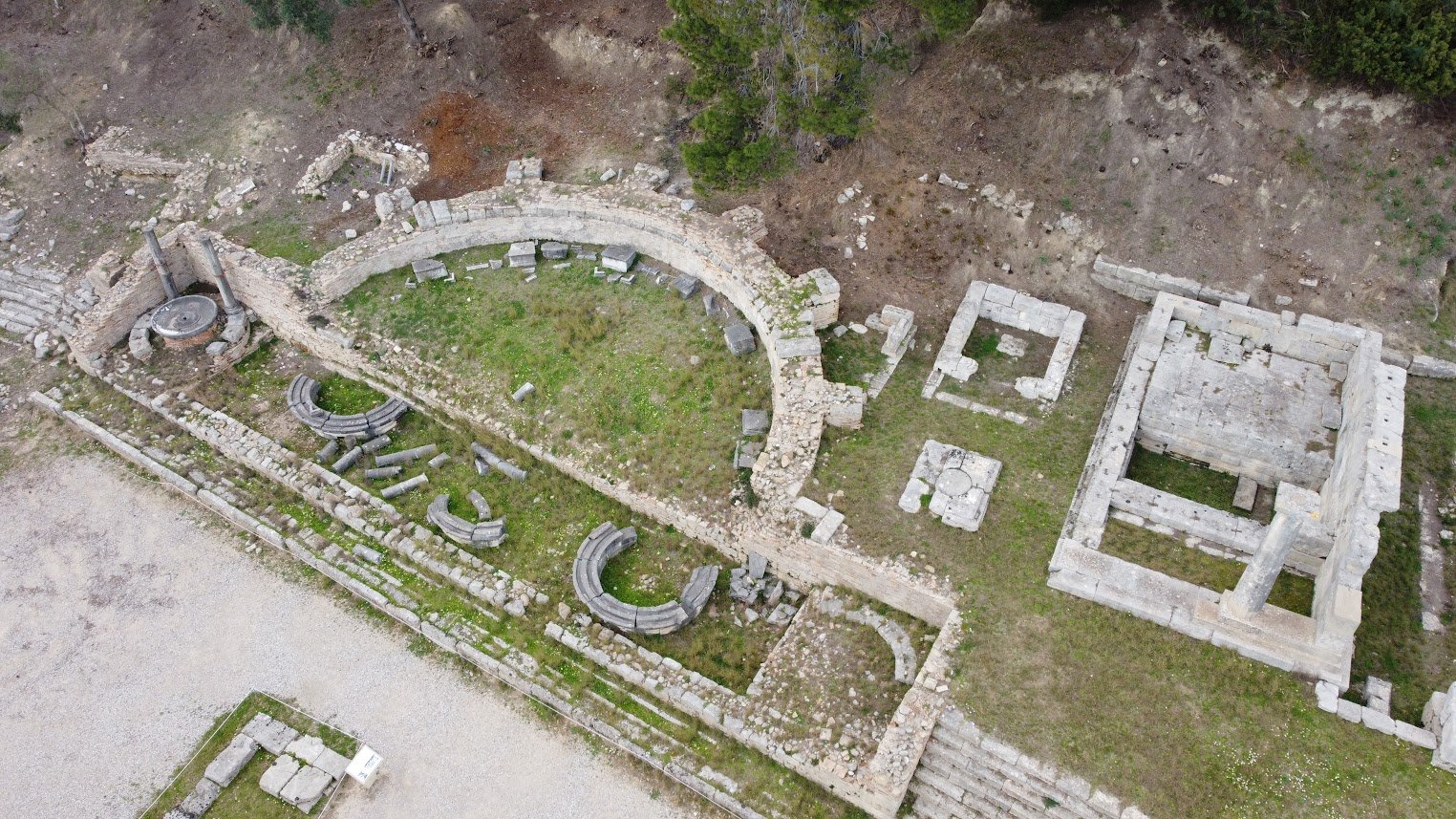
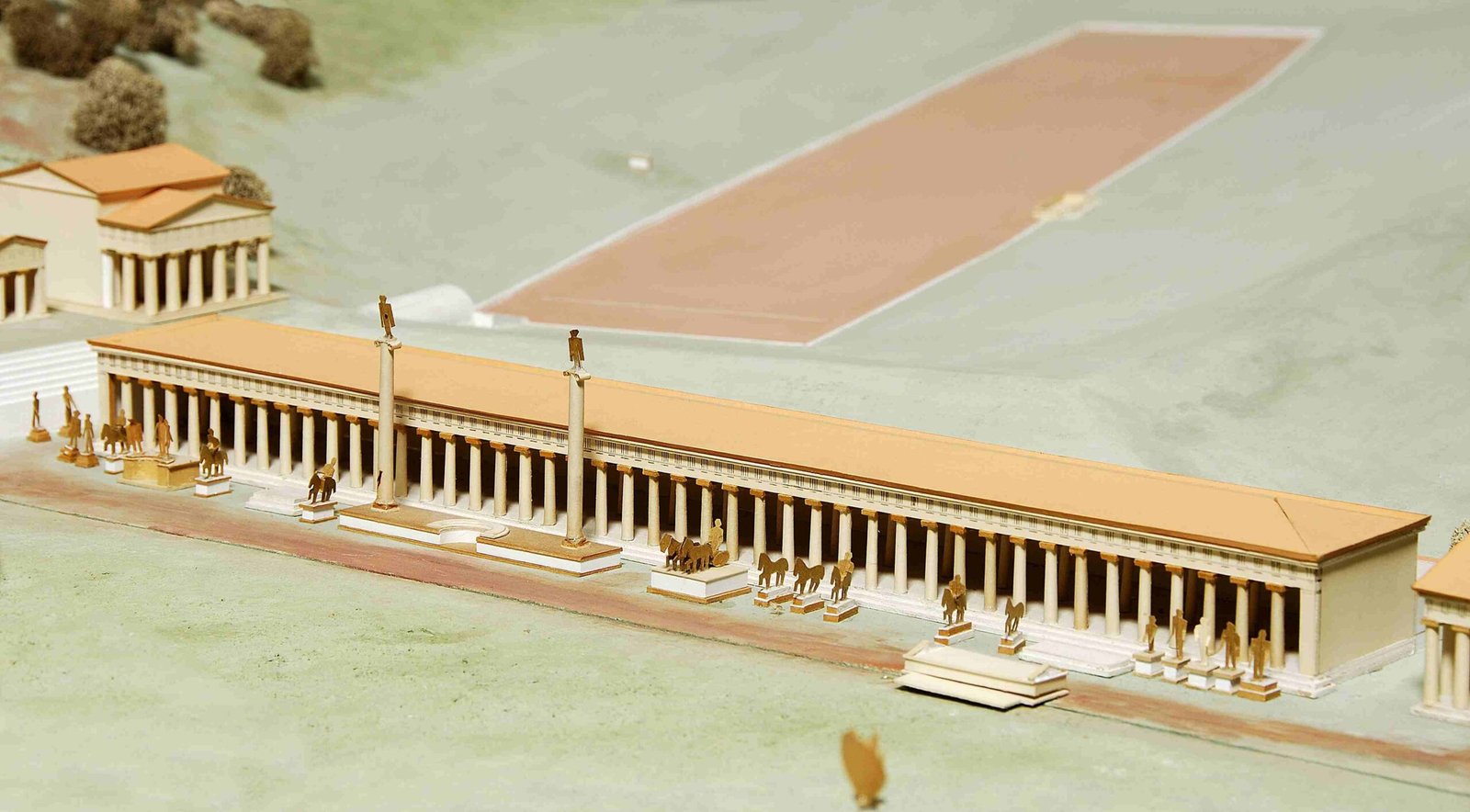
eco hall The Stoa of Eco, built in the 4th century BC, created an impressive architectural boundary between the sacred Altis and the Olympic stadium. This 98-meter-long colonnade featured double columns—Doric on the exterior and Ionic on the interior—creating elegant covered walkways that provided shade and comfort for visitors. The building’s name derives from its…
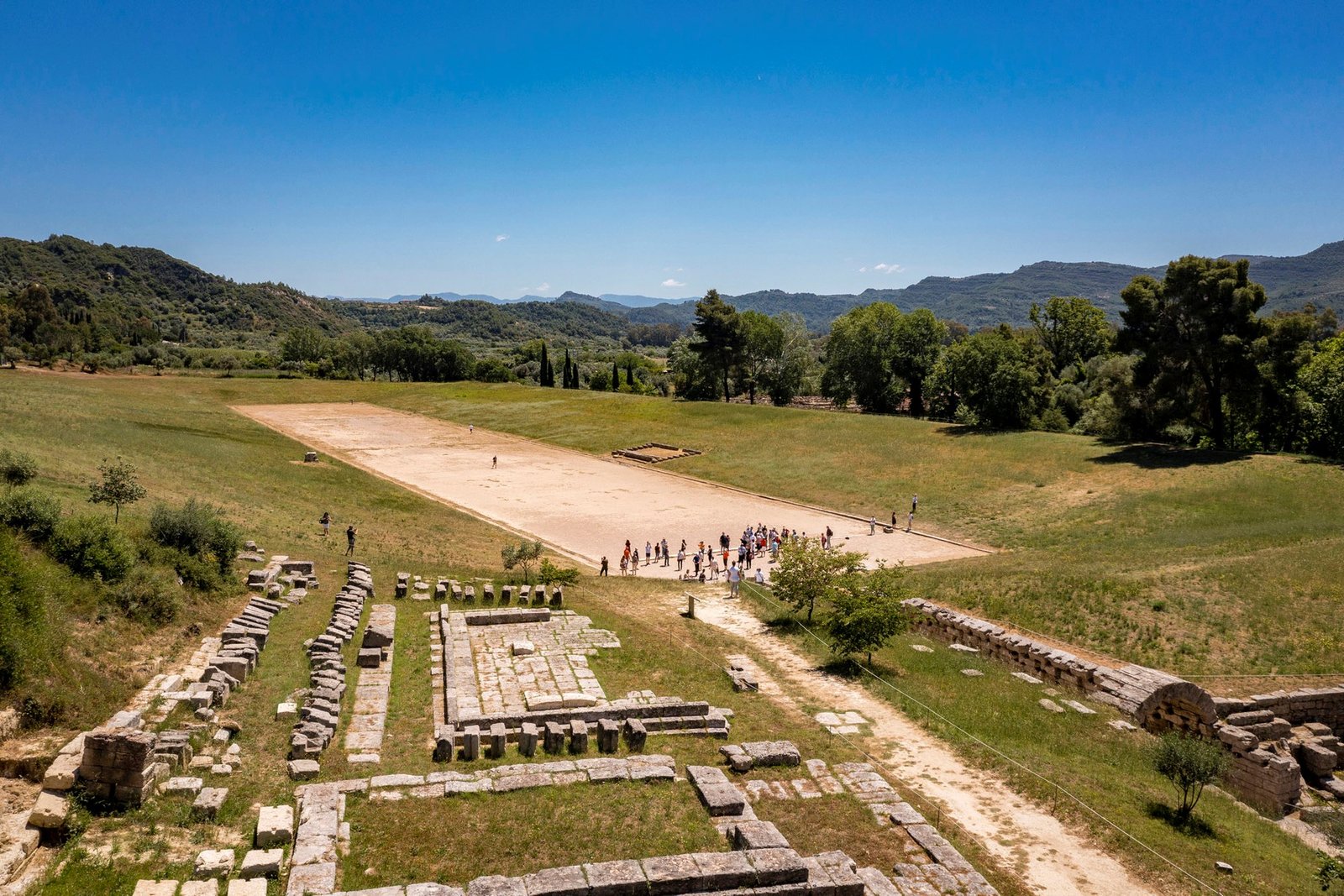
stadium Dating back to the 5th century BC, the stadium was the place where athletes competed before thousands of Greek spectators and the best of them crossed the threshold of eternity as Olympic champions, conquering their immense fame. Heart of Athletic Glory The Stadium of Olympia was for centuries the ultimate destination of recognition for…
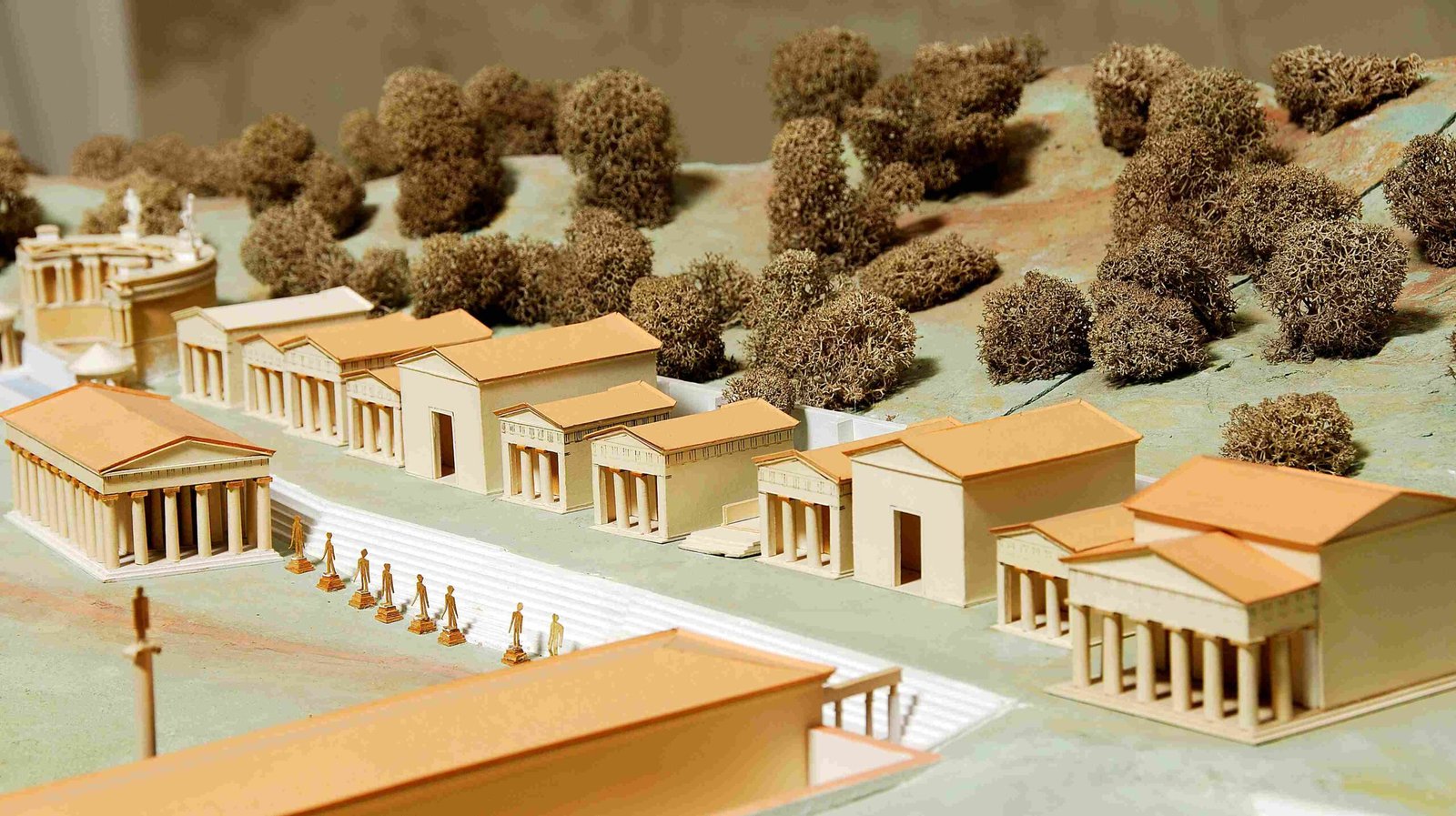
treasuries The Treasuries of Olympia lined the southern slope of the Kronios Hill, small temple-like buildings constructed by wealthy Greek city-states to house valuable dedications to Zeus and display their piety and prosperity. Dating primarily to the 6th and 5th centuries BC, each treasury was a miniature temple featuring columns and decorative elements reflecting the…
Pelopion The Pelopion, one of Olympia’s most sacred structures, housed the burial mound of the hero Pelops, mythical founder of the Olympic Games The Significance of the Pelopion The Pelopion stands as a profoundly significant archaeological monument within the Altis sanctuary at Olympia, primarily serving as a tomb or cenotaph (a memorial monument for a…
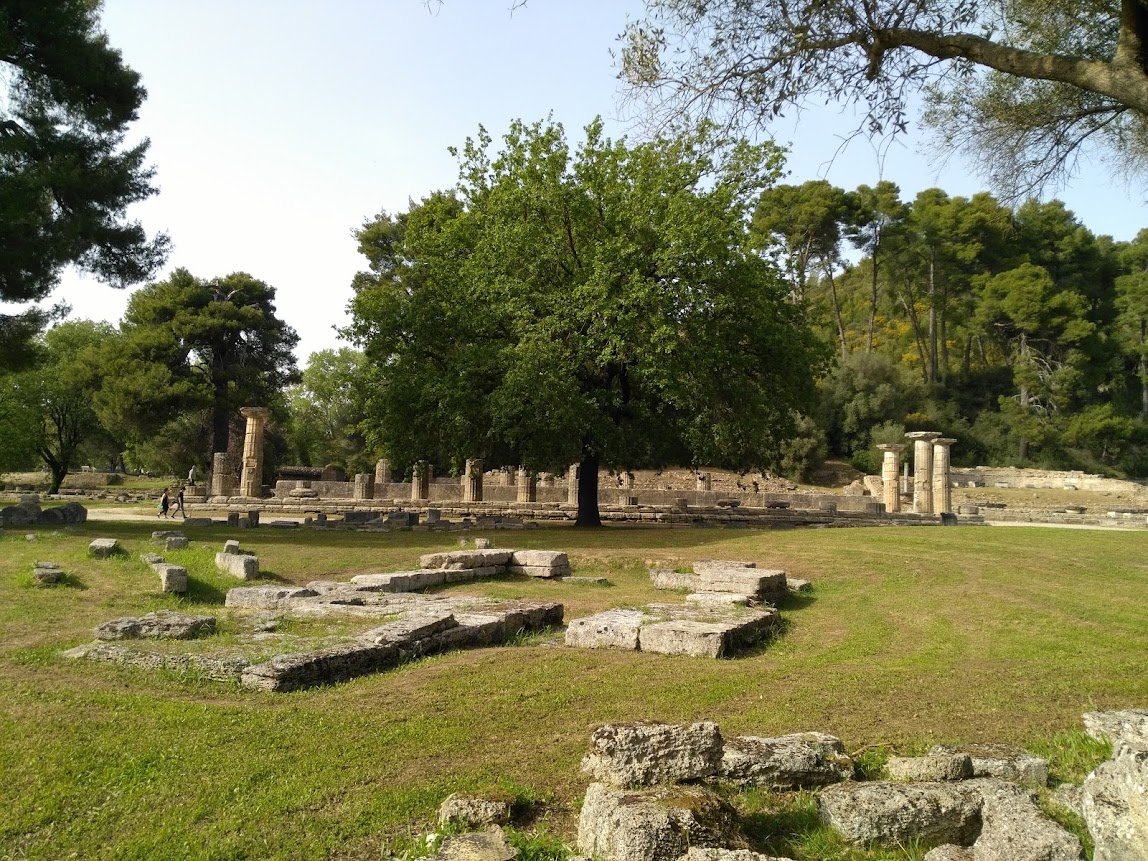
Prytaneion The Prytaneion served as the headquarters of Eleian officials who administered Ancient Olympia and housed the sacred hearth of Hestia, where an eternal flame burned continuously throughout antiquity Center of Administration of the sanctuary The Prytaneion, one of the oldest and most important structures within the Altis, stood as the official nerve center of…
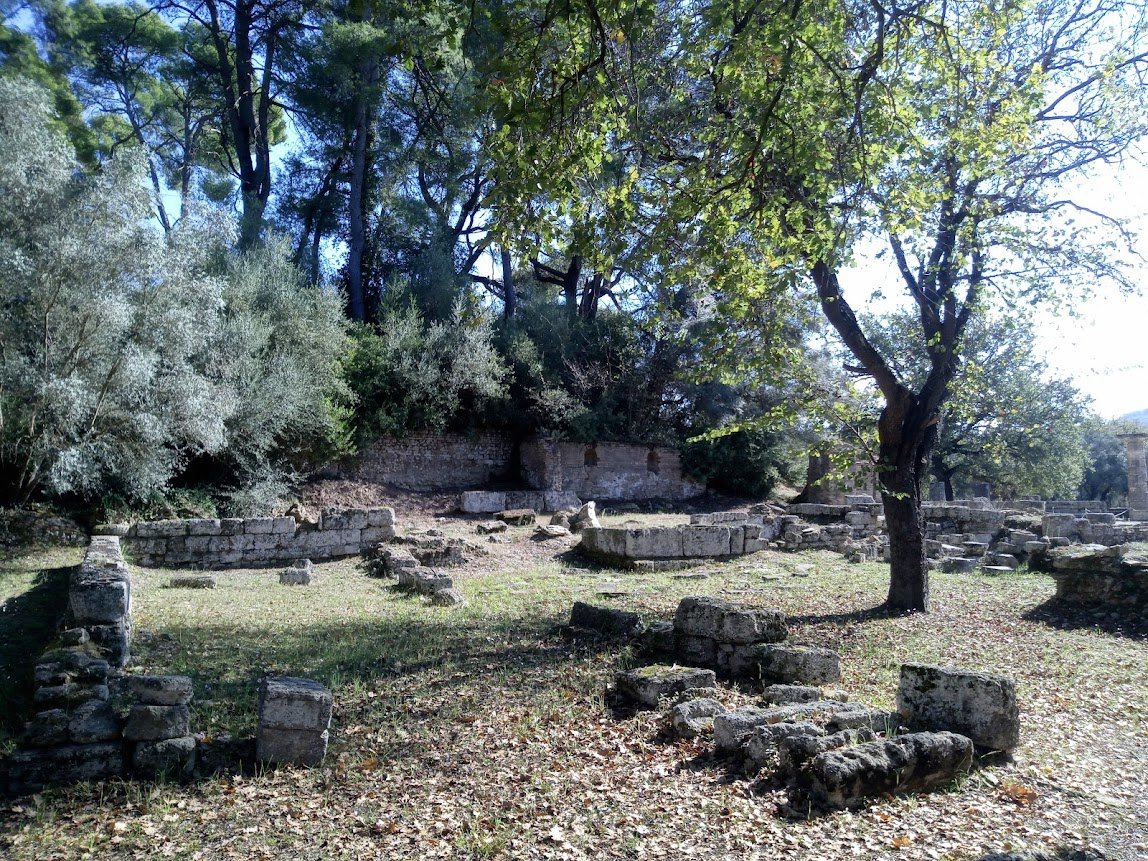
Bouleuterion The Bouleuterion of Olympia served as the meeting place of the Olympic Council, the governing body responsible for organizing and overseeing the Olympic Games. According to the custom, it was here, at the yard in front of the Bouleuterion where athletes and judges took their solemn oaths before competition. Governing the Sacred Festival The…
The Leonidaion The Leonidaion: A Distinguished Hostel at Ancient Olympia. The building provided private accommodations for important officials, ambassadors, and other elite guests attending the Olympic Games. Greek commitment to proper hospitality The Leonidaion was one of the most significant secular buildings in the Sanctuary of Olympia, serving a crucial function during the ancient Olympic…
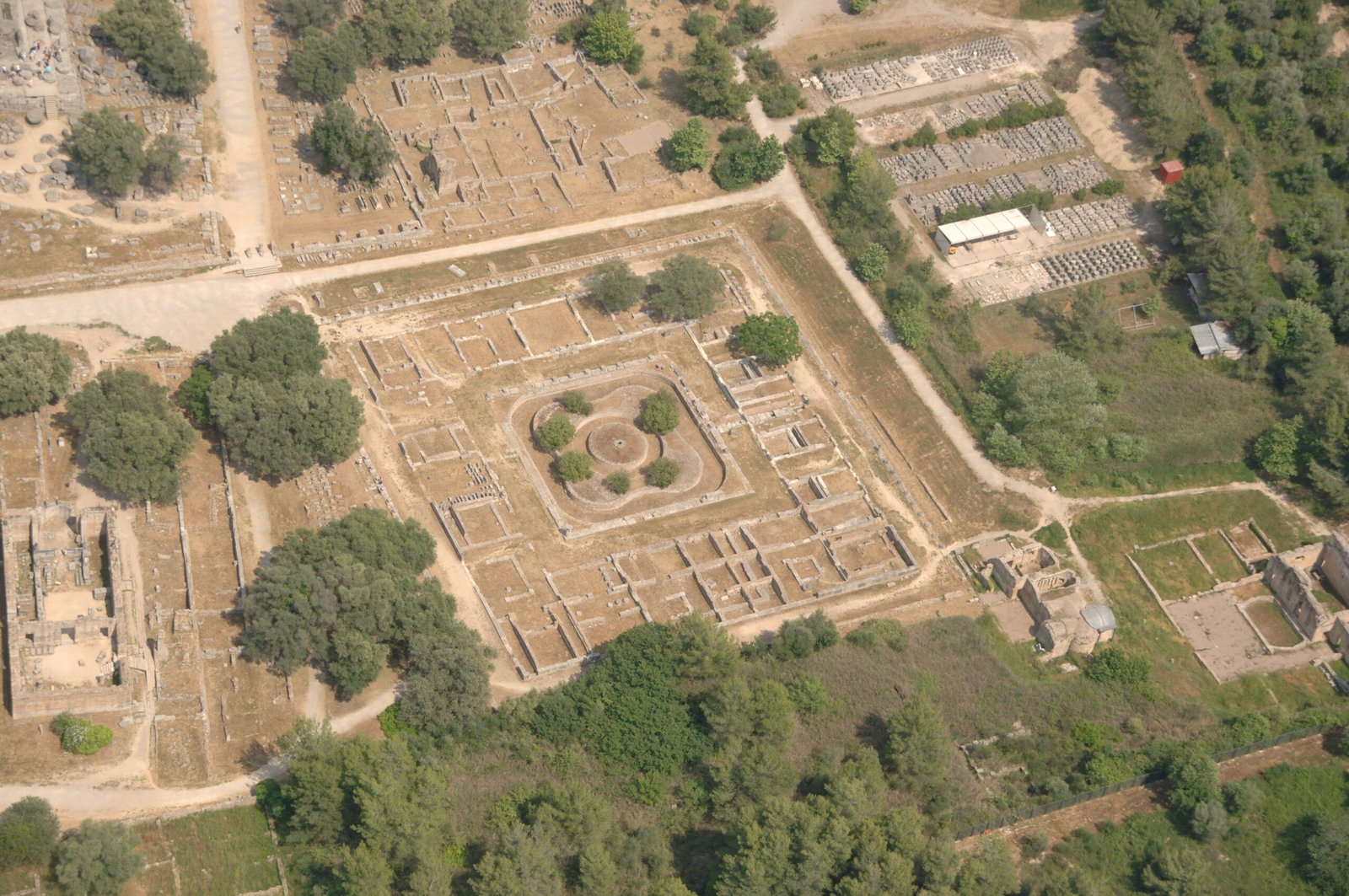
Gymnasion Erected during the Hellenistic period, specifically in the 2nd century BC, this vast, rectangular complex was purpose-built as the premier training ground for athletes preparing for the Olympic Games. a massive rectangular complex The Gymnasion of Ancient Olympia stands as one of the ancient world’s most significant and impressive athletic facilities. Erected during the…
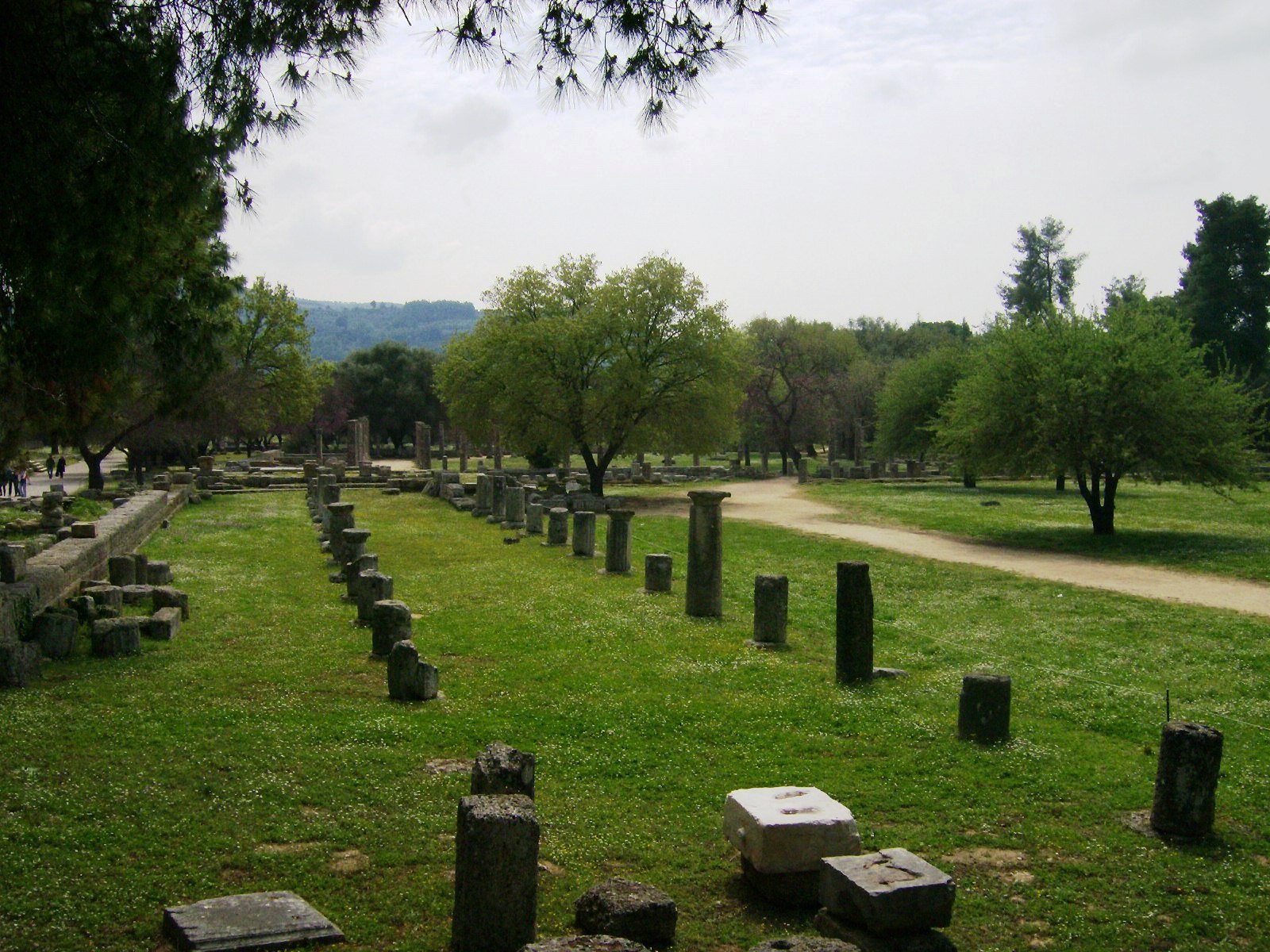
Palaestra Constructed in the 3rd century BC, this square building with its distinctive peristyle courtyard served as the primary training ground for wrestlers, boxers, and practitioners of the pankration. Τhe Palaestra reflects the sophisticated understanding ancient Greeks had of athletic training requirements. Training Ground for Glory The Palaestra of Ancient Olympia, constructed in the…
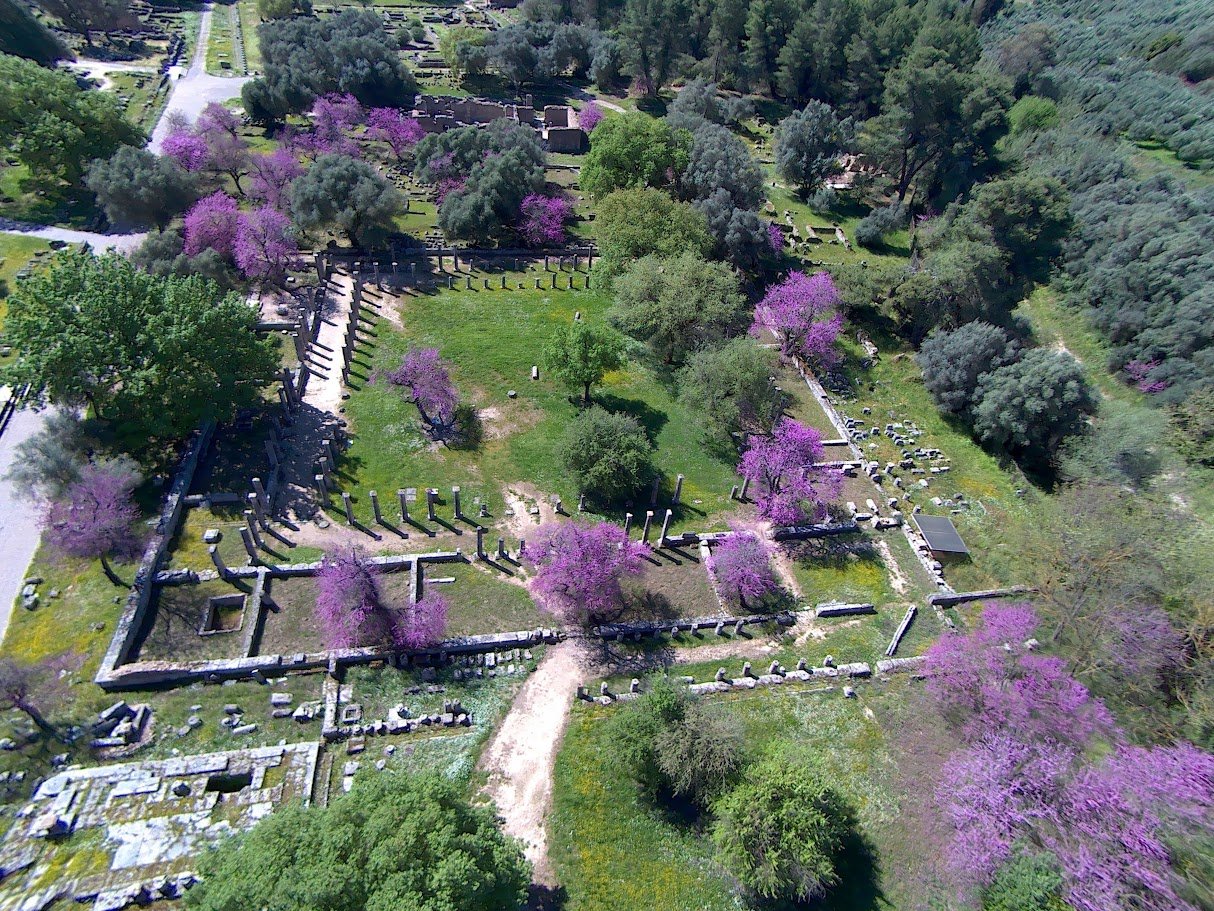
The Metroon Built during the Classical period, the Metroon was a small Doric temple dedicated to Rhea-Cybele, the Mother of the Gods, representing primordial creative forces and nature’s generative power. During the Roman period, the Metroon underwent a significant transformation in function, being rededicated to the cult of the emperors The Metroon: A Classical Temple…

Temple of Hera Constructed around 600 BC during the Archaic period, the Heraion of Olympia is one of the earliest examples of monumental stone temple architecture in ancient Greece from wood to stone architecture Situated north of the Temple of Zeus at the southern foothills of Mount Kronios, this Doric structure was dedicated to Hera,…

zeus temple The Temple of Zeus at Olympia stands as one of the greatest masterpieces of ancient Greek architecture and religion. an awe inspiring edifice by the architect Livon of Elis Built between 470 – 456 BCE by the architect Livon of Elis, it occupied the most prominent position within the sacred precinct (the Altis)…