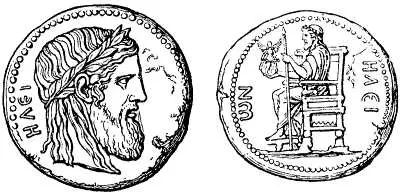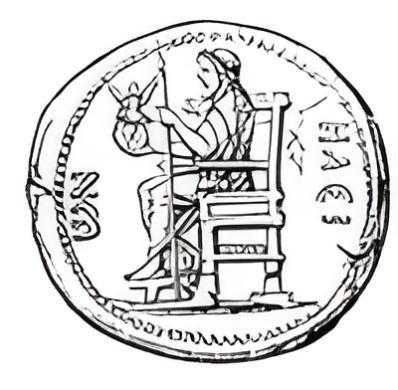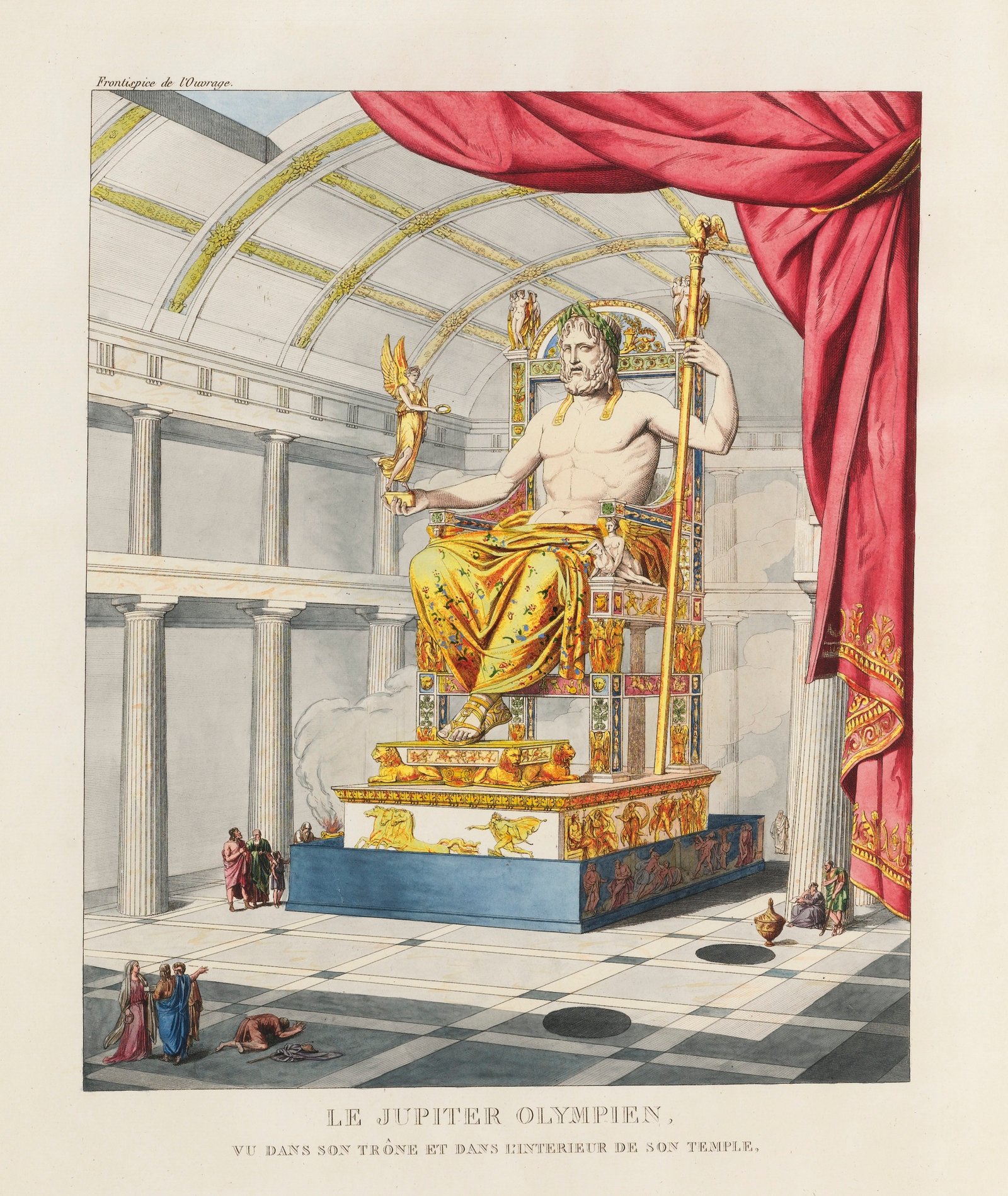
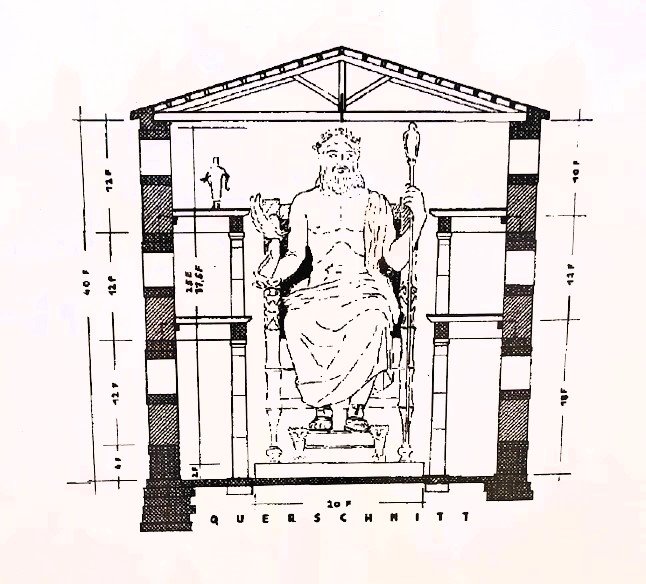
Perhaps the most famous feature of the Temple of Zeus at the heart of the sanctuary was the large gold and ivory statue of Zeus, created by the master sculptor Phidias around 435 BC, shortly after the temple was completed.
The colossal gold and ivory statue — made of gold and ivory plates on a wooden frame — represented the pinnacle of ancient Greek sculptural achievement.
Almost twelve meters high, the seated figure of Zeus held in his right hand the goddess of Victory (Nike)and in his left a scepter with an eagle on top. The god’s robe was adorned with glass flowers and precious stones. Zeus sat on an elaborate throne decorated with precious materials, mythological scenes and intricate carvings.
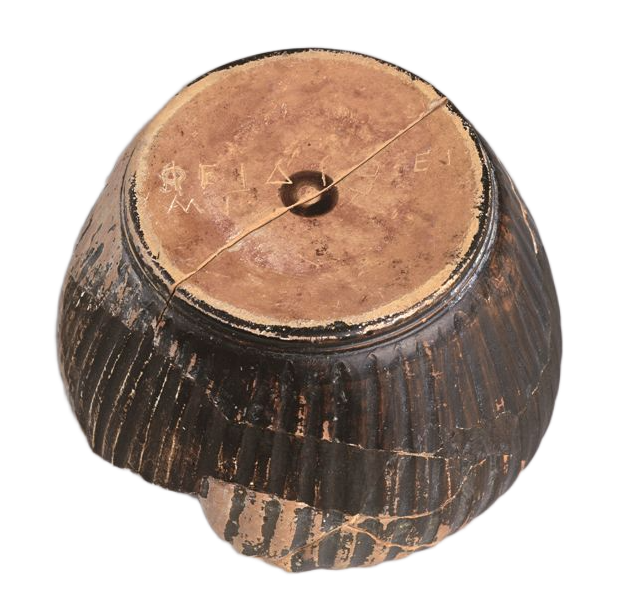
Phidias and his craftsmen worked with gold, ivory, glass and semi-precious stones in the adjacent south wing of the workshop, located to the west of the great Temple of Zeus, immediately outside the walls of the sacred precinct. Notable finds from excavations include clay molds for the statue’s himation, fragments of ivory, goldsmith’s tools and a small cup with the inscription “Belonging to Phidias” .
After its completion, the statue was dismantled and transported in parts inside the temple. It was then reassembled and placed in its final position, at the back of the cella, where it remained for many centuries .
Ancient writers described visitors being moved to tears by the statue’s extraordinary beauty and grandeur – the geographer Strabo wrote that if Zeus stood upright, he would break the roof of the temple.
The statue required constant maintenance . Records mention workers regularly polishing and oiling the ivory to prevent cracking in the humid climate of Olympia. A rectangular tank of olive oil was kept in front of the statue to provide moisture and create shiny reflections.
The presence of the statue transformed the temple into something much more than a building – it became a symbol of divine majesty , of human achievement, and of the spirit of Olympia itself.
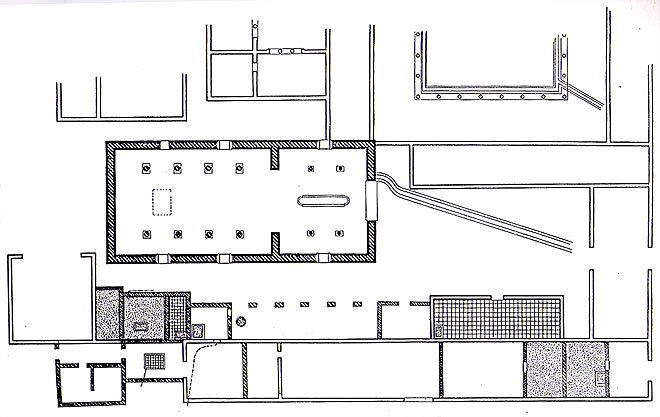
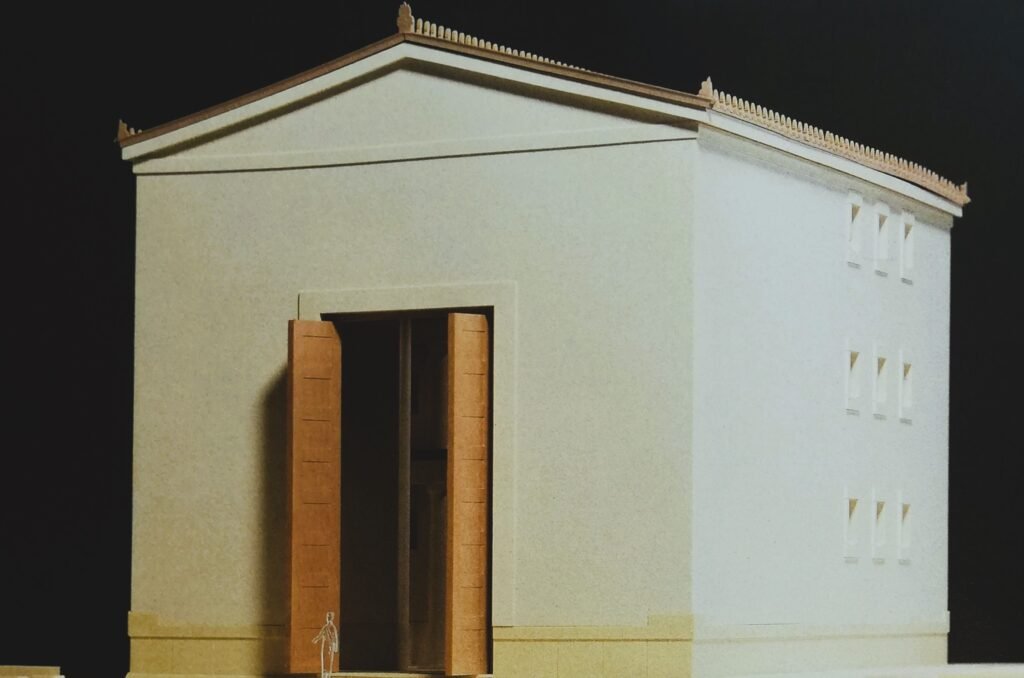
Phidias created this monumental statue— one of the Seven Wonders of the ancient world— in his workshop, a building west of the sacred precinct, opposite the temple of Zeus.
The officials of Elis, responsible for the sanctuary of Olympia, invited the famous Athenian sculptor to Olympia to create a statue worthy of the newly completed temple.
Built between 430-420 BC , the rectangular hall (32 x 18 x 14.50 m) exactly matched the dimensions of the temple’s nave to facilitate the construction of the colossal statue.
The workshop was divided into three aisles with columns, with the statue placed in the central aisle.
With the help of a team of workers, Phidias dedicated years of work to the project.
The fate of the statue remains uncertain. Some sources suggest that it was transferred to Constantinople in the late 4th or early 5th century AD.
In the new capital of the empire, Phidias’ Zeus became part of an aristocratic collection of ancient art in the Palace of Lausus , an official serving under Theodosius II.
The final fate of this monumental work was sealed in 475 AD , during the reign of Emperor Zeno, when a devastating fire destroyed the palace and its entire collection, resulting in the permanent loss of one of the greatest artistic treasures of antiquity.
This wonder of the ancient world disappeared from history, leaving only descriptions and small reproductions on coins that hinted at its former glory.