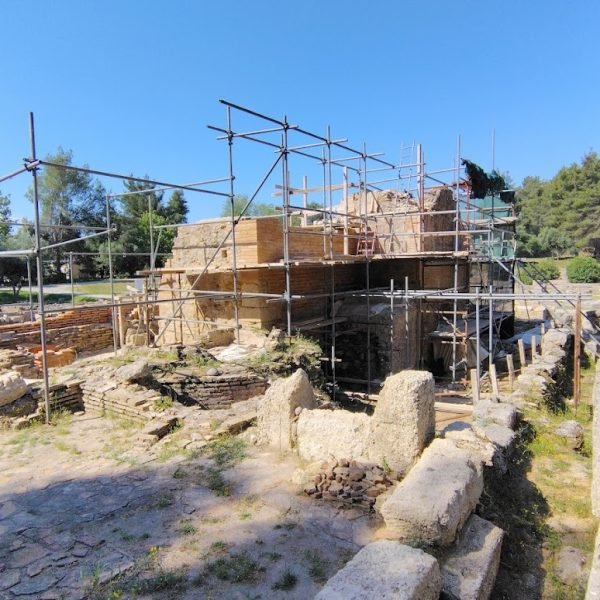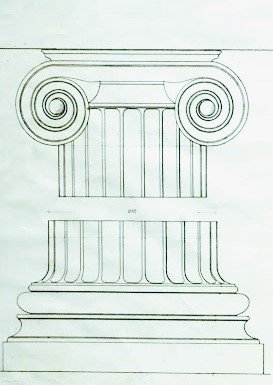
A second phase, completed in 2012, focused on the comprehensive presentation of the area of the opisthodomos of the Temple of Zeus .
Philippeion
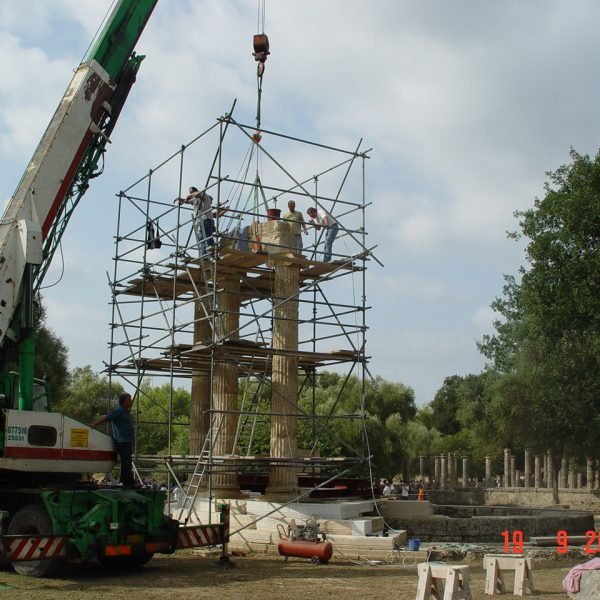
The restoration of part of the floor (krepis) and some columns of the Philippeion was completed in 2005 also by the German Archaeological Institute . The restoration, during which architectural members of the monument repatriated from Berlin were used, was made possible by the generous sponsorship, also in this case of the “A. G. Leventis” Foundation .
The monument of the Ptolemies
The restoration, maintenance and enhancement projects of monuments of the Roman period and late antiquity at the archaeological site of Ancient Olympia are part of a broader intervention program totaling approximately 8,300,000 euros, with funding from the Recovery and Resilience Fund (Greece 2.0 / NextGenerationEU) and implemented by the Ministry of Culture through the competent Directorates and the Ephorate of Antiquities of Elis .
The common goal of all interventions is to preserve the authenticity of the monuments, address serious structural problems, improve the legibility of the remains and substantially upgrade the visitor experience.
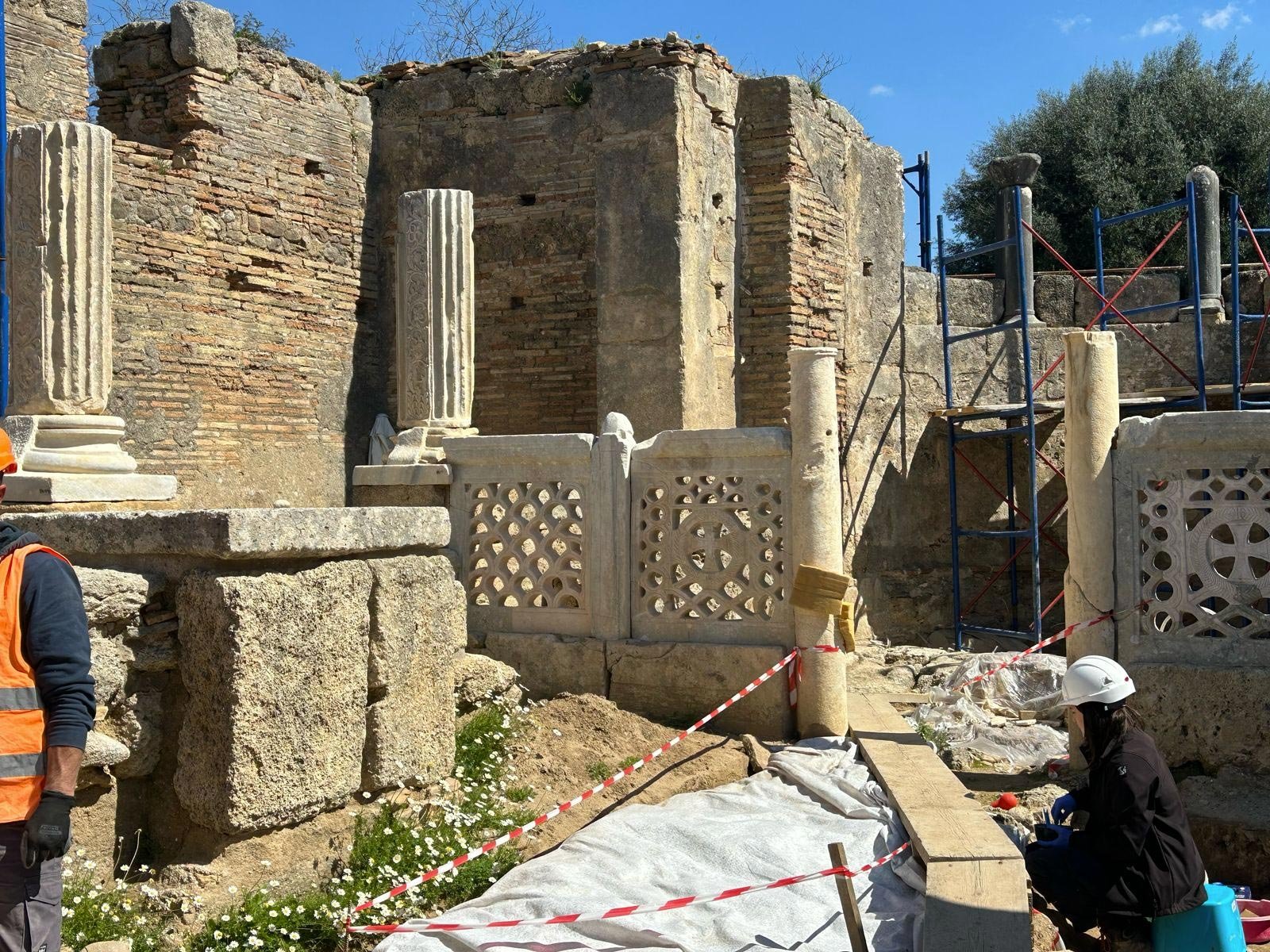
On the site of the famous Workshop of Phidias, where the chrysanthemum statue of Zeus was constructed , an imposing early Christian basilica was erected in the 5th century AD, incorporating and reusing parts of the older building.
The monument is an excellent example of the transition from the pagan to the Christian character of the area.
Fixation and rehabilitation procedures aim to:
in addressing serious static problems of masonry,
in the conservation of architectural members and surviving mosaics,
in restoring the legibility of the three-aisled basilica and the individual phases of use,
to improve the security and visitor numbers of the monument.
The project budget amounts to €2,226,400.00, with funding from the European Union of €1,852,377.42.
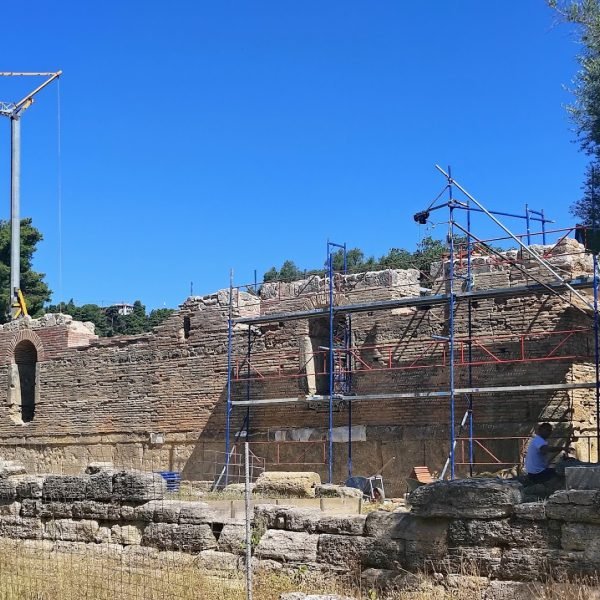
The restoration work, which was completed at the end of 2025, included two main sub-projects:
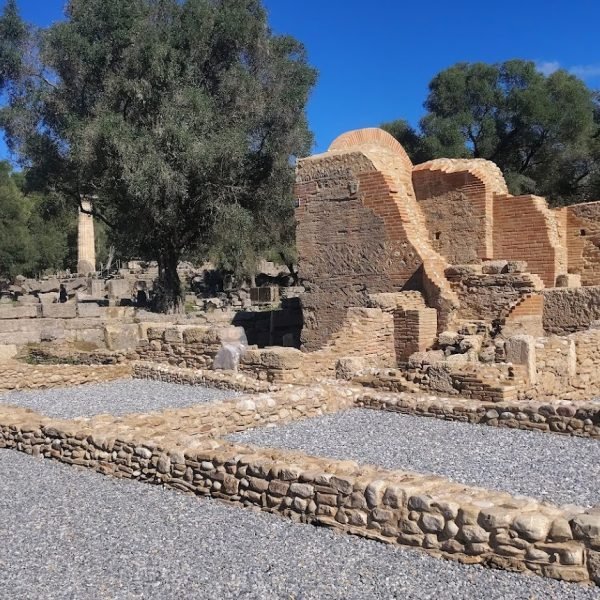
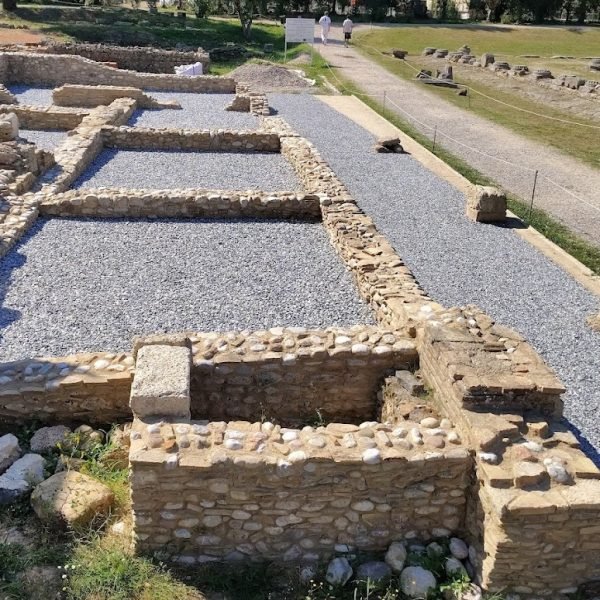
• Restoration and Enhancement: It included excavation cleaning, structural reinforcement of the existing walls (mainly the hot bath/caldarium), foundation reinforcement and the repositioning of displaced architectural members. At the same time, backfilling was carried out to create a tour route accessible to people with disabilities.
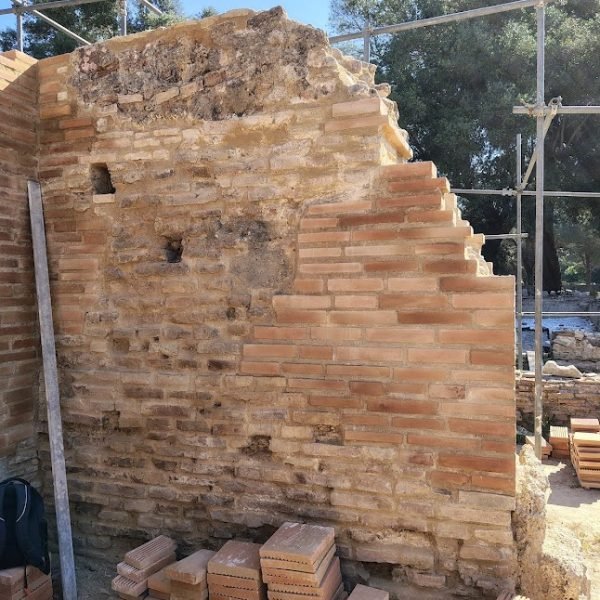
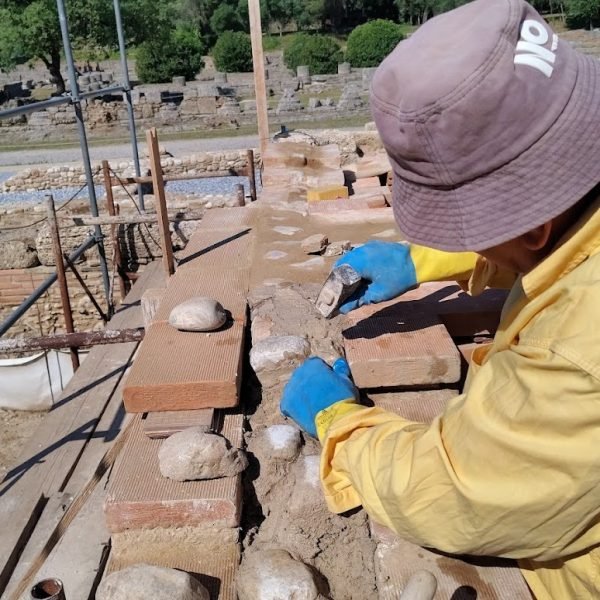
• Maintenance of Mortars and Stone Elements: It focused on cleaning from debris and plant organisms, on the consolidation of the original coatings and on the replacement of older cement interventions with compatible materials.
Particular attention was paid to the western wall of the atrium and West Tower 2, which presented dangerous deviations.
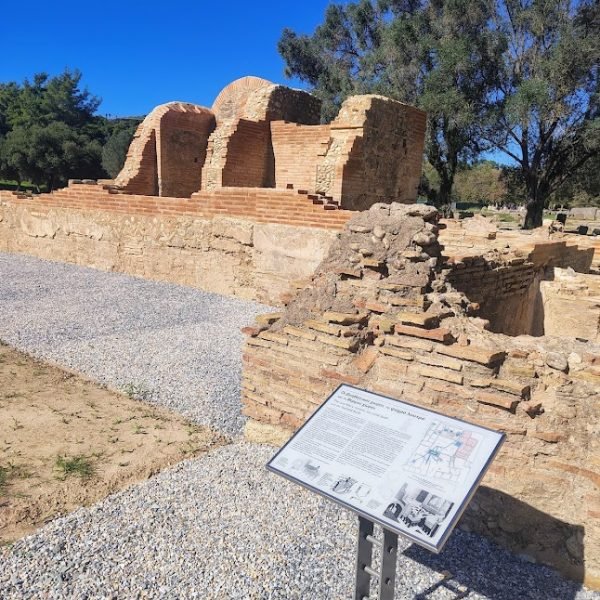
Now, the South Baths are a fully accessible site, enriched with information signs and information material, highlighting the historical continuity of the sanctuary during Roman times and late antiquity.
At the Thermae of Leonidaion (3rd century AD), the restoration project includes work related to:
The project “YPOD. 7.3.1 – Restoration, Stabilization and Conservation of the Baths of Leonidaion in Ancient Olympia” is implemented by the Ministry of Culture, with funding from the Recovery and Resilience Fund (Greece 2.0). It aims to open the monument to the public, enriching the visitor’s experience beyond classical antiquity and highlighting the Roman and Byzantine phases of the sanctuary.