The Kronios Baths
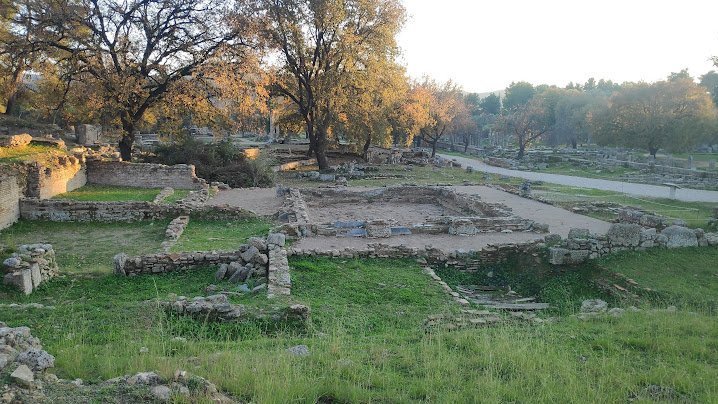
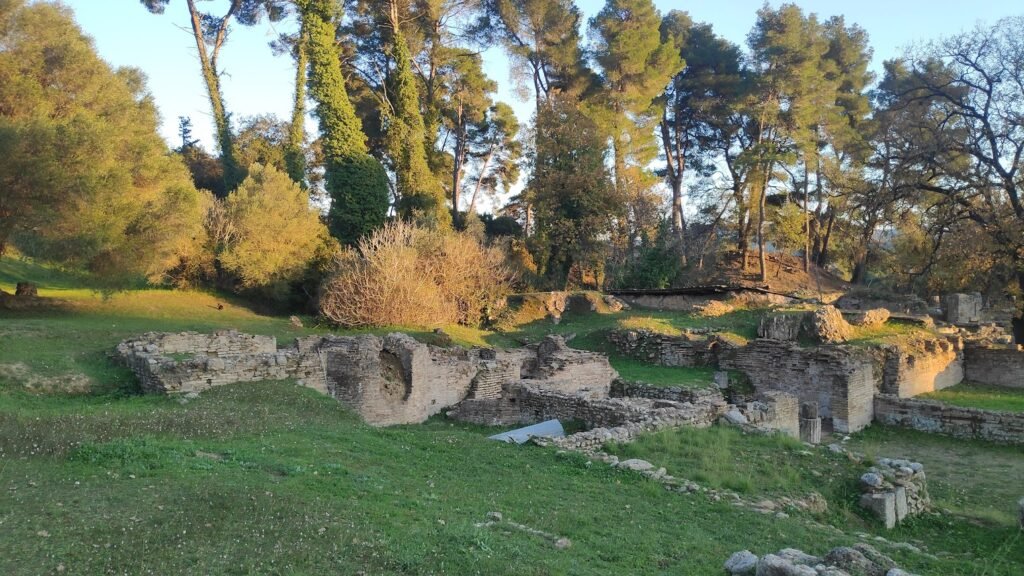
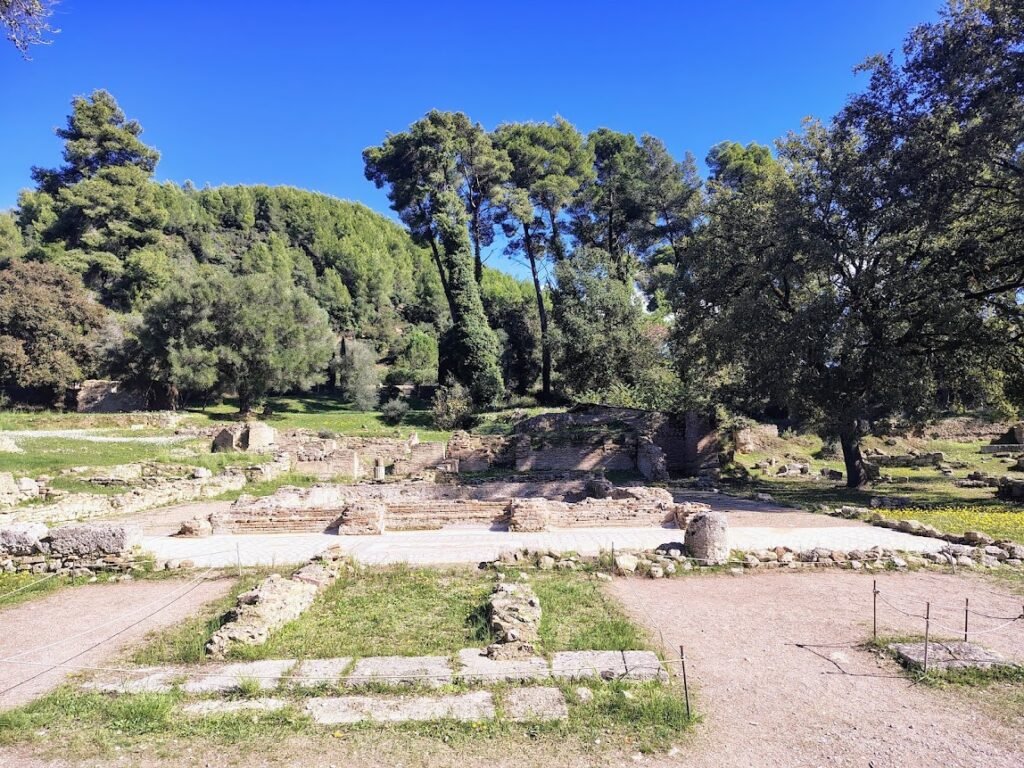
The Kronios Baths are situated in the northern sector of the archaeological site of Olympia, strategically positioned at the foot of Mount Kronios and north of the Prytaneion. Known also as the "Northern Baths," the complex was constructed during Roman times over the remains of earlier structures to serve the needs of the sanctuary's visitors. The monument's location offers a unique view towards the Altis, and its preservation allows for an understanding of thermal architecture during the Imperial period

Roman Bathing Luxury at the Foot of Mount Kronios

The dating of the Kronios Baths is a subject of scientific debate, with the most prevalent views placing their construction between the 2nd and 3rd centuries AD.

The site enjoyed an exceptionally long lifespan, remaining in active use until the 5th or 6th century AD. Throughout these centuries, the baths were not static; they underwent numerous repairs and structural additions. One notable expansion was the construction of a smaller, secondary bath suite on the northeastern side of the main building.

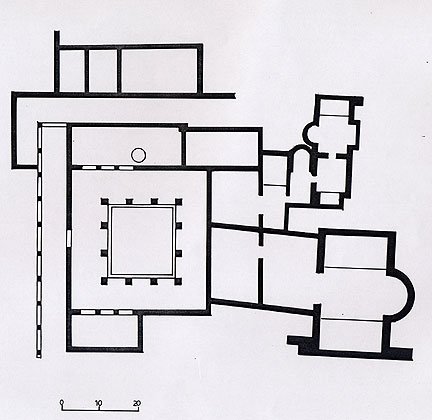
Architecturally, the Kronios Baths are defined by a large, centralized design. The complex consists of various multi-functional rooms and halls organized around a central peristyle court at the center of which was a swimming pool. 

The entrance to the complex was located on the western side, leading visitors directly into the luxurious areas decorated with mosaics.

Monumental Mosaic Decoration

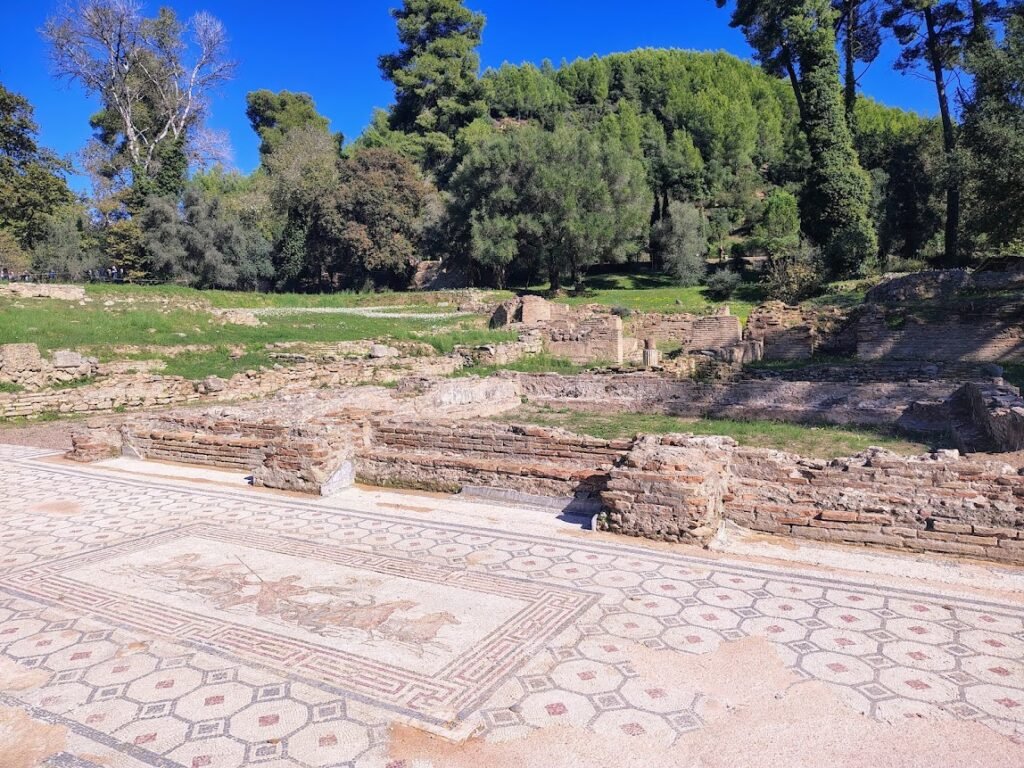
The most striking feature of the Kronios Baths is the exquisite quality of the mosaic floors, which were first uncovered as early as 1880.
 
The geometric decoration includes complex patterns of octagons and squares in blue-black and white tones, with diagonal red elements at the center of the octagons.
 
The figurative representations are highly artistic:
In the western portico, an “emblema” depicting a Triton accompanied by four Hippocamps dominates the space.
On the southern side, a scene of a Nereid riding a sea creature was identified.
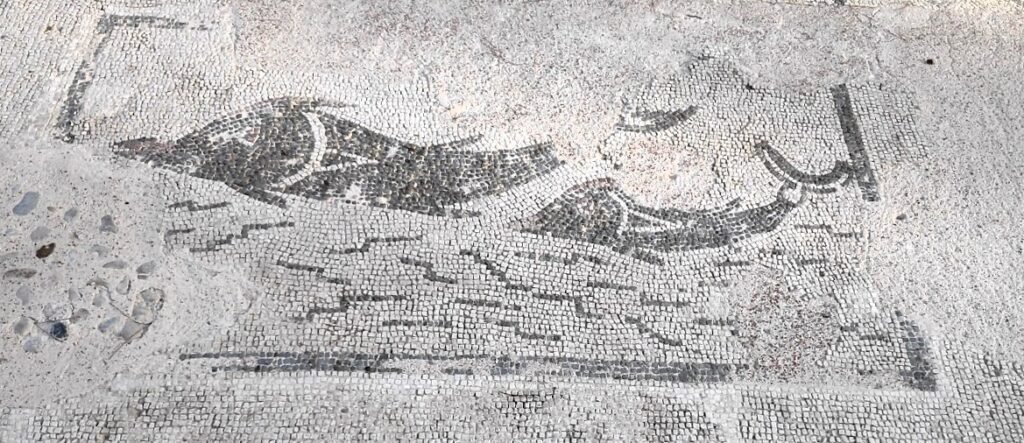
At the center of the northern wing, a later mosaic featuring two dolphins was revealed during excavations (1987–1990), which appears to have replaced an earlier damaged emblem

 

Main Features of the Kronios Baths

Historical Context and Use

The complex was constructed during the Imperial era over earlier buildings and baths from the Hellenistic period.

It remained in use until the 5th-6th century AD, undergoing various repairs and additions, such as the small bath suite on the northeast side.

During the Early Byzantine period (5th-7th c. AD), the local population repurposed the building’s existing structures into agricultural processing workshops (wine press, pottery kiln).

Architectural Design and Decoration

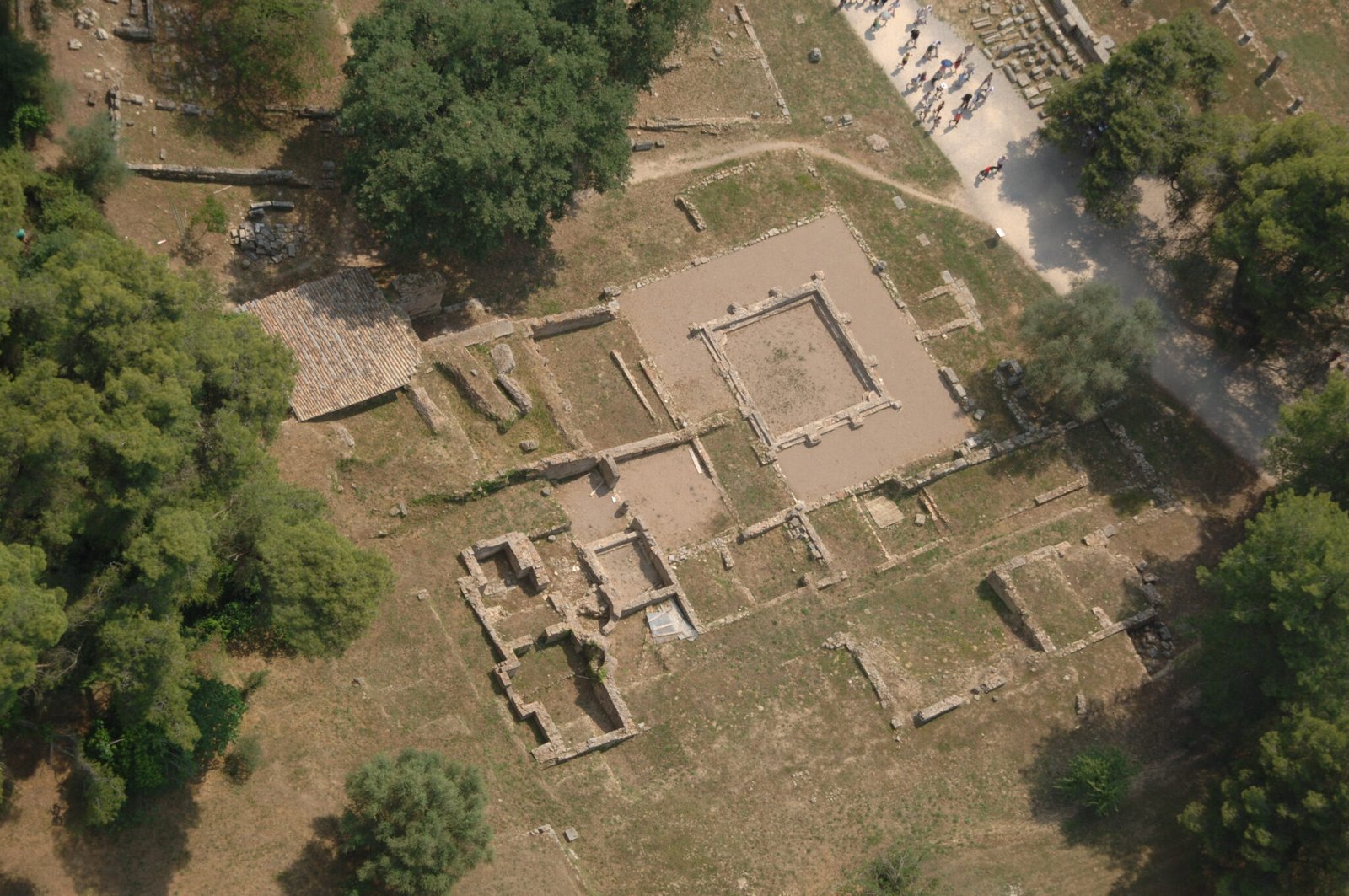
The complex consists of numerous rooms and halls arranged around a central peristyle.

The peristyle floor is decorated with impressive mosaics depicting marine scenes, including a Nereid on a sea bull and Triton.

It featured standard Roman bath areas, such as an apsidal room that originally served as a tepidarium (warm room).

Technical Features and Infrastructure

On the north side, three cisterns were identified, likely used for the cleaning and preparation of clay.

In the eastern section, a wine press (lenos) was installed for wine production during the site’s later phases.

Excavations yielded many vessels and potsherds, documenting the operation of the pottery workshop on-site.

Excavation and Conservation

The building was first uncovered in 1880, while full systematic research was completed between 1987 and 1991.

In 2003, extensive conservation work was carried out on all the floor mosaics.

The mosaics were reinstated to their original positions in the peristyle, preserving the monument’s historical integrity for visitors.

Historical Continuity and Transformation

Following the prohibition of the Olympic Games in 393 AD, the Kronios Baths remained remarkably well-preserved and were subsequently integrated into the emerging Christian settlement.
 
During the Early Byzantine period (5th-7th c. AD), the local population repurposed the building’s existing structures and hydraulic facilities, for the processing of agricultural goods, ensuring continuous use of the site until the catastrophic floods and landslides of the 7th century AD.
 
The Roman peristyle was modified to house a lenos (wine press) for wine production, while other halls were converted into a pottery workshop.
 
This transition highlights the shift from the cosmopolitan Roman era to the more pragmatic, utilitarian needs of the late antique period.

Technical Infrastructure and Workshops

Technical discoveries at the site provide a glimpse into these later industrial activities. In the northern section, archaeologists identified three cisterns that were likely used for the cleaning and preparation of clay for the pottery workshop.

In an interesting reuse of space, an original tepidarium (warm room) with an apsidal design was converted into a ceramic kiln.

These modifications demonstrate how the sophisticated heating and water systems of the Roman baths were adapted for industrial manufacturing.

Modern Discovery and Systematic Research

The rediscovery of the Kronios Baths began during the first German excavations in 1880. However, the monument was not fully revealed until much later. Systematic and comprehensive research took place between 1987 and 1991, which brought almost the entire complex to light.


Further supplementary research in 2003 focused on the earliest phases of the monument, allowing archaeologists to create a complete timeline of the site’s development from the Hellenistic period to its final abandonment.


Maintenance and Conservation Works

A major milestone in the preservation of the Kronios Baths occurred during the 2003 conservation program. The primary focus was the stabilization and cleaning of the extensive mosaic floors, which had suffered from environmental exposure.

After careful treatment, the mosaics were reinstated to their original positions on the floor of the peristyle. These maintenance efforts ensure that the intricate marine artistry remains visible to the public while protecting the structural integrity of the ancient foundations.