Identity and Historical Context
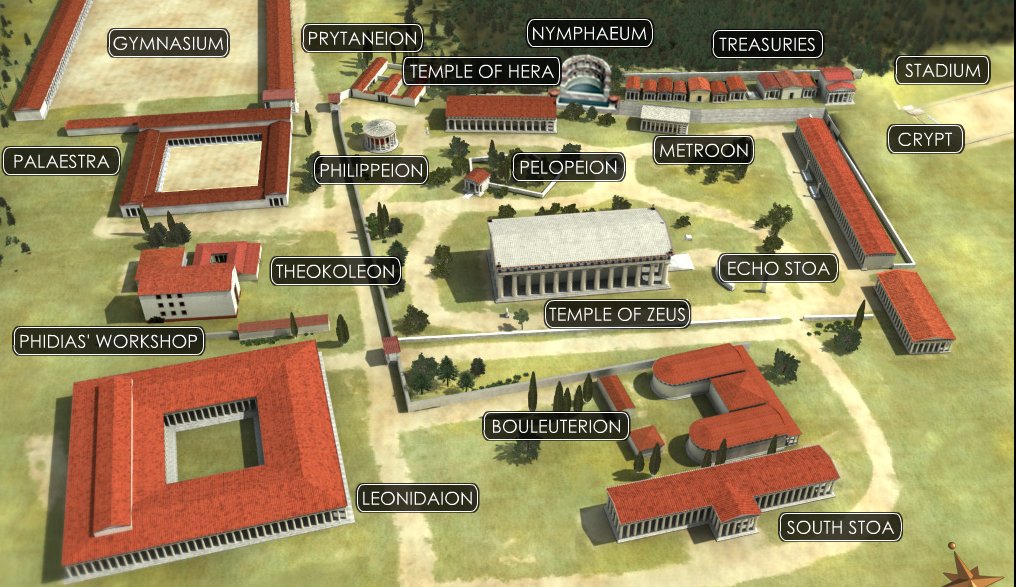
The South Hall functioned primarily as the southern limit of the sanctuary of Olympia and its main entrance from the south.
It was constructed around c. 360–350 BC, making it contemporaneous with the Echo Hall.
The structure remained in use for many centuries.
In the Late Antique period (5th–6th century A.D.), the Hall formed the southern border of the area enclosed by the Late Antique Wall (Spolienmauer).
The building marks an extension of major construction activity outside the Altis during the 4th century B.C.
Architectural Design and Materials
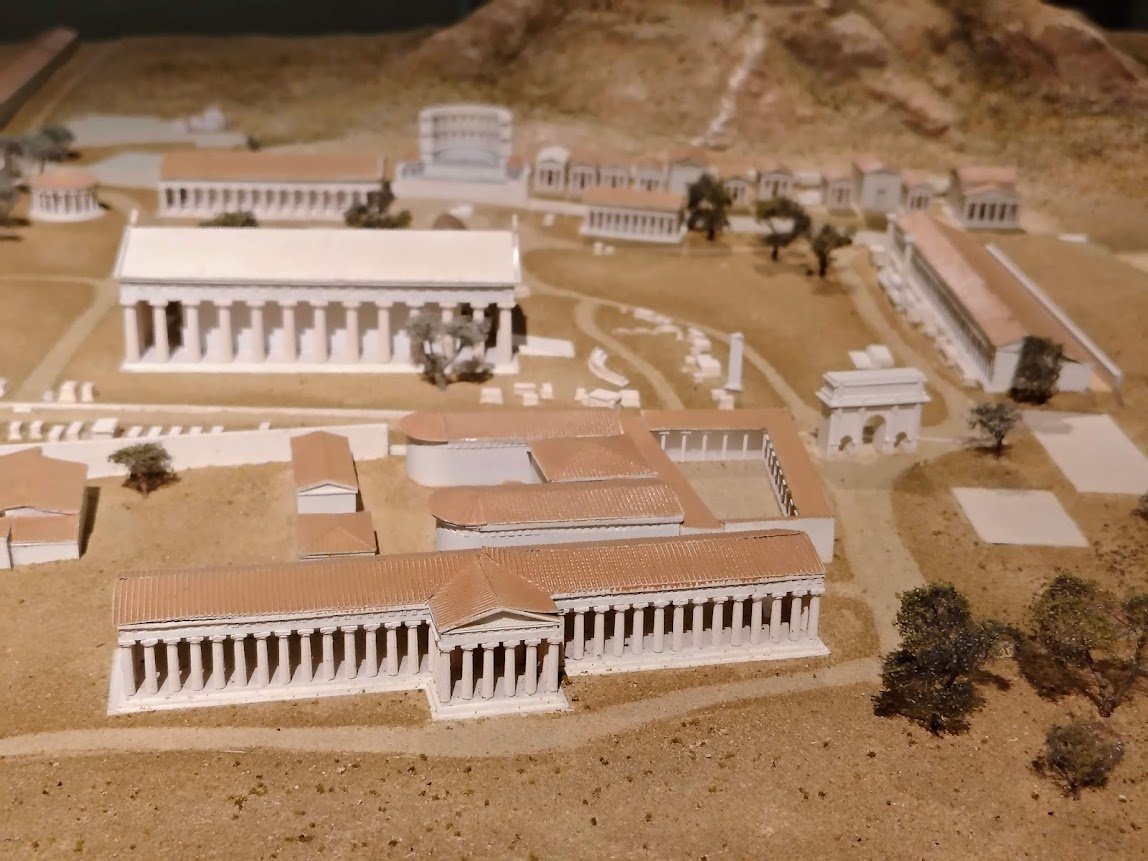
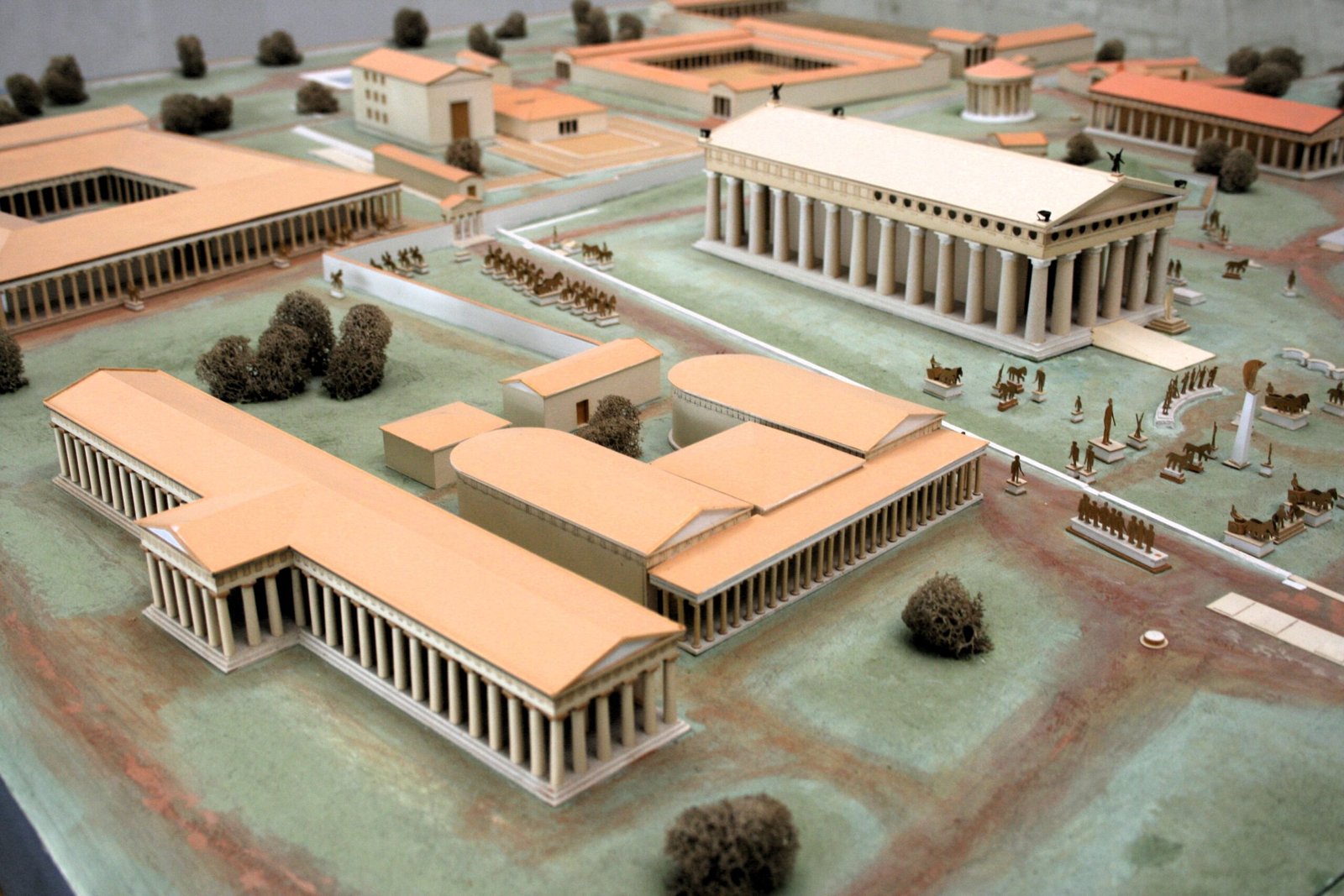
The Hall was substantial in size, measuring eighty meters long and thirteen and a half meters wide (80 m x 13.5 m).
It was constructed of shell-limestone and erected upon a marble platform.
The structure featured a Doric order exterior and a Corinthian interior, a common architectural combination of the era.
The exterior façade, facing the Alpheios river, included 34 Doric columns along the front and six on each side.
A prominent feature was a protruding portico (seven meters wide) located in the middle of the façade.
The interior space was divided longitudinally by a row of seventeen Corinthian columns.
Location and Function within the Sanctuary
The Hall was situated outside the Altis enclosure, immediately south of the Bouleuterion.
Its orientation facing south was directed toward the Alpheios river and the presumed location of the Agora (market place).
The area beneath and immediately south of the Hall had historically been used extensively as a commercial market area.
Archaeological investigations uncovered six terracotta kilns and ample 5th-century B.C. pottery (Attic, Corinthian, and local) in this vicinity prior to the Hall’s construction.
The protruding southern portico suggested a role as a central point of reception and/or commerce.
The area near the South Hall and Bouleuterion was a prominent location for the storage and use of official dry measures and bronze weights used for commercial transactions at the festival.
Excavation Status and Later Modifications
The South Hall was renovated during the Roman period, with at least one major refurbishment attributed to the Augustan era.
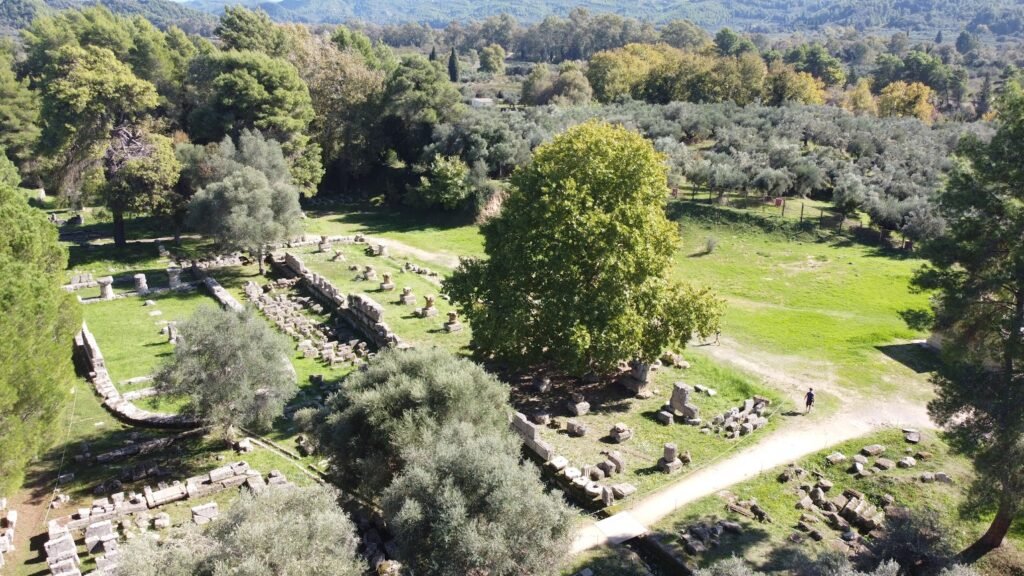
Only the foundations and the lower part of its walls are visible in situ today.
The Hall was only partially investigated during early excavations, leaving its west side unexcavated for some time.
Recent cleaning efforts fully revealed the entirety of the building’s ground plan.
Evidence such as a peculiar structure made of stacked roof tiles found beneath the Hall suggests the location was used for temporary merchant booths prior to or immediately after its construction.

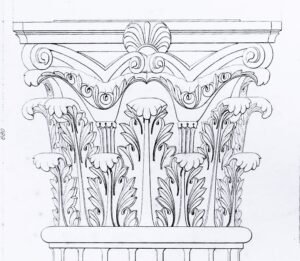 The South Hall was designed to support multiple functions. Its interior was longitudinally divided by a row of seventeen (17) Corinthian columns.