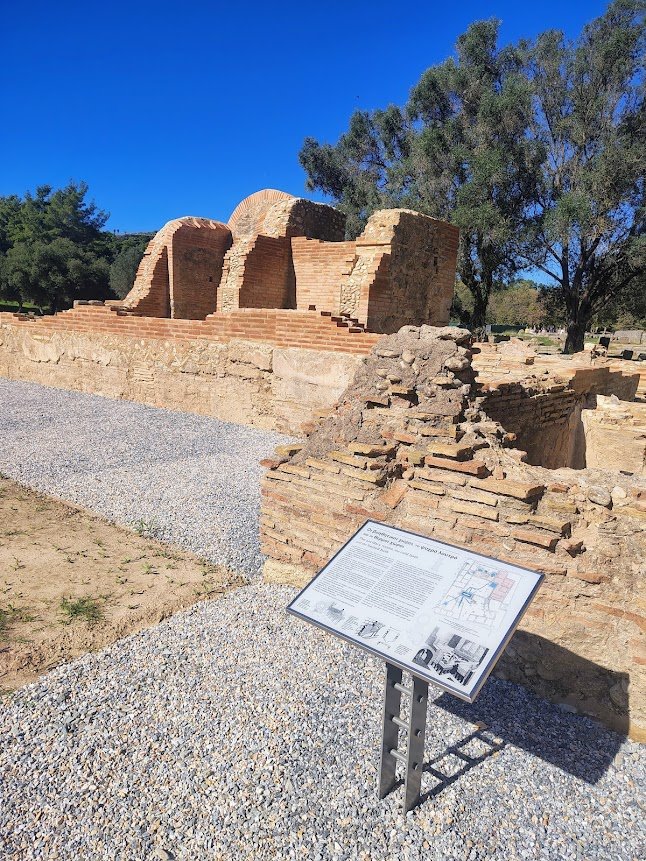
The South thermae
The Southern Baths are an important Roman bath complex located in the southern part of the archaeological site of Olympia, a short distance from the Temple of Zeus and west of the Bouleuterion.

Historical Development and Structure

The complex of South Thermae covers an area of ​​approximately 1.55 acres.

The choice of the location of the building is considered to have resulted from the diachronic evolution of the sanctuary, with the aim of serving the increasing needs of visitors during the imperial period.

Its current form is the result of successive building phases extending from the 1st century AD to the 4th/5th century AD.

The complex reached its full development at the end of the 3rd century AD, constituting one of the most important recreational areas in the region.

The different areas of the Baths

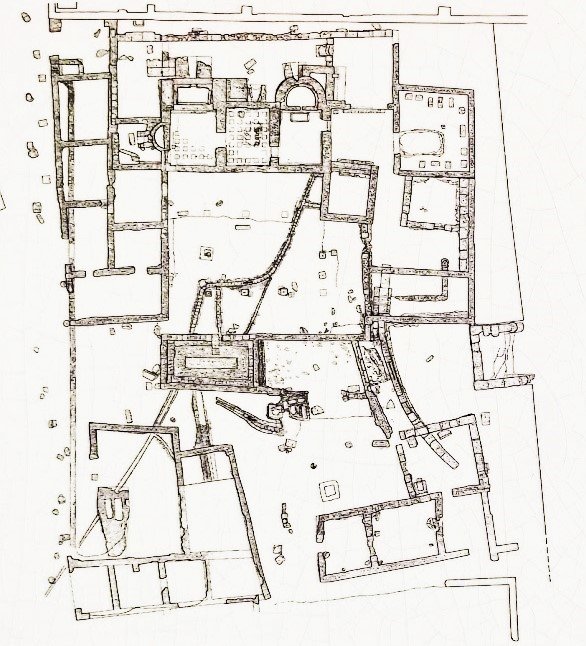
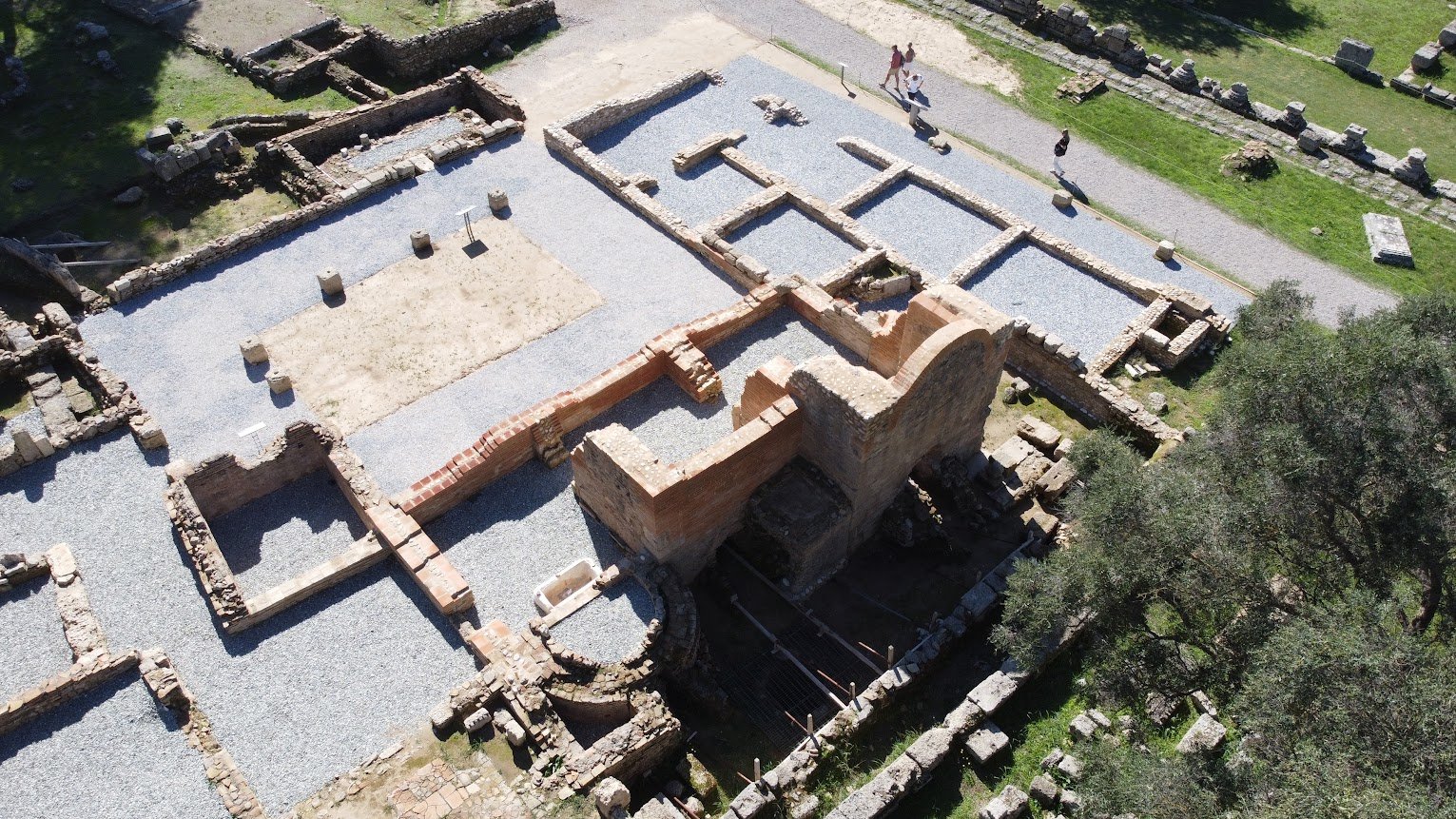
The layout of the rooms followed the classical Roman tradition. On the north side, arranged from east to west, were the hot rooms;

  • Tepidarium: Warm chamber

  • Sudatorium / Laconicum: Sweating area (sauna)

  • Caldarium: The hot tub area

On the eastern side was the Frigidarium (cold bath), as well as the antechambers and auxiliary spaces, such as the changing room and the oil room, where bathers anointed their bodies with oil.

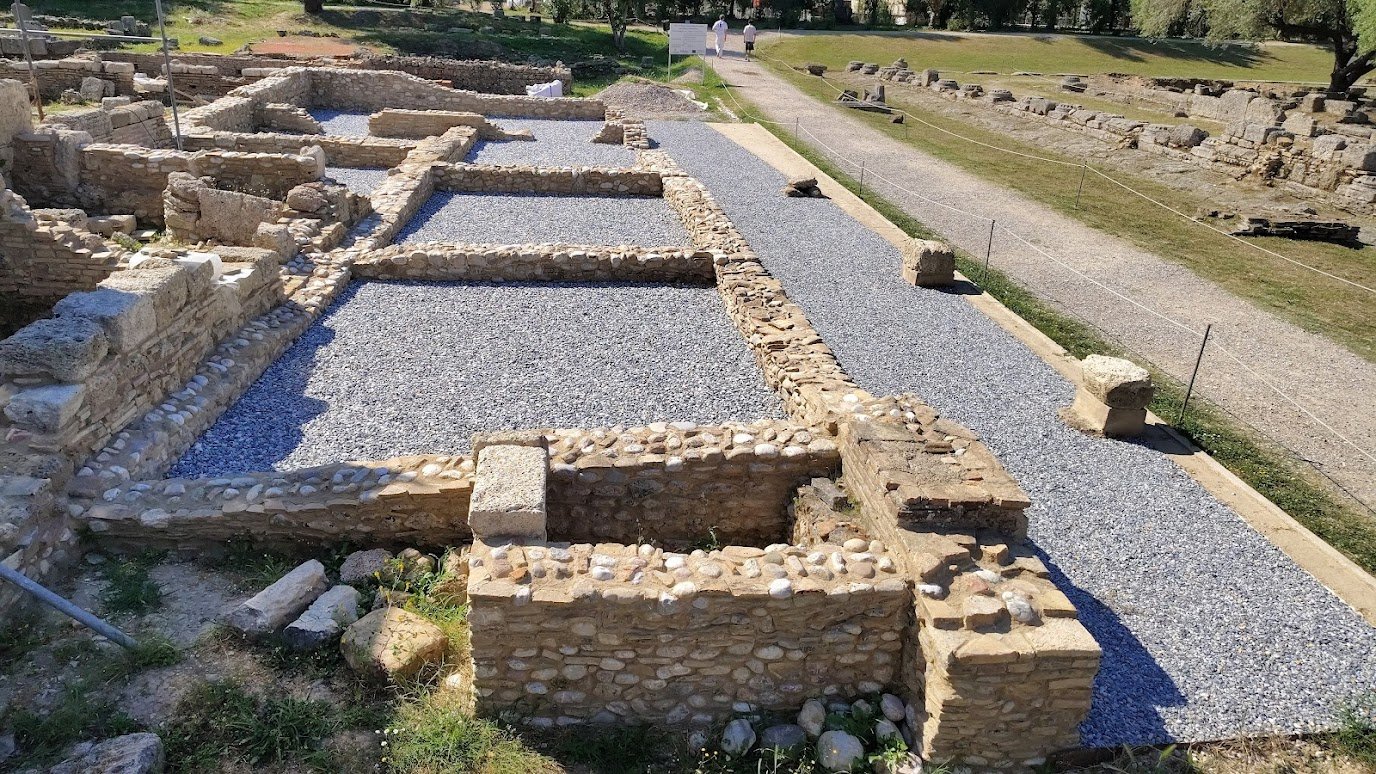
The atrium that has been uncovered in the center of the complex, measuring 9.30 X 6.35 m, probably also functioned as a palaestra, following the model of the large, imperial baths of Rome. In the rectangular space immediately south of the atrium, there were toilets (Vespasian).

Outside the northern and eastern walls, hearths (prefurnia) had been opened to heat water for the various needs of the bath.

On the western side, the rectangular or square spaces probably functioned as shops (tavernae) for the purchase of food. The entrance to the baths is likely to have been located on the western side of the complex, immediately south of the shops.

Technology and Space Heating

The heating of the hot rooms was an achievement of the engineering of the time.

The hypocaust system was used, where the hot air circulated freely under the floor, but also through clay tubes (tubuli) or square clay slabs with spacers (tegulae mammatae).

  • Hearths (praefurnia): They were located outside the hot rooms for the firing of the system.
  • Floors: The floors of the three hot rooms were paved with marble.
  • Evolution of the Baths: In the Caldarium there was initially a small niche-bath that was later replaced by a larger rectangular one. In the Tepidarium, a portable marble bath replaced the original semicircular tank.
Main Features of the South Baths in Olympia
Historical Context and Purpose

The South Baths are one of the most impressive examples of Roman architecture within the sacred site of Olympia.

The complex covers an area of approximately 1,550 m².

Construction began in the 1st century A.D. and was completed through successive phases until the 4th/5th century A.D..

The monument reached its full development towards the end of the 3rd century A.D..

They served as a place for hygiene, recreation, and social gathering for the sanctuary’s visitors.

The entrance for bathers was located on the west side, in the same position as it remains today.

Architectural Design and Materials

The complex follows the classic Roman bath layout with heated and cold areas.

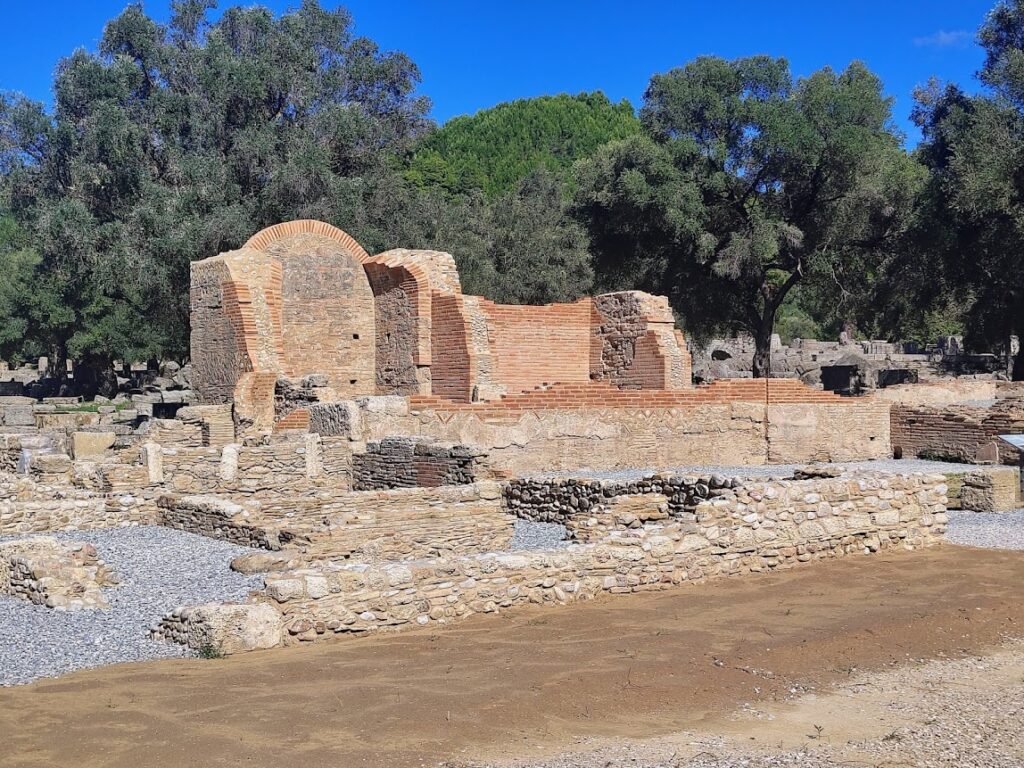
Located on the north side were the heated chambers: the Tepidarium (lukewarm), the Sudatorium/Laconicum (sweating room), and the Caldarium (hot bath).

The east wing housed the Frigidarium (cold bath), the dressing room, and the anointing room.

The floors of the heated spaces were paved with marble for added luxury.

In the center, there was an atrium (courtyard), surrounded by a roofed corridor to protect users from the weather.

On the west side, along the processional road, there were square shops for purchasing foodstuffs and sweets.

Technical Features (Heating & Water Systems)

The advanced hypocaust system was used for heating (channeling hot air beneath the floors).

Hot air also circulated within the walls via clay tubes (tubuli) or special tiles with bosses (tegulae mammatae).

External furnaces (praefurnia) provided the necessary heat for the system.

South of the atrium was the Vespasian toilet (latrine), a long rectangular space with a perimeter duct.

The Vespasian toilet was cleaned by a continuous flow of water channeled from the cold plunge via clay pipes.

Current Condition and Findings

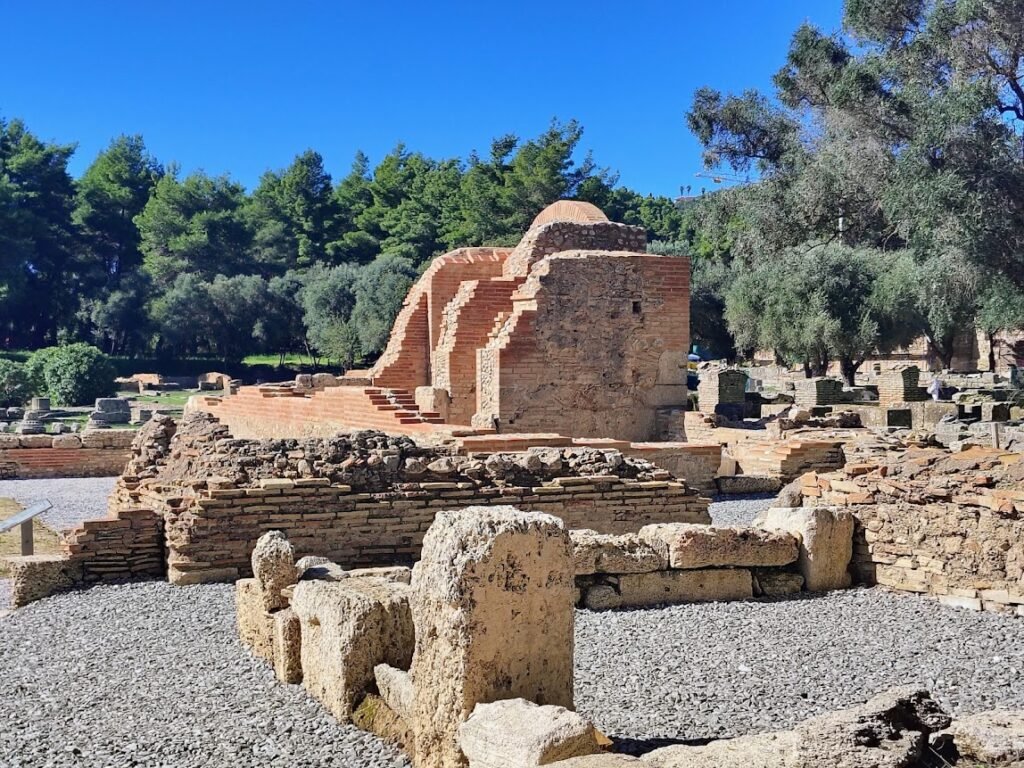
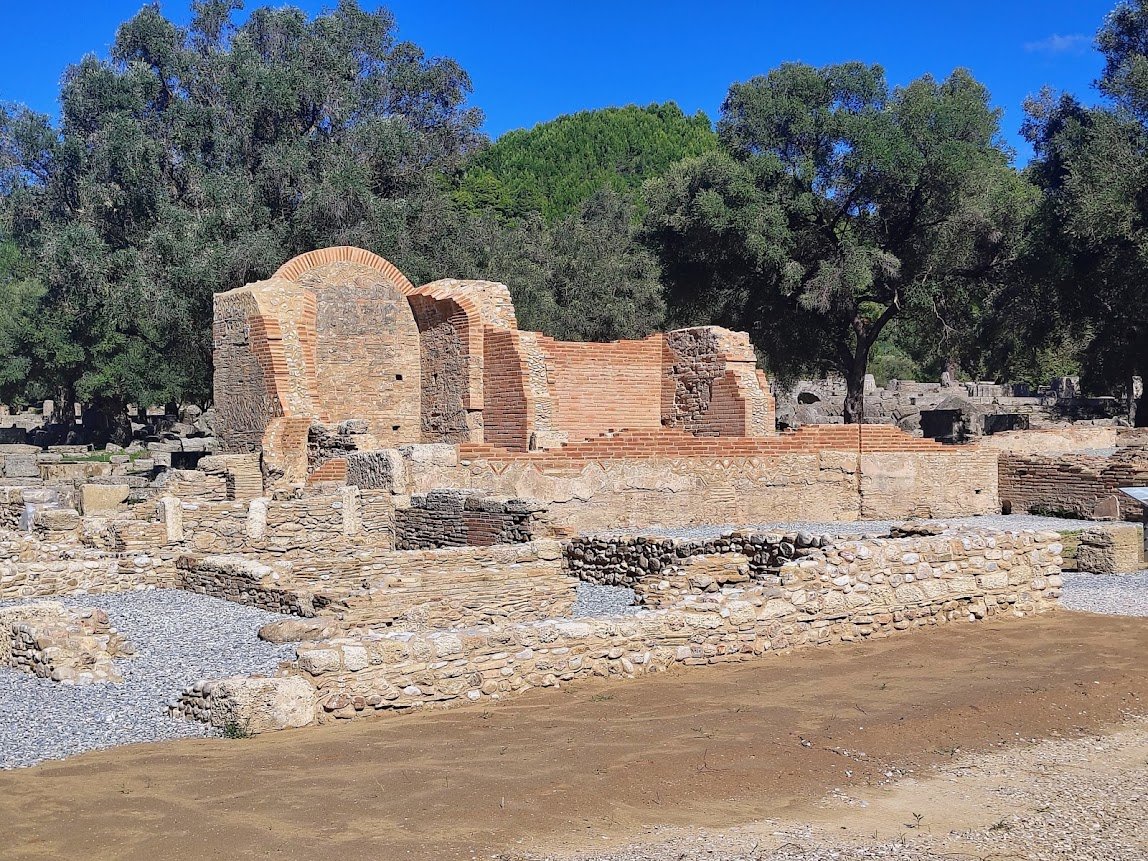
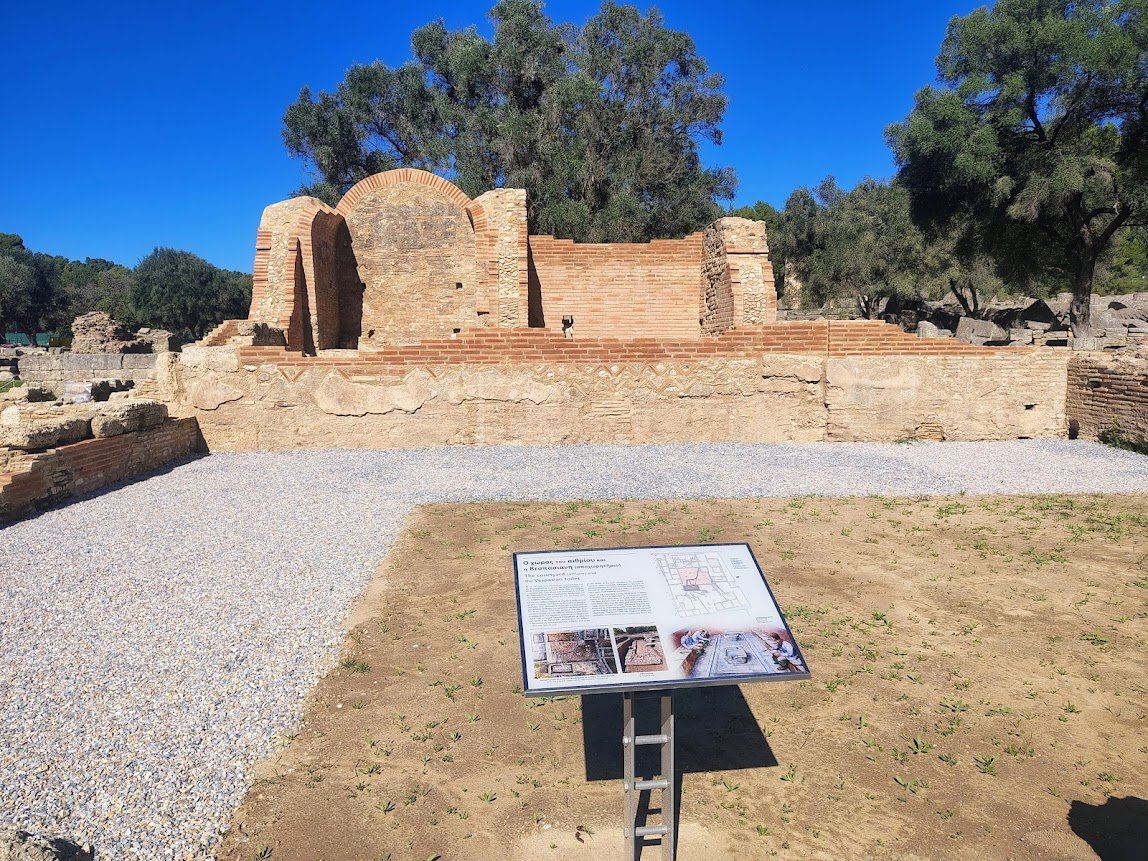
The site preserves the foundations and parts of the superstructure of the walls and vaults.

The clay infrastructure of the heating system and the water conduits are still visible.

The current appearance of the monument allows visitors to fully understand the functional path of a bather in antiquity.

Restoration and Enhancement Works

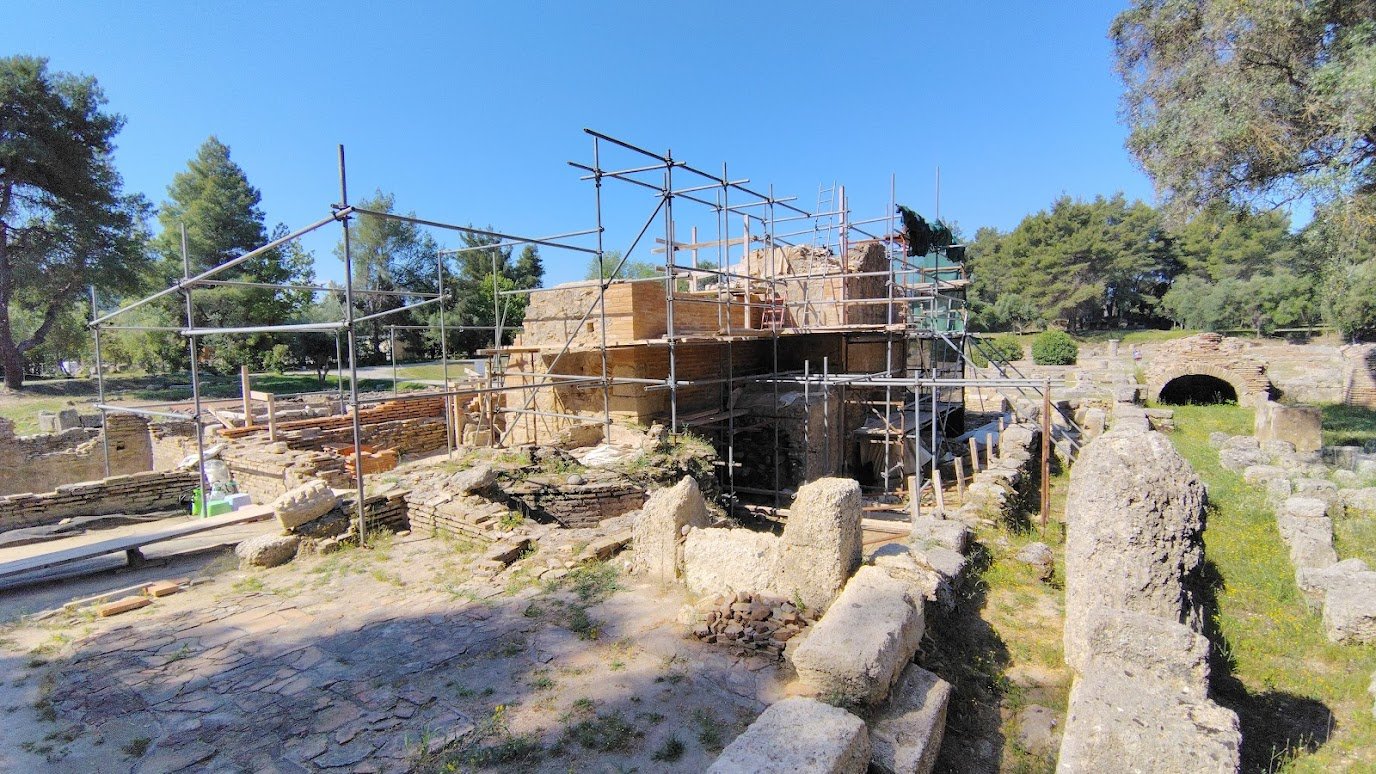
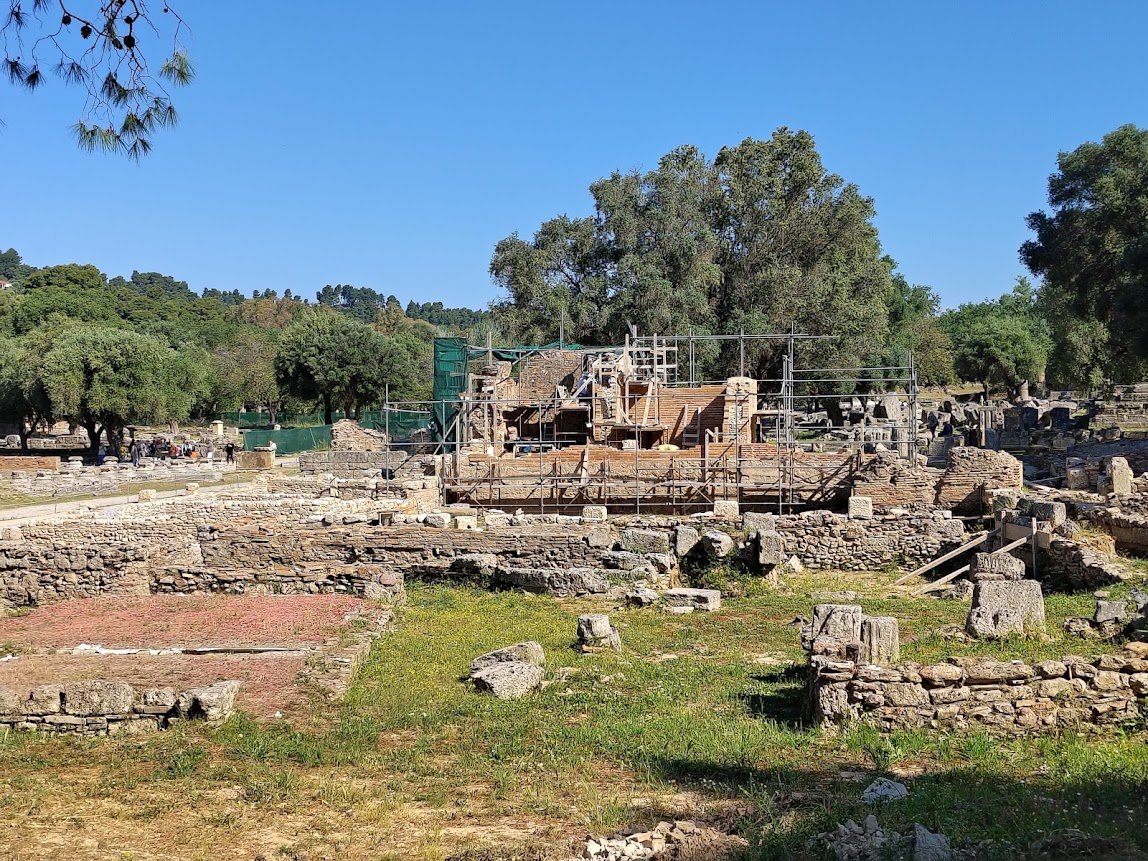
As part of a strategic plan prepared in 2020 for the protection of the Roman monuments of Olympia, the South Baths were included in a restoration program with a total budget of 615,000 euros, financed by the Recovery and Resilience Fund (Greece 2.0).
 
The project was implemented by the Ephorate of Antiquities of Ilia and aimed to make the monument accessible to the public and to extend the time visitors spend in the area.


The restoration work, which was completed at the end of 2025, included two main sub-projects:

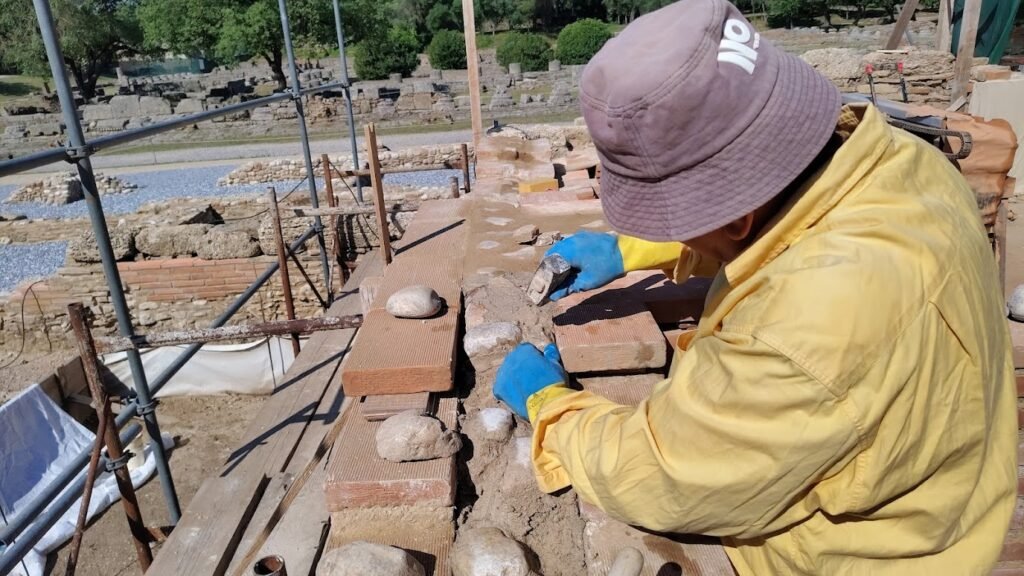
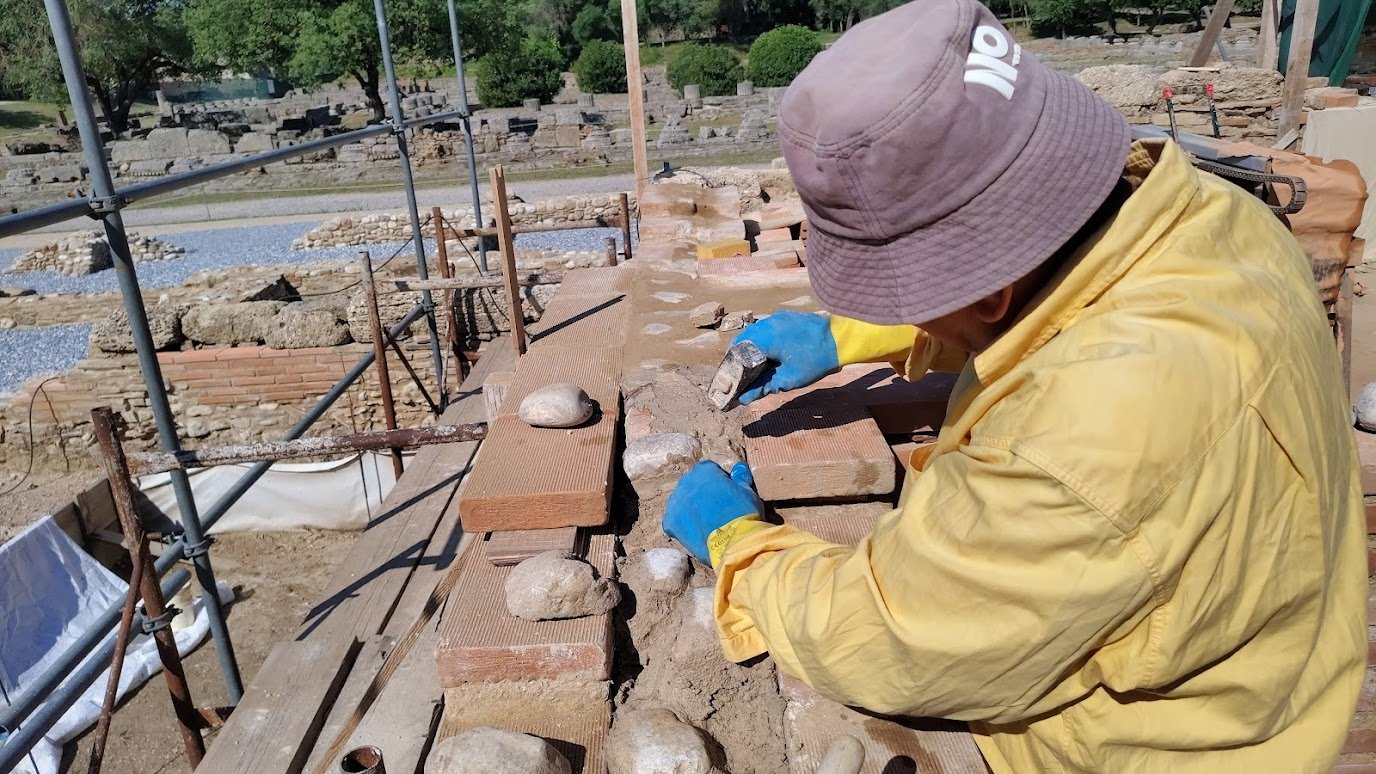
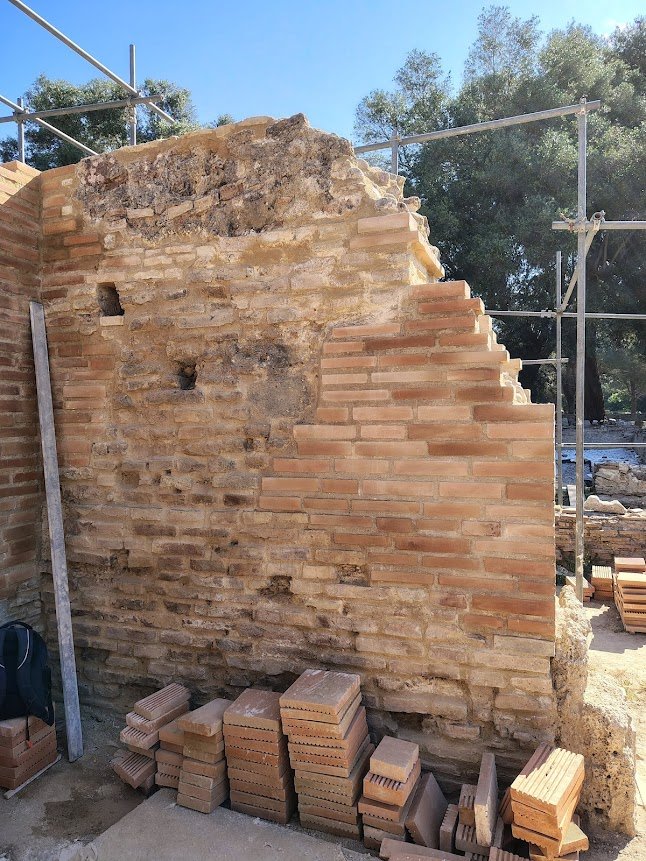
Restoration and Enhancement: It included excavation cleaning, structural reinforcement of the existing walls (mainly the hot bath/caldarium), foundation reinforcement and the repositioning of displaced architectural members. At the same time, backfilling was carried out to create a tour route accessible to people with disabilities.

Maintenance of Mortars and Stone Elements: It focused on cleaning from debris and plant organisms, on the consolidation of the original coatings and on the replacement of older cement interventions with compatible materials.

Particular attention was paid to the western wall of the atrium and West Tower 2, which presented dangerous deviations.

Now, the South Baths are a fully accessible site, enriched with information signs and information material, highlighting the historical continuity of the sanctuary during Roman times and late antiquity.