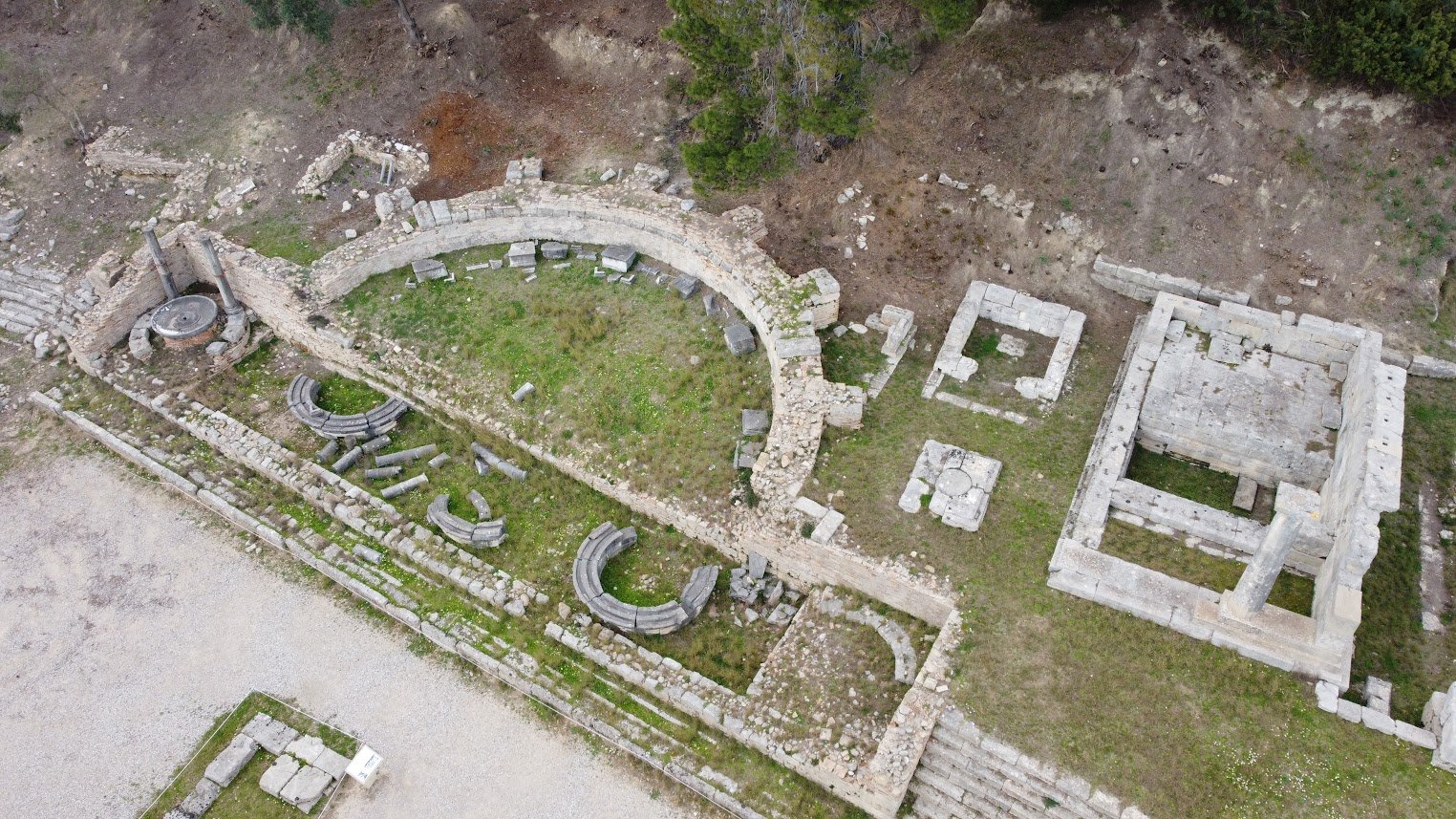
The Nymphaion, donated by Herodes Atticus around 160 AD, was a spectacular monumental fountain
that solved Olympia's chronic water supply problems while creating impressive architectural display. The
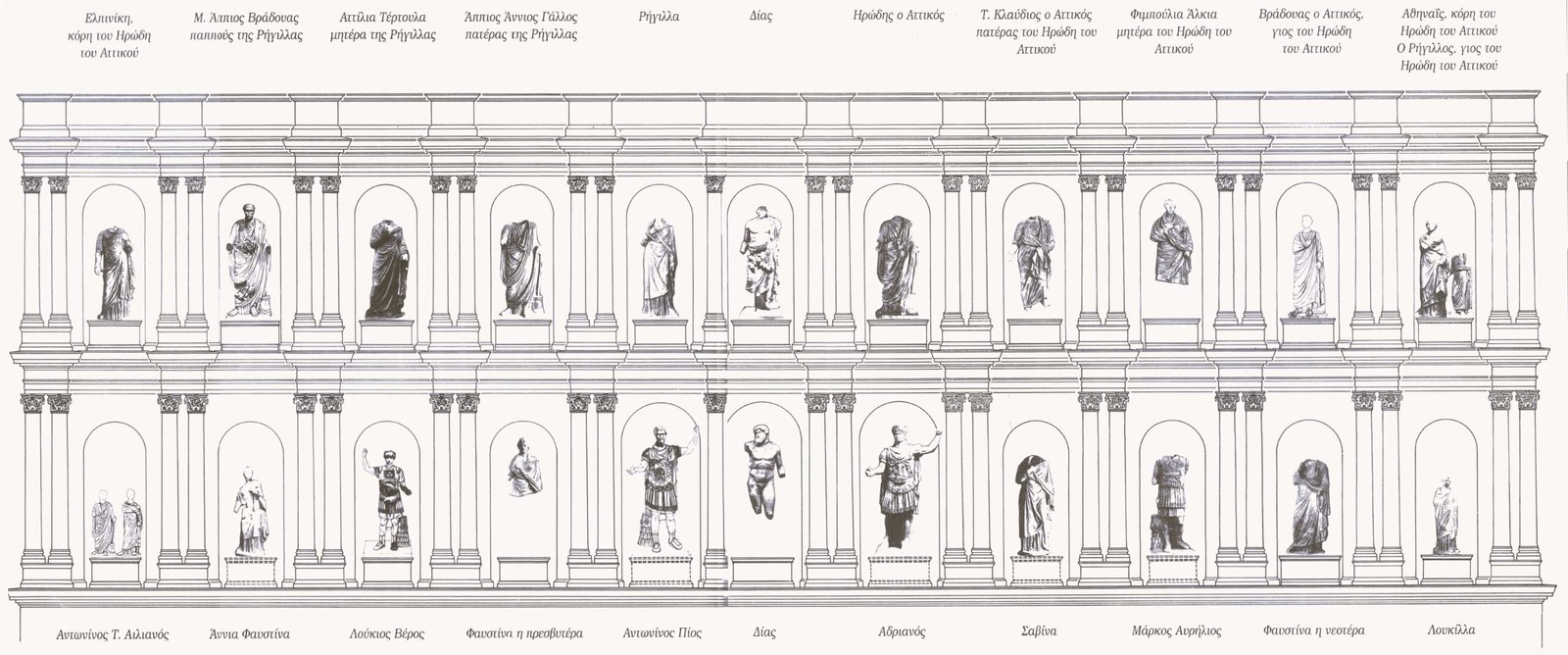
two-story semicircular structure featured niches with marble statues of the donor's family and Roman
emperors alternating with water basins and fountains.
The Grand Benefaction: A Roman Solution for Olympia
The primary function of the Nymphaion was practical. For centuries, Olympia had struggled with limited local water sources, a difficulty magnified dramatically during the Olympic Games when thousands of visitors converged on the sanctuary.
Herodes Atticus funded an intricate hydraulic system, including aqueducts, to bring a much-needed supply of pure drinking water from distant springs east of the sanctuary.
The Nymphaion itself was the glorious terminus of this system, ensuring that reliable water was finally distributed through a dense network of pipes to the entire sacred precinct. This transformation of a utilitarian necessity into a monumental act of patronage was characteristic of the Roman era.
Architectural Spectacle
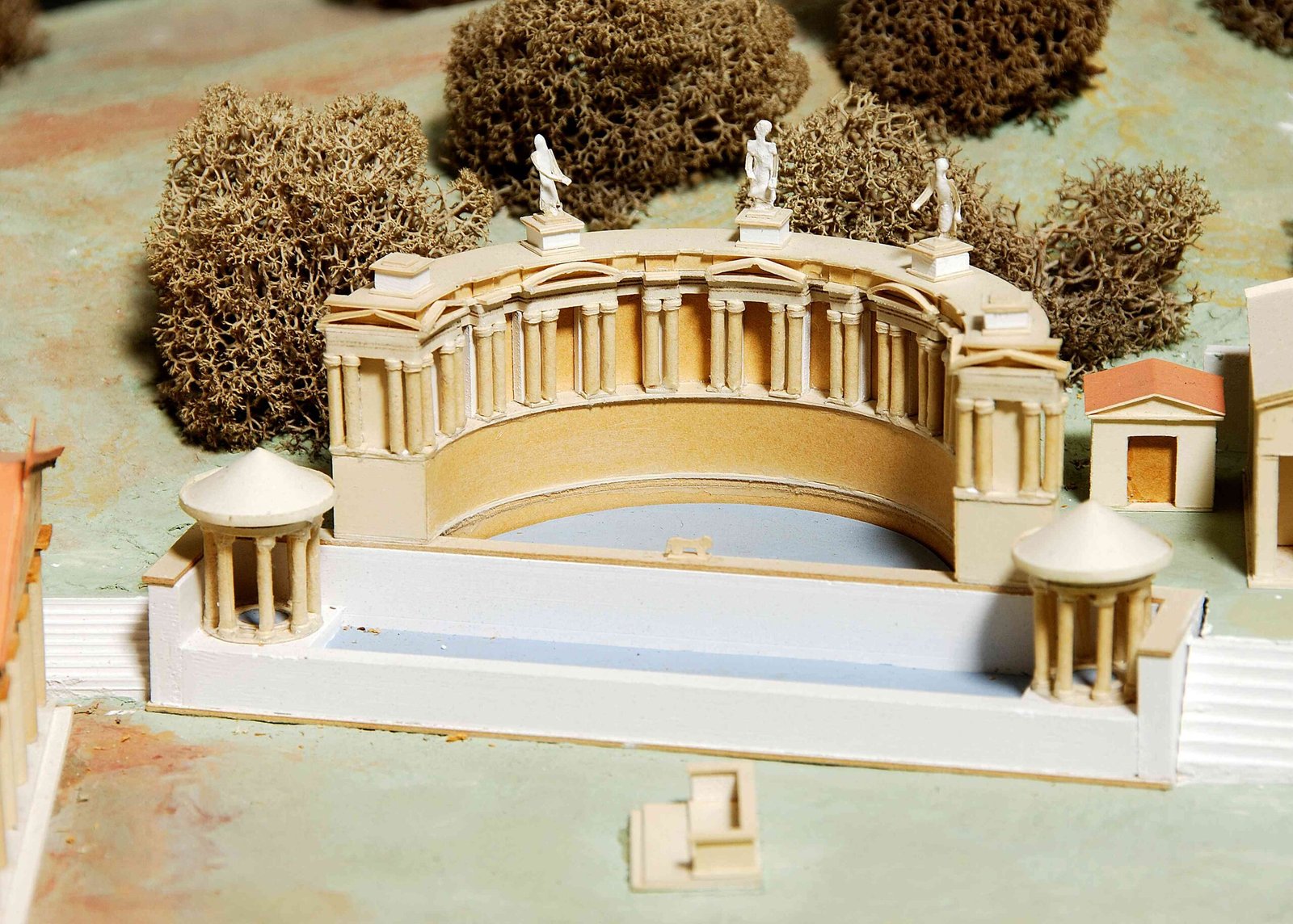
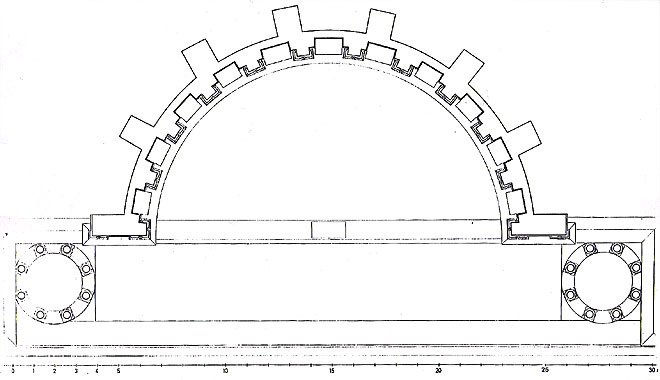
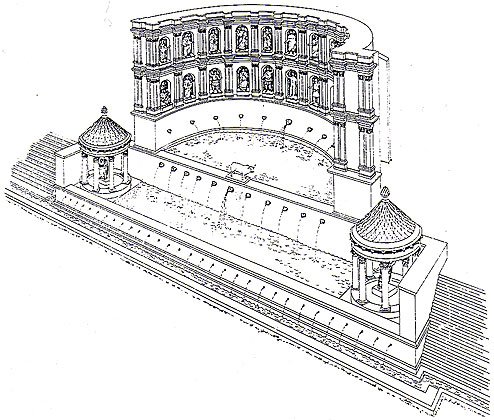
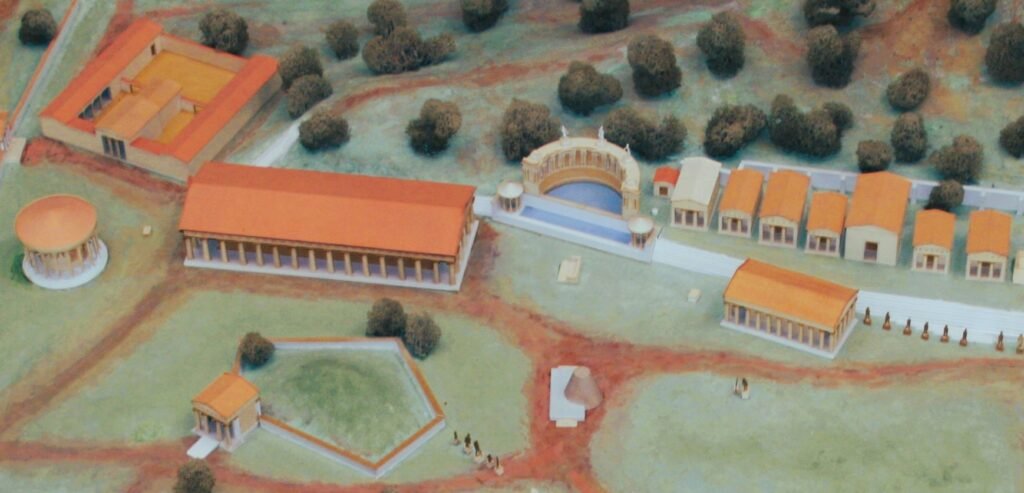
The structure’s architectural design was breathtaking in its ambition and execution. The Nymphaion featured a massive semicircular facade—an apse measuring 16.62 meters in diameter—rising in two stories and capped by a half-cupola.
The apse was originally constructed of brick and adorned with a lavish polychrome marble revetment, though little of this luxurious cladding survives today. The water flowed through the complex in a carefully orchestrated display, cascading from an upper semicircular basin into a larger, oblong tank below (21.90 meters long).
This arrangement transformed the simple act of drawing water into an architectural spectacle, blending visual spectacle with functional infrastructure.
Key Features of the Nymphaion of Olympia
Primary Function: Solved the sanctuary’s chronic water supply problems by serving as the terminal point for an extensive new aqueduct system (c. 160 AD).
Architectural Form: A monumental, two-story semicircular facade (an apse) measuring 16.62 meters in diameter.
Location: Situated prominently within the Altis, between the Temple of Hera and the treasury terrace.
Construction Material: Originally of brick, richly adorned with polychrome marble revetment.
Water Display: Featured multiple tiers of basins and fountains where water cascaded from an upper semicircular tank into a lower, larger oblong tank (21.90 m long).
Donor: Commissioned and financed by Herodes Atticus, a wealthy Roman Senator of Greek origin and a figure of the Second Sophistic.
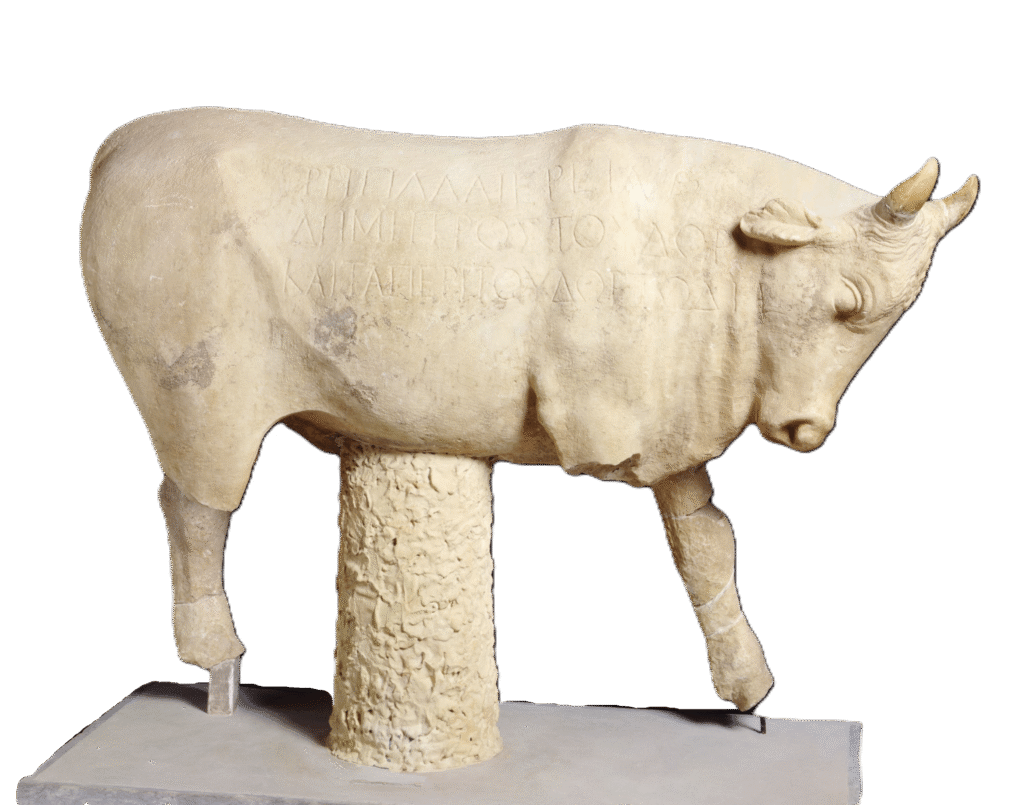
Inscribed Dedication: A statue of a marble bull in the main tank bore an inscription dedicating the monument to Zeus in the name of Herodes’s wife, Regilla.
Sculptural Program (Statues):
Two tiers of eleven niches each.
Upper tier displayed the family of Herodes Atticus.
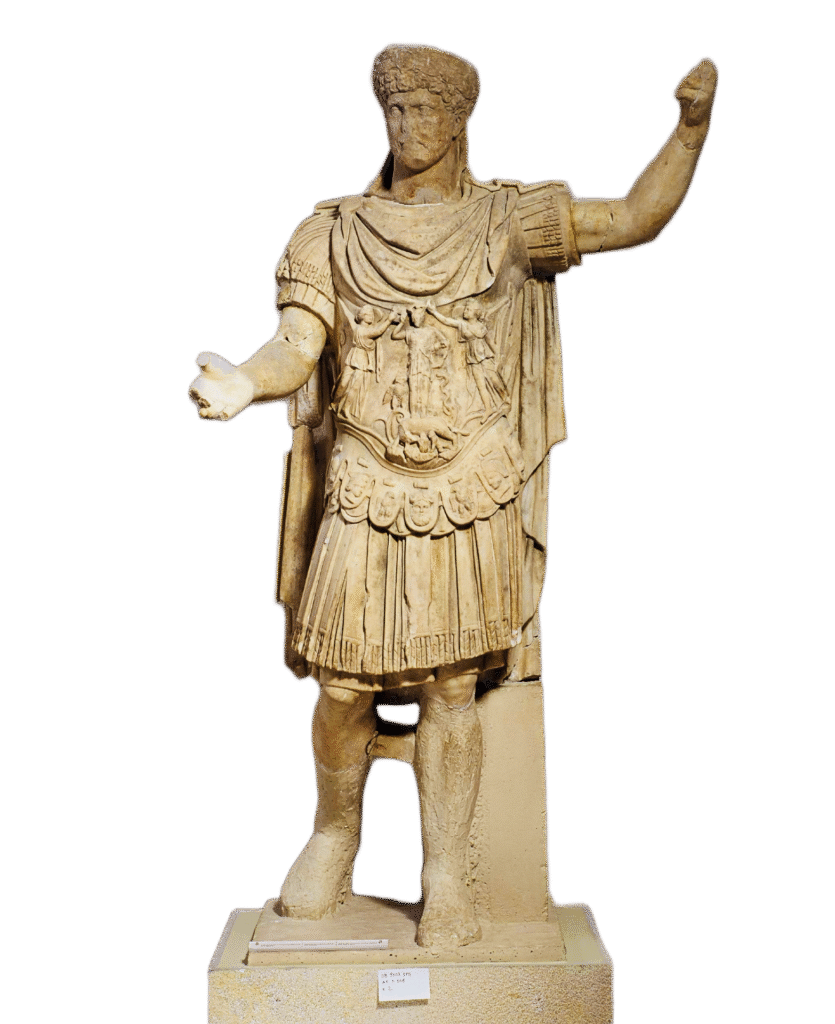
Lower tier displayed the family of the Roman Emperor Antoninus Pius.
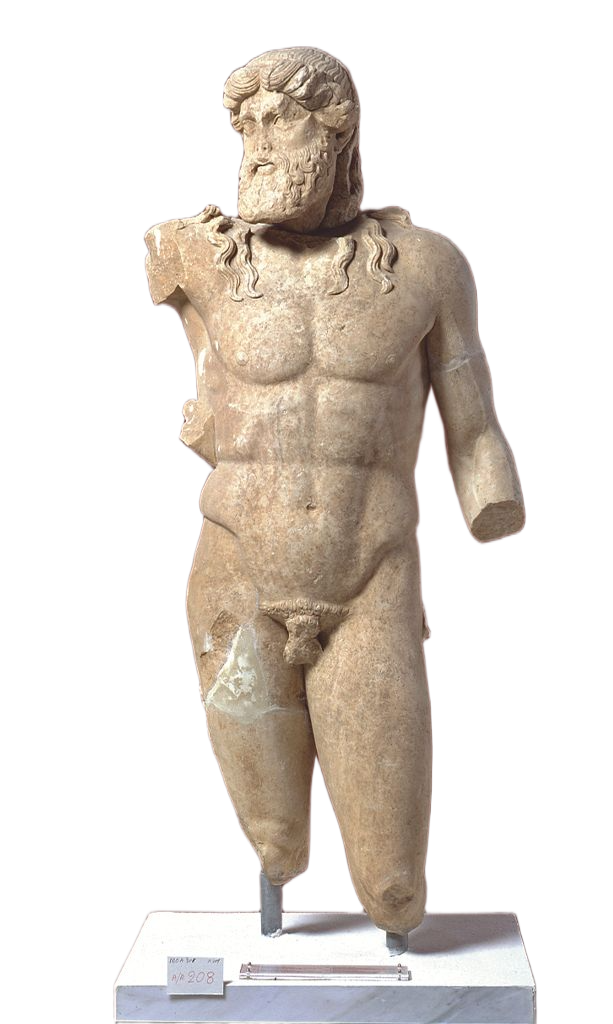
The central niche of each tier contained a statue of Zeus.
Statues were also housed in small circular Corinthian temples at either end of the lower tank (e.g., Herodes Atticus, Marcus Aurelius).
Significance: Exemplifies the transformation of Greek sanctuaries by Roman benefactions, combining practical engineering with political propaganda and spectacular architectural display.
The Donor: Herodes Atticus and the Second Sophistic
The benefactor, Herodes Atticus, was one of the wealthiest and most cultured individuals of his era. A Roman senator of Greek origin, he was a renowned orator, intellectual, and teacher who embodied the cultural revival of the 2nd century AD, known as the Second Sophistic.
His donation to Olympia was driven by both personal piety and the competitive culture of aristocratic display prevalent among Roman elite and Hellenized Greeks.
The large marble bull that once stood in the center of the main tank, bearing an inscription that recorded Herodes’s dedication of the reservoir and its statues to Zeus in the name of his wife, Regilla, who was a priestess of Demeter Chamyne.
A Gallery of Power: The Sculptural Program
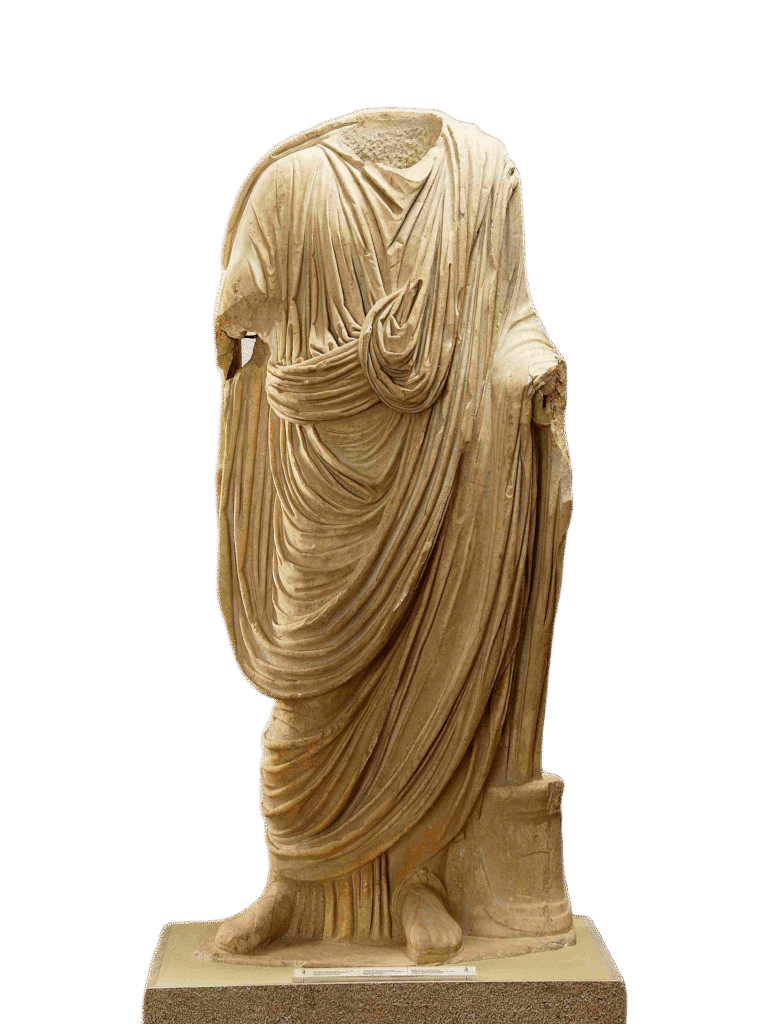
The structure housed an extensive sculptural program that communicated messages of power, lineage, and cultural identity. The apse featured two tiers of eleven niches each, populated with magnificent marble statues. The lower tier held figures representing the Roman Imperial family of Antoninus Pius, while the upper tier displayed the family of Herodes Atticus himself.
The central niche of each tier contained a statue of Zeus. Additionally, at each end of the lower oblong tank, small circular Corinthian temples enclosed statues of Herodes Atticus and a contemporary emperor (Antoninus Pius or Marcus Aurelius). This “family gallery” associated the donor’s lineage with the ultimate source of Roman imperial authority, a clear political statement.
Engineering a Lifeline
The Nymphaion was as much an engineering achievement as it was an artistic one. Its construction required highly sophisticated hydraulic engineering to manage the water flow, maintain constant pressure for the fountain displays, and ensure a reliable, clean supply for sanctuary needs.
This technical mastery—mobilizing resources for a monumental project that solved a chronic classical problem—demonstrated the vast capabilities of Roman technical expertise. By finally providing abundant water, the system fundamentally enhanced the functionality and habitability of Olympia, especially during the massive gatherings of the Olympic festival.
Legacy of Transformation
The Nymphaion exemplifies how Roman-period benefactions transformed the character of Greek sacred spaces. It was a hybrid environment where traditional Greek piety met a new, dynamic Roman architectural vocabulary, engineering capability, and display culture.
Though today the structure is in a poor state of preservation, with its polychrome marble gone and architectural members re-used in a 5th-century AD Christian basilica, the surviving statues, now displayed in the Archaeological Museum of Olympia, confirm its original splendor.
The Nymphaion stands as one of the finest examples of this cultural fusion, a monument that remains a symbol of generosity and spectacular utility.