stadium
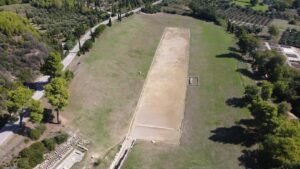
The Stadium of Ancient Olympia, dating from the 5th century BC, was the sacred space where Olympic champions earned their glory. The 192.27-meter track, defining the length of the prestigious stadion sprint, featured stone starting and finishing lines with grooves for runners' toes.

Heart of Athletic Glory

The Stadium of Ancient Olympia represents the ultimate destination for every athlete who trained in the sanctuary’s facilities—the hallowed ground where Olympic champions were crowned and legends were born.

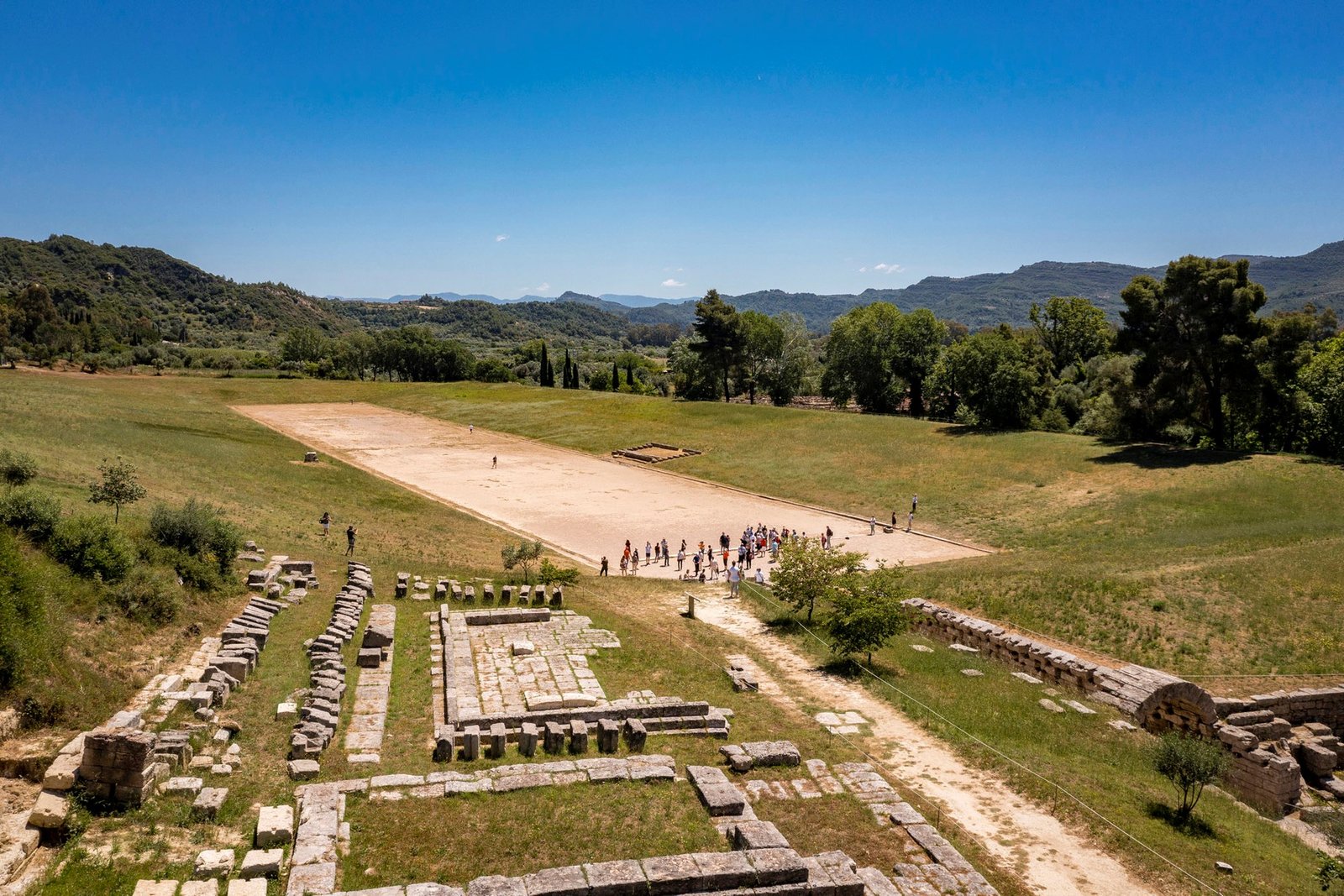
Positioned east of the sacred Altis enclosure, this space was not only the stage for the ancient Olympic Games but also for the Heraia, the women’s games held in honor of the goddess Hera.

Before the classical era, running events were held in a simpler, flatter area closer to the altar of Zeus, to whom the games were dedicated, before the site evolved into its final, monumental form.

Architecture and Ceremonial Entrance

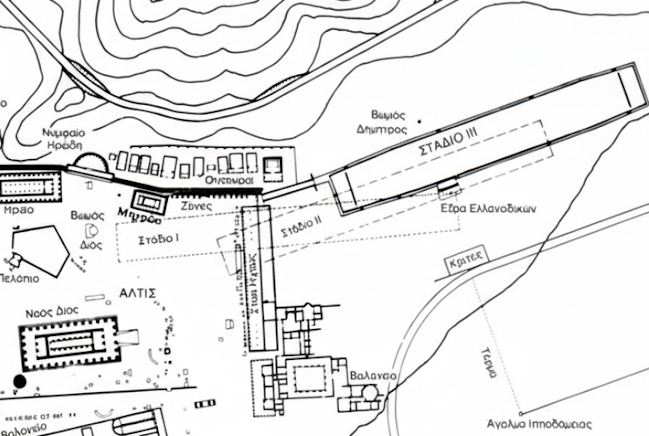
The stadium was not built in a single effort, but evolved through several phases. The first Archaic stadium (Stadium I) was formed in the mid-sixth century BC, but as the Games grew in popularity, a new stadium (Stadium II) was created, moving the track eastward.

The monument received its final and most famous Classical form, Stadium III, in the fifth century BC, relocated approximately 82 meters to the east and 7 meters to the north and surrounded by artificial banks for spectators.

This final isolation from the Altis, emphasized later by the construction of the Echo-hall in the mid-fourth century BC, marked the evolution of the Games from a purely religious ceremony to a major athletic and social event.

Key Features of the Ancient Olympia Stadium
  • Location: Positioned immediately east of the sacred Altis enclosure in Olympia.
  • Historical Evolution: The final, Classical form (Stadium III) was moved significantly east and north from its predecessors (Stadium I and II) to accommodate larger crowds.
  • Track Dimensions: The critical distance for the prestigious stadion race was 192.27 meters (one Olympic stade).
  • Starting Lines: Marked by stone sills with grooves  to provide grip for the runners’ toes.
  • Ceremonial Entrance: The Krypte Stoa, a 32-meter-long stone-vaulted tunnel, used by athletes and judges to dramatically enter the stadium from the sanctuary.
  • Spectator Seating: Simple earthen embankments surrounding the track, accommodating approximately 45,000 people.
  • The Single Seat: A marble pedestal reserved for the Priestess of Demeter Chamyne, the only woman permitted to watch the games.
  • Main Events: Primarily hosted the foot races (stadion, diaulos, and dolichos) and the final event of the pentathlon.
  • Modern Use: Hosted the shot put event during the 2004 Athens Olympic Games.

The Stadion Track and the Race for Glory

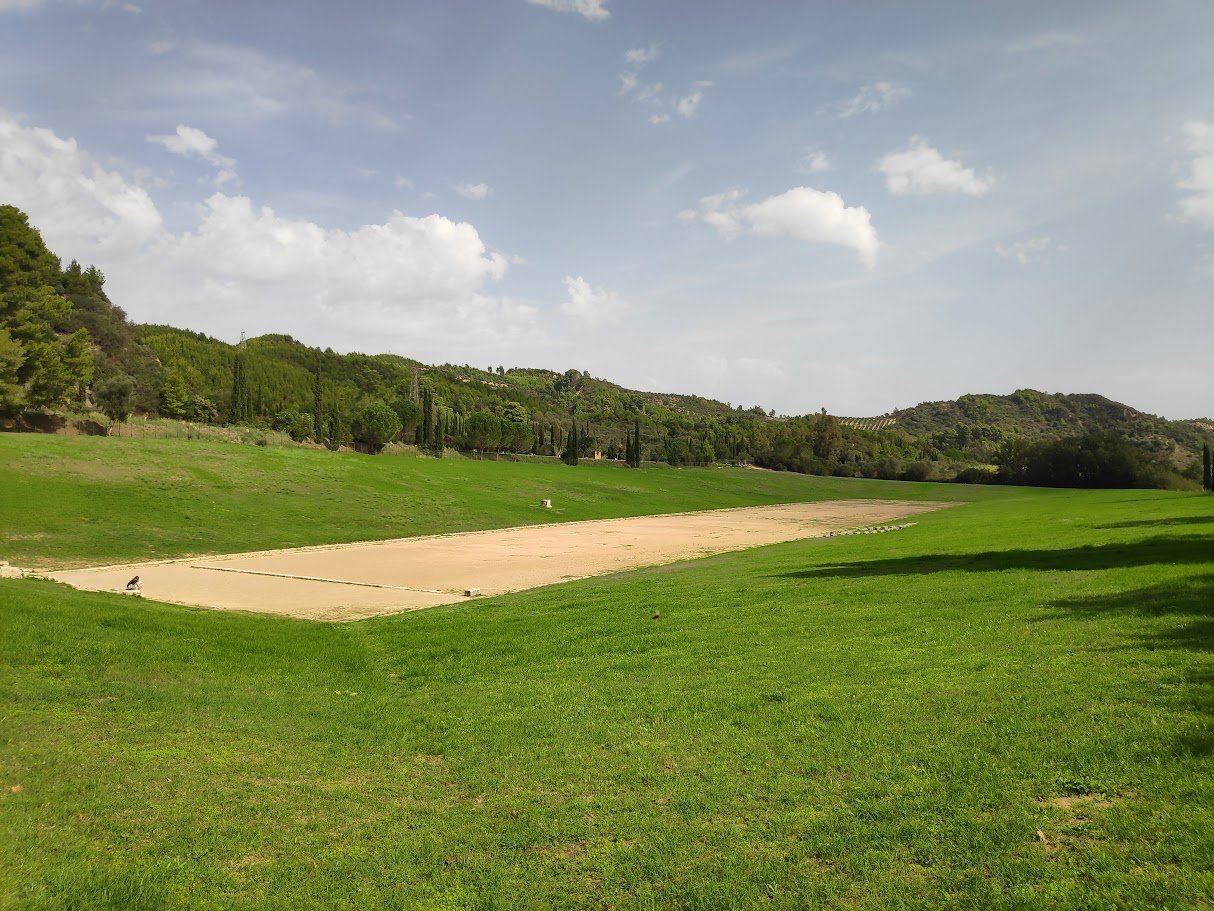
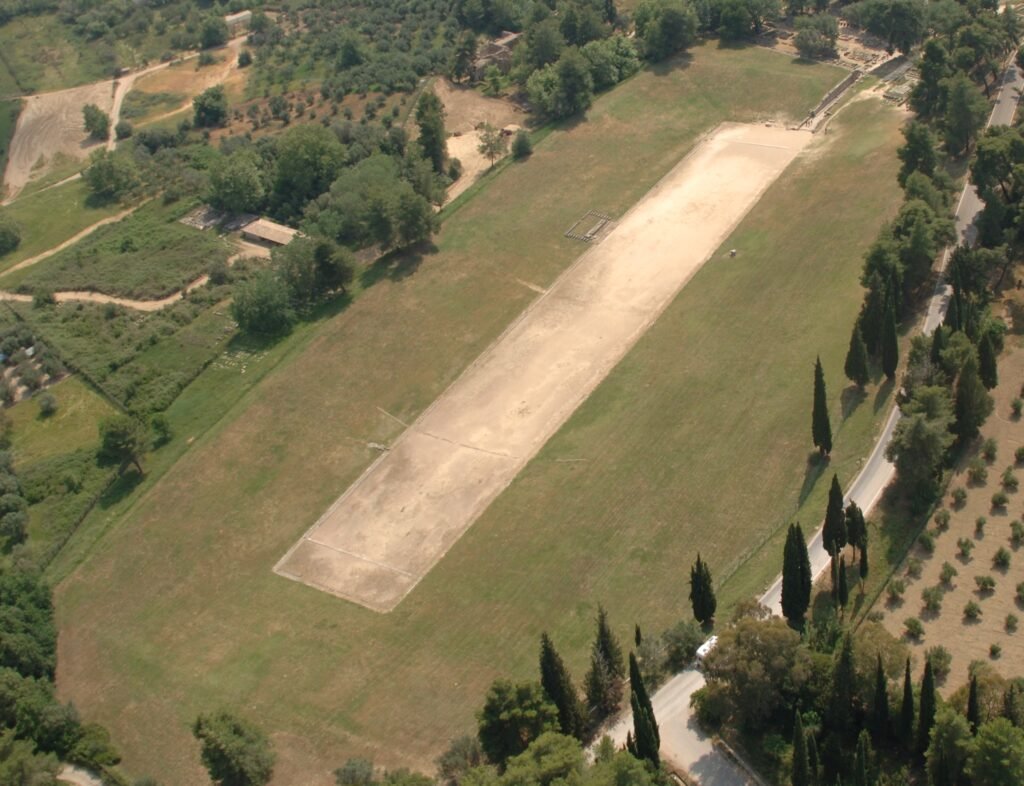
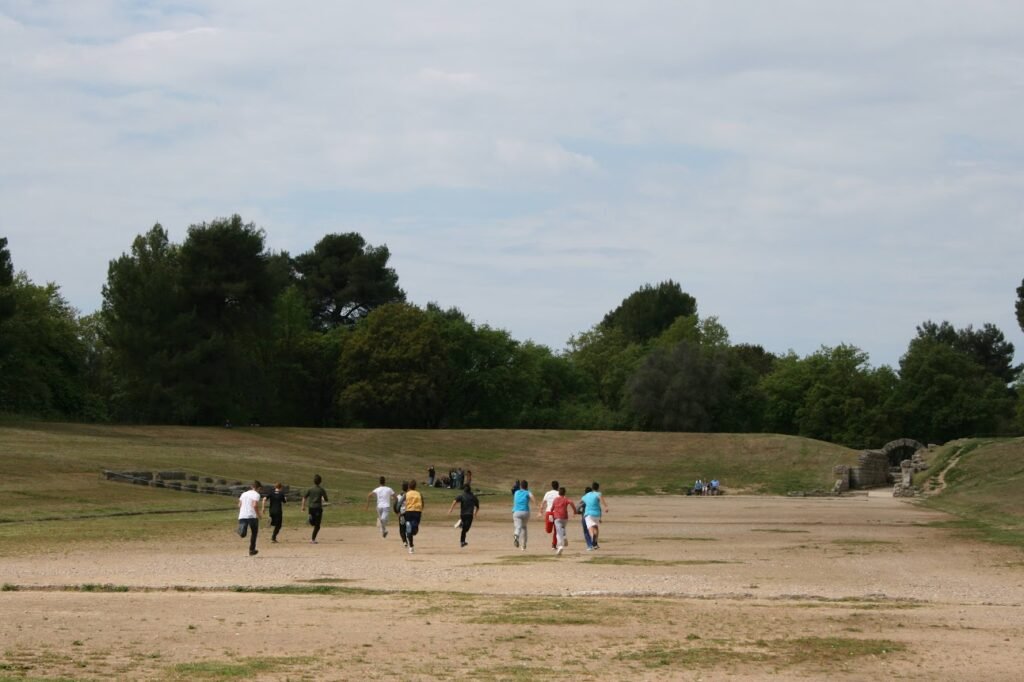
The heart of the stadium was the running surface, a track of packed earth. The racetrack measured 212.54 meters in length, though the critical distance was marked by two stone sills placed 192.27 meters apart.

This measurement defined the distance of the stadion race—the most prestigious sprint event and the oldest in the Olympic program—and was equivalent to one Olympic stade, or roughly 600 ancient feet.

Grooves carved into the stone sills provided grip for the runners’ toes, enabling the explosive starts that often determined victory.

The Dramatic Entrance: The Krypte Stoa

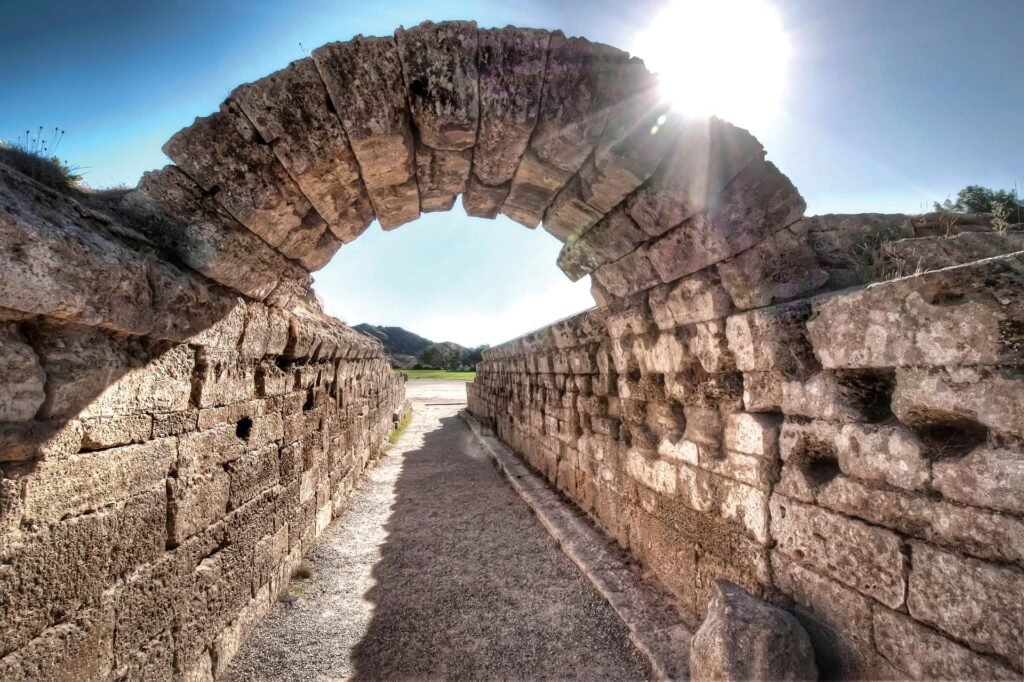
Connecting the sacred Altis to the competitive arena was the Krypte Stoa, a stone-vaulted tunnel that served as the ceremonial entrance for the athletes and judges.

Built in the late third century BC, this 32-meter-long passageway created a dramatic architectural feature. Competitors would process from the sanctuary’s preparation areas, emerging from the darkness of the tunnel into the brilliant light of the stadium and the immense roar of the crowd.

This solemn and dramatic entrance added ceremonial grandeur, a tradition echoed in the modern parade of athletes at Olympic opening ceremonies.

The Spectators, the Officials, the Umpires and the Single Seat

Unlike modern venues with tiered seating, the ancient Olympic stadium featured simple earthen embankments on all sides where spectators would sit or stand.These embankments could accommodate approximately 45,000 people.

Officials had a few stone seats, and a podium was reserved for the judges.

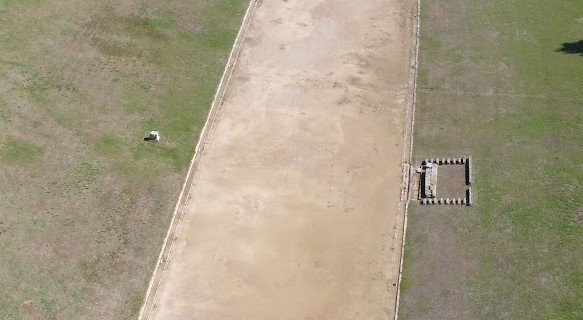
However, the stadium featured one highly significant seat: a single marble pedestal reserved for the Priestess of Demeter Chamyne. She was the only woman permitted to watch the Olympic Games, underscoring both the religious nature of the event and the strict gender segregation that defined the competitions.

The seat of the judges at the south slope (right) and the seat of the priestess of Demeter Chamyne

The Events and the Atmosphere

The stadium hosted the foot races that formed the core of the Olympic program: the stadion (sprint), the diaulos (double-length sprint), and the dolichos (long-distance race). It also served as the venue for the final event of the pentathlon, following the discus, javelin, long jump, and wrestling portions. During the Games, the atmosphere must have been electric, with thousands of spectators from across the Greek world creating a wall of noise as they cheered for their favored athletes and city-states, fueling the pursuit of arete (excellence).

Modern Insight

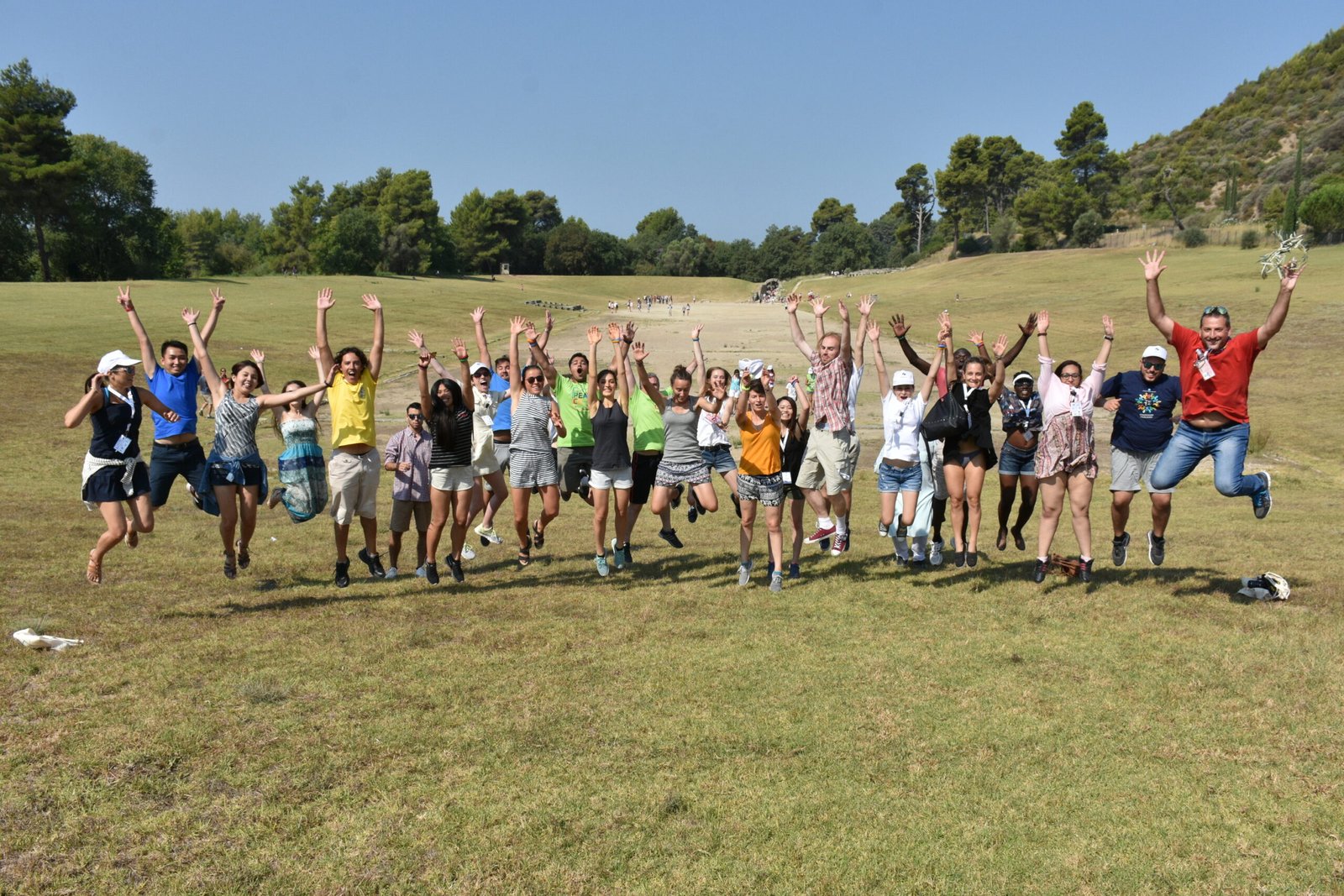
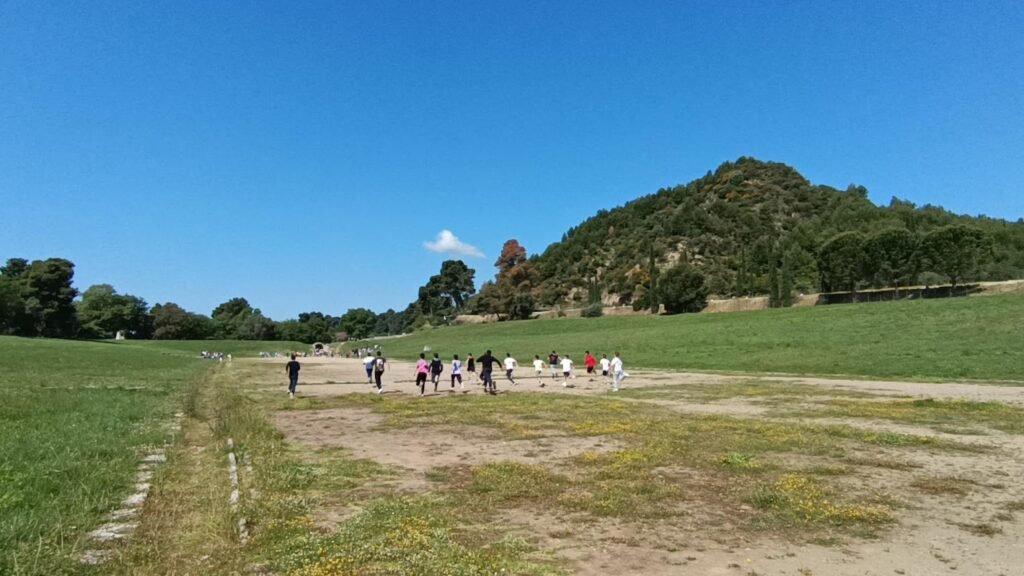
Today, visitors can walk along the ancient track, stand at the starting line grooves, and imagine the moment when ancient runners launched themselves toward Olympic glory.

The stadium, though stripped of its crowds and ceremonial trappings, still conveys the powerful essence of athletic competition and the universal human desire for excellence and recognition.

The site briefly relived its former glory in 2004 when it was used to host the shot put event of the Athens Olympic Games, connecting the modern spectacle directly to its ancient roots.

The Beginning of the Torch Relay in the Ancient Stadium of Olympia

Immediately after the Olympic Flame is born before the altar of the Temple of Hera, the ritual moves from sacred ignition to global celebration. The newly lit flame is carried into the ancient stadium of Olympia, where the official start of the torch relay takes place.

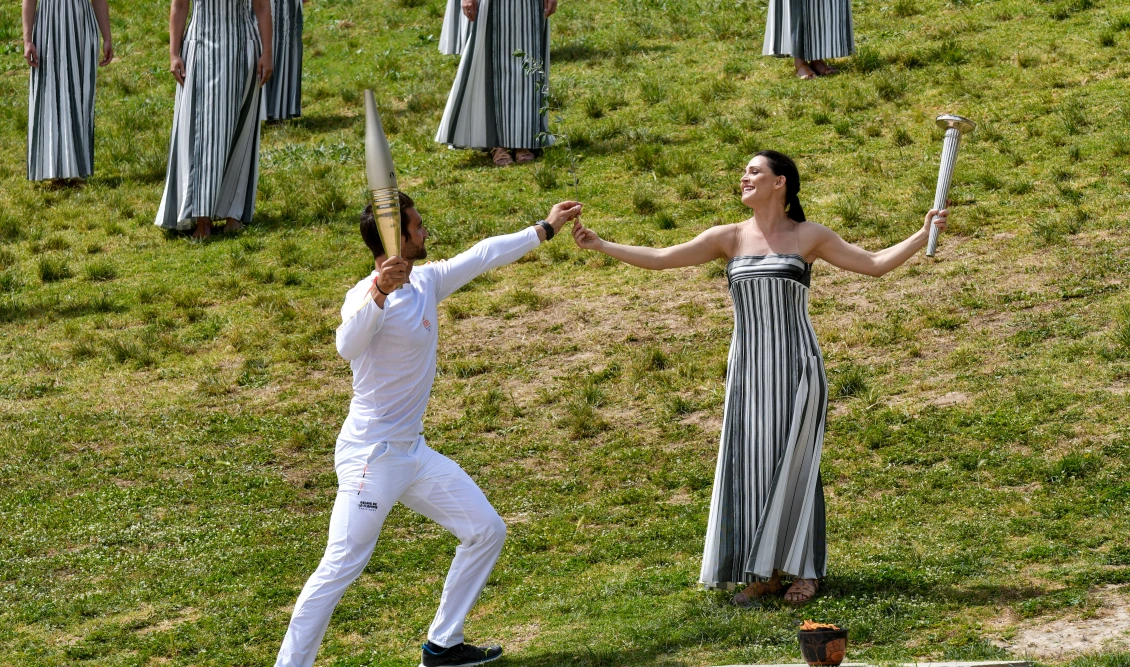
In front of dignitaries, spectators, and cameras broadcasting live across the world, the Head Priestess—embodying centuries of symbolism and tradition—hands over the flame to the first torchbearer. This honor is traditionally given to a distinguished Greek Olympic medalist or a prominent athlete, linking the ancient birthplace of the Games with the modern spirit of athletic excellence.

From this moment, the flame begins its journey across nations and continents, carried by thousands of torchbearers who serve as ambassadors of peace, unity, and sportsmanship.

The torch relay reaches its climactic conclusion during the Opening Ceremony at the Olympic Stadium of the host city. There, before a global audience, the final torchbearer lights the Olympic Cauldron.

The Olympic Flame will shine brightly throughout the Games—an enduring symbol of hope, human achievement, and the universal values that the Olympic Movement seeks to inspire.