The Leonidaion: A Distinguished Hostel at Ancient Olympia. The building provided private accommodations for important officials, ambassadors, and other elite guests attending the Olympic Games.
Greek commitment to proper hospitality
The Leonidaion was one of the most significant secular buildings in the Sanctuary of Olympia, serving a crucial function during the ancient Olympic Games.
Situated at the southwest corner of the sanctuary, it was deliberately placed outside the sacred precinct, known as the Altis.
This large, luxurious structure was built in approximately 330 BC and functioned as a high-status guesthouse, designed to accommodate the most distinguished visitors and officials attending the games.
Its construction marked a period of architectural investment in the Olympic site, ensuring comfort and prestige for its elite guests.
The Vision of Leonidas of Naxos
The entire building takes its name from its architect and benefactor, Leonidas, son of Leotas, from Naxos. A dedicatory inscription, fragments of which were found preserved on the epistyle of the outer Ionic stoa, formally records his contribution.
Leonidas was a generous patron as well as a master builder, a role emphasized by the presence of his statue.
The inscribed pedestal for this statue was discovered at the north-east corner of the Leonidaion, marking the honor bestowed upon the man responsible for the hostel’s creation.
Key features
Purpose and Function
Primary Use: A large, luxurious hostel or guesthouse.
Guests: Accommodated distinguished visitors and high officials attending the Olympic Games.
Later Function: Remodeled in Roman times to serve as a residence for high officials.
Founding and Location
Construction Date: Approximately 330 BC.
Architect/Benefactor: Leonidas, son of Leotas, from Naxos.
Location: Situated at the southwest corner of the Sanctuary of Olympia.
Boundary: Located outside the sacred precinct known as the Altis.
Architectural Structure (Classical Period)
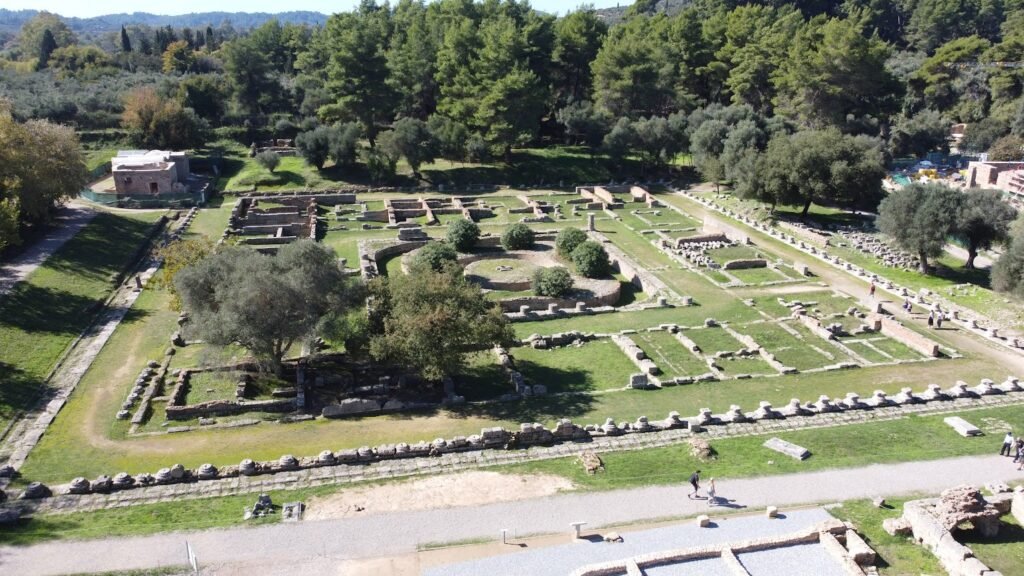
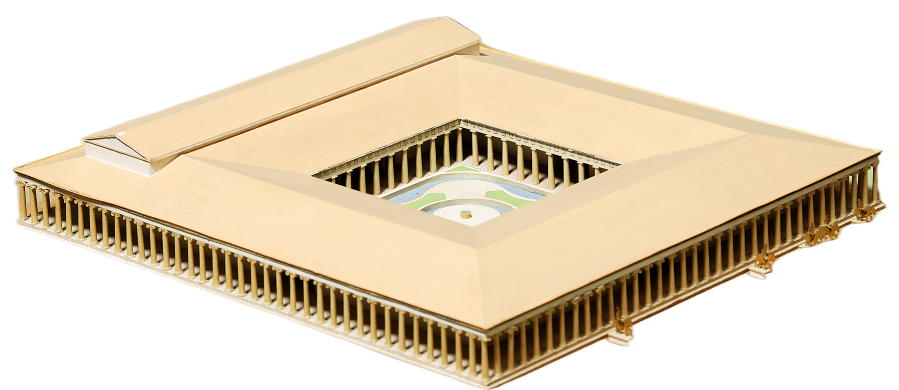
Overall Shape: Massive, nearly square building.
Inner Court: Featured a large central court surrounded by a colonnade.
Inner Colonnade: A Doric peristyle consisting of forty-four columns.
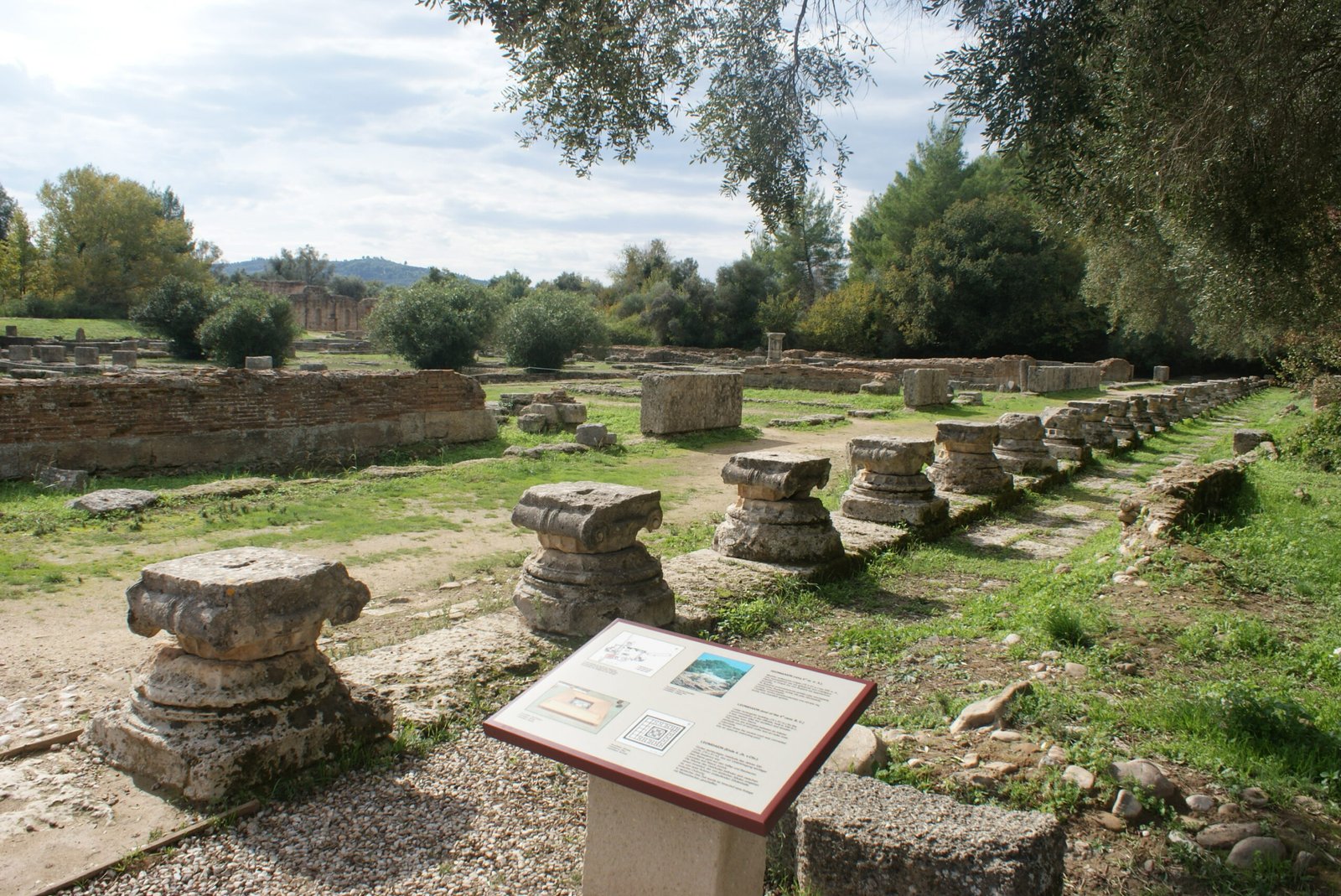
Outer Colonnade: A continuous outer colonnade of Ionic columns, numbering one hundred and thirty-eight.
Internal Spaces: Rooms opened off all four sides of the central court, with the largest rooms located on the wider west side.
Roman Alterations
Remodeling: Underwent two significant remodels during the Roman era.
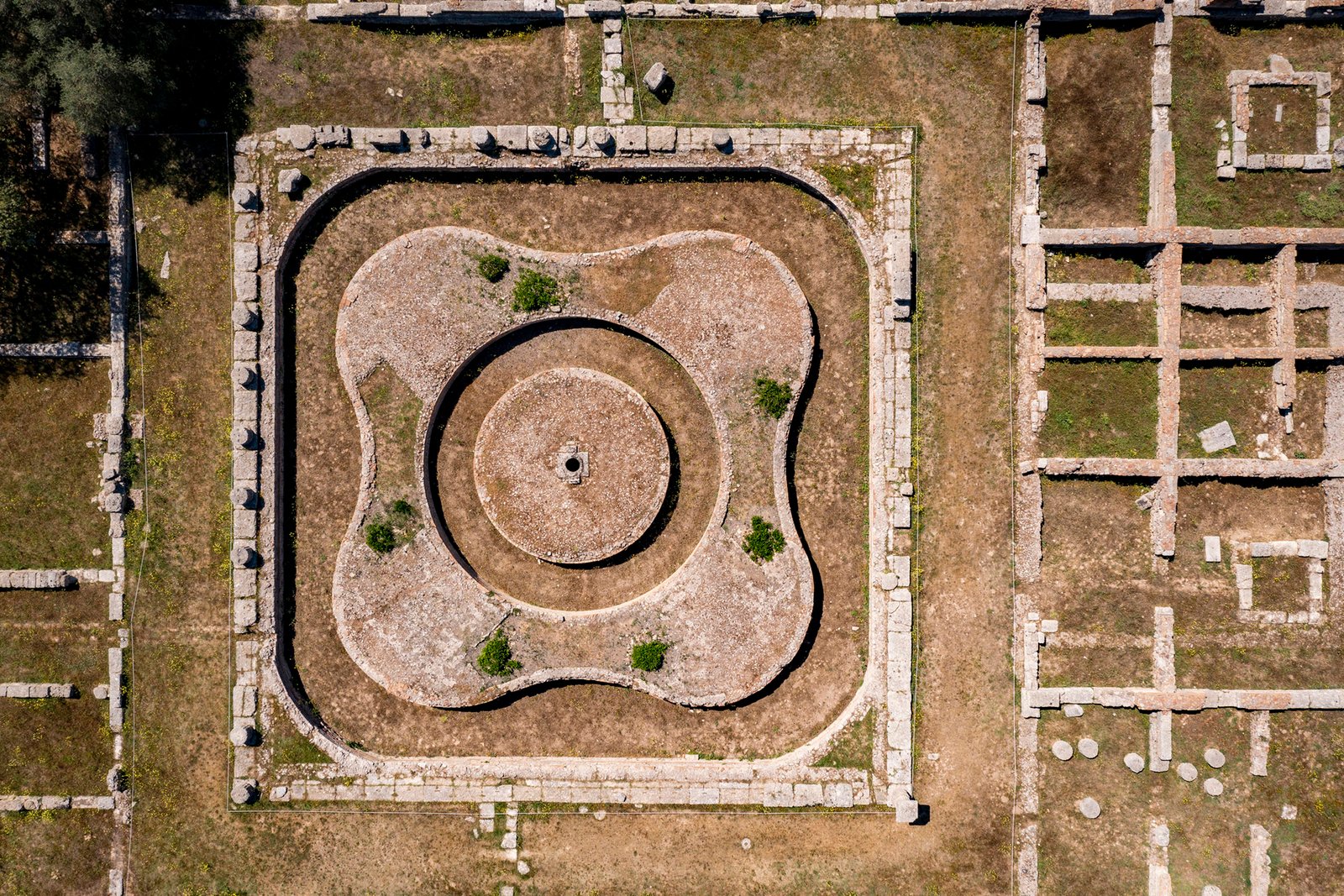
Key Addition: An elaborate pool was laid out in the center of the inner court, replacing or modifying the original open space.
Archaeology and Legacy
Discovery: Uncovered during recent German excavations.
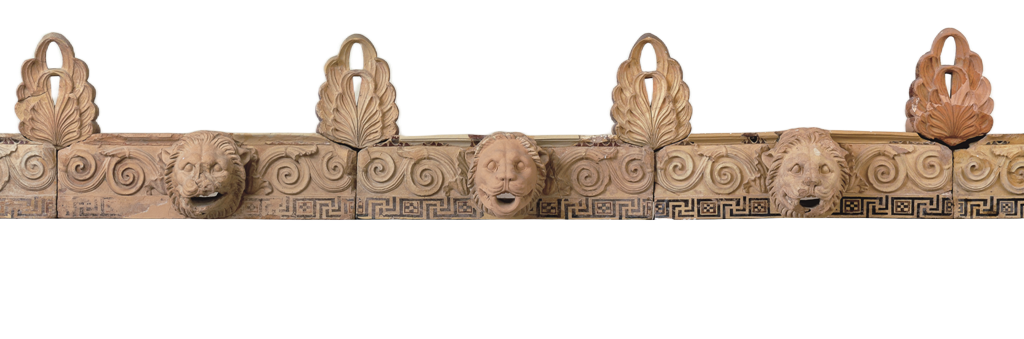
Artifacts: Fragments of its elaborate terracotta gutter are on display at the Olympia Archaeological Museum.
The Core Design: A Doric Heart
The primary architectural footprint of the Leonidaion was a massive, nearly square structure. Its interior was focused around a large central court, which provided light and air to the surrounding rooms.
This court was enclosed by a stately, forty-four columned Doric peristyle, establishing a classical, imposing aesthetic for the inner parts of the building.
Off the four sides of this central colonnade, numerous rooms opened up, providing accommodation and perhaps administrative spaces for the guests.
The Imposing Exterior: An Ionic Collonade
Contrasting with the Doric style of the inner court, the exterior of the Leonidaion presented a continuous, graceful facade of Ionic columns.
This grand outer colonnade wrapped around the entire structure, consisting of one hundred and thirty-eight Ionic columns in total.
This massive scale would have made the Leonidaion an unmistakable and impressive sight upon approaching the sanctuary. Furthermore, the west side of the building was architecturally wider than the other three, suggesting that the largest and most important rooms were situated in this section.
Transformation in Roman Times
Like many structures in the Greek world, the Leonidaion underwent significant changes under Roman rule.
The building was remodeled twice during this era, reflecting its evolving function and status. Notably, the structure transitioned from a public hostel to a private residence for high officials, an indicator of the changing political landscape of the sanctuary.
The most elaborate physical modification was the addition of an ornate pool that was laid out directly in the middle of the central court, replacing or heavily modifying the original open space.
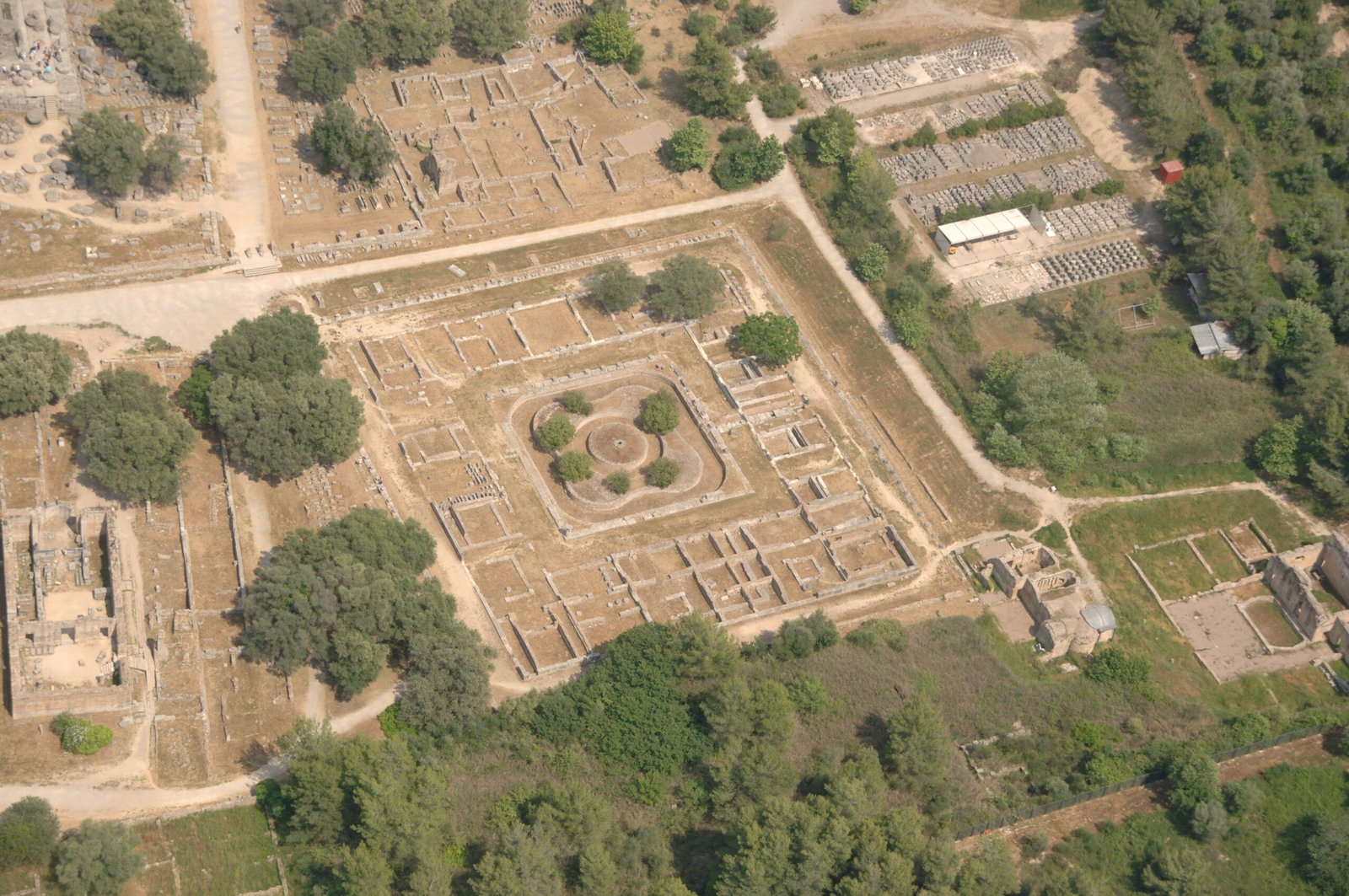
Aerial view of the Leonidaion, the worksop of Phidias to its north, the southern baths to its east and the Leonidaion thermae to the south
Rediscovery and Modern Restoration
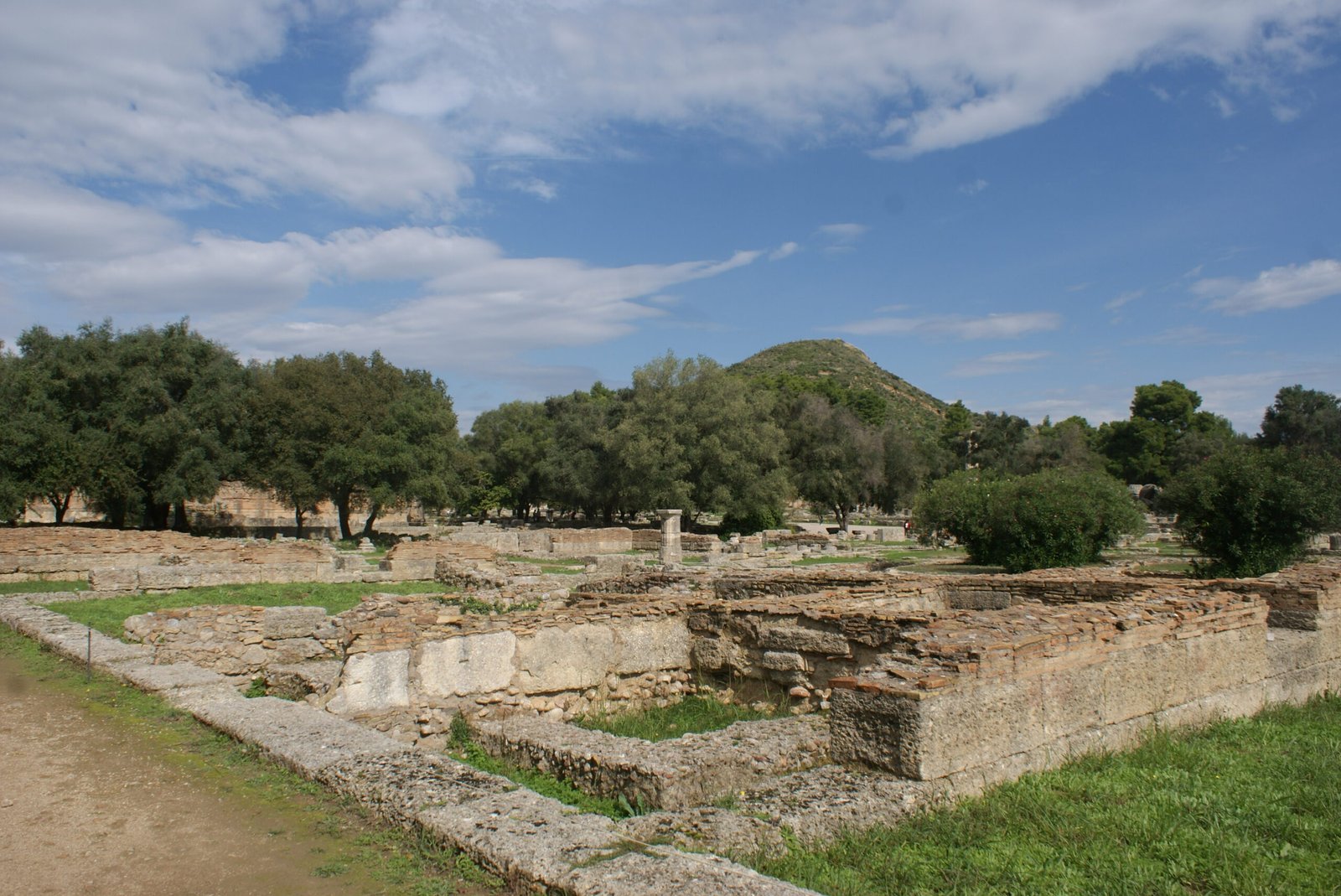
The monument remained buried for centuries until its rediscovery during the more recent German excavations at Olympia.
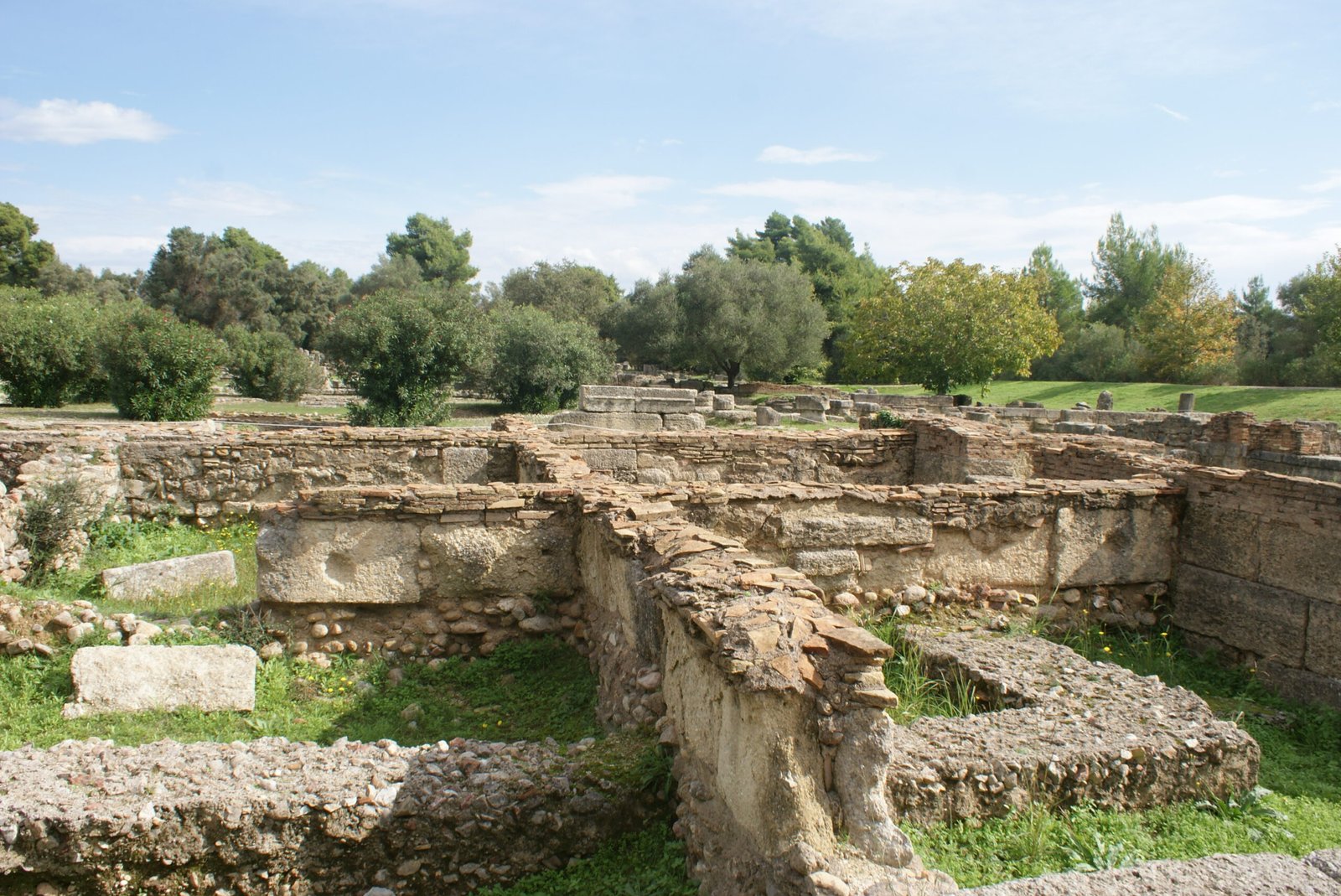
These archaeological efforts uncovered the entirety of the vast complex. Subsequent preservation efforts have focused on restoring surviving elements, including the fragile original wall-plaster.
The Leonidaion continues to yield valuable artifacts, with fragments of the building’s elaborate terracotta gutter now on display in the Olympia Archaeological Museum, helping to paint a complete picture of its ancient grandeur.