The Hippodrome
The Hippodrome was the heart of equestrian competitions, representing one of the most prestigious and visually spectacular components of the ancient Olympic Games.

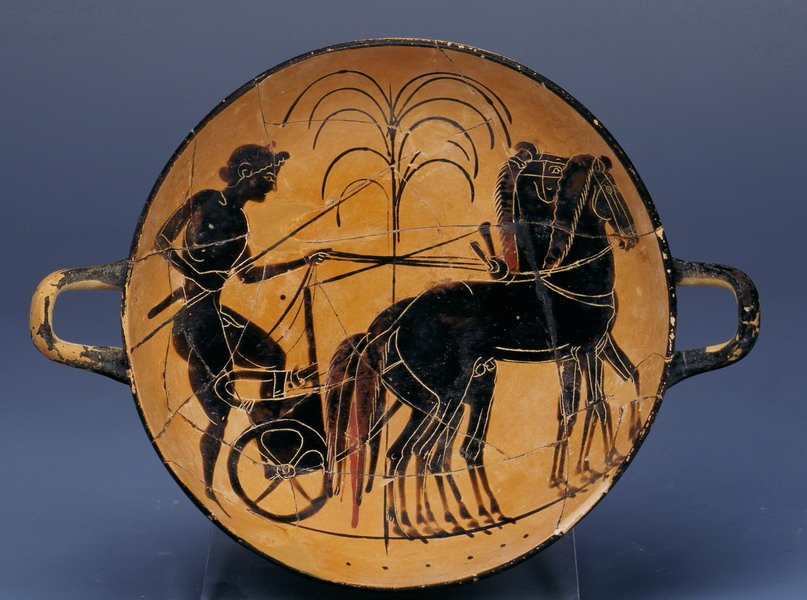
Unlike the gymnastic events, horse and chariot racing provided an elite platform for the demonstration of wealth and power by those capable of maintaining expensive stables and teams, making a victory there a mark of extreme social and political distinction

Siting and Environmental Impact

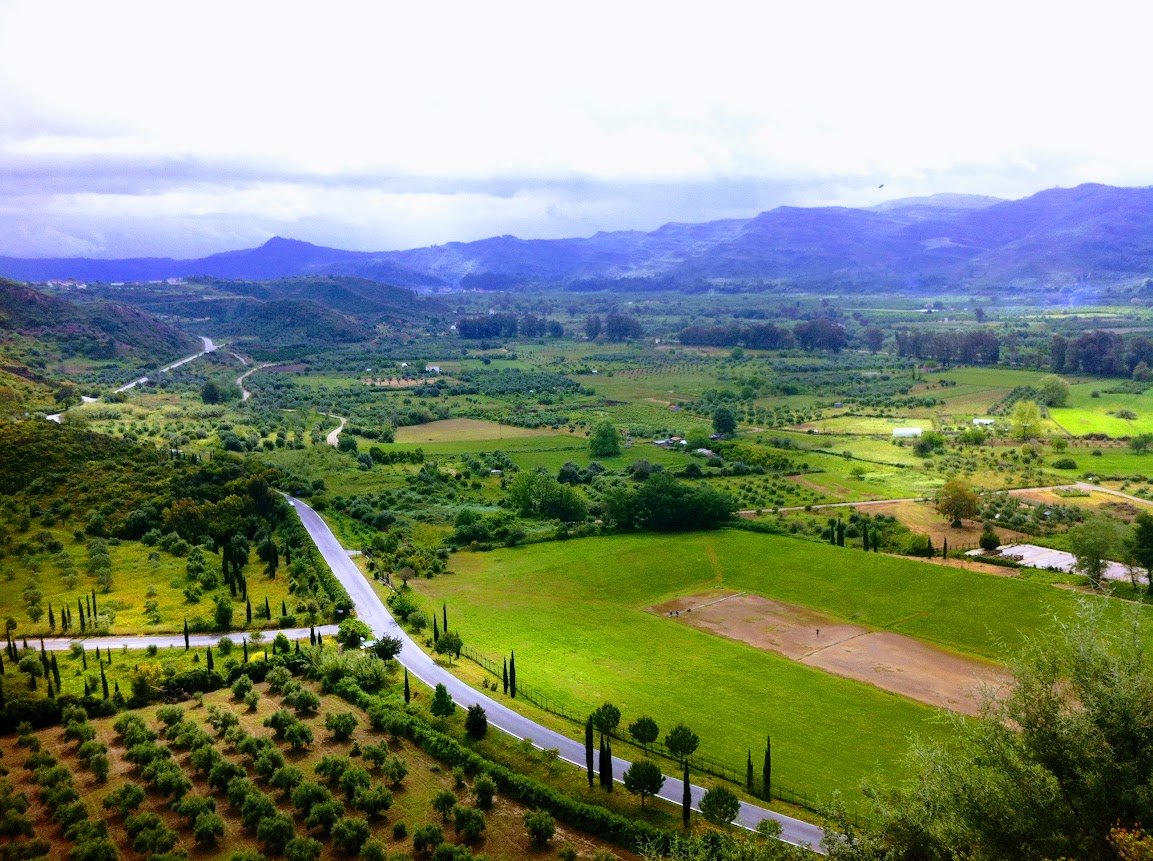
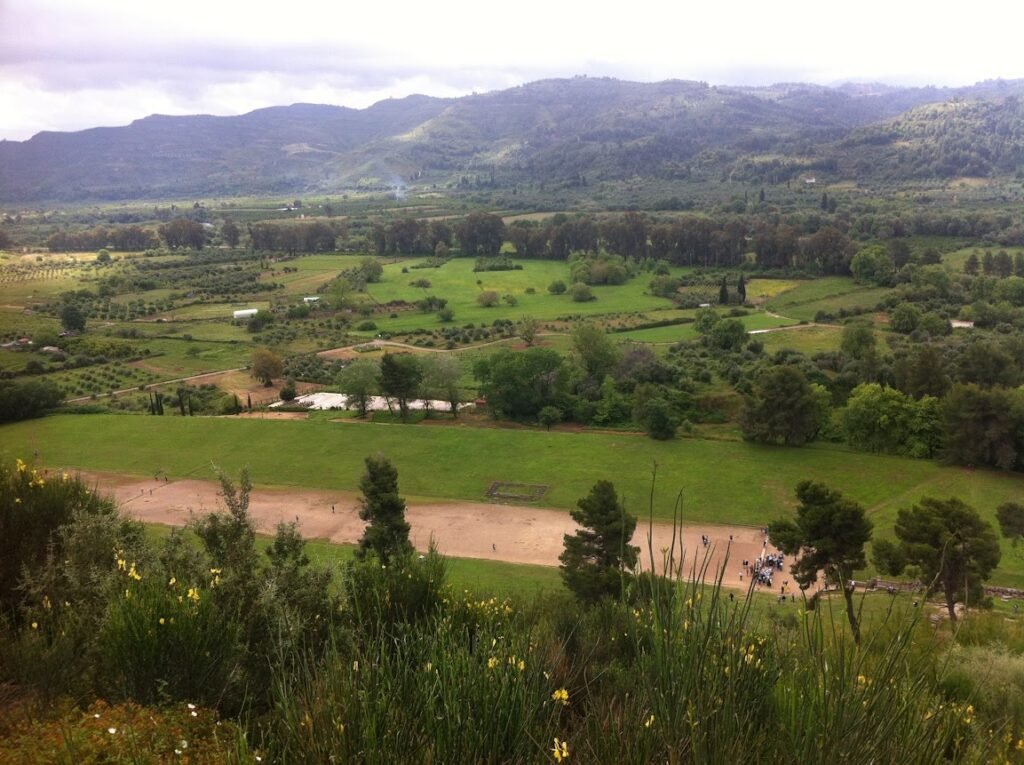
The Hippodrome was situated to the east of the sacred Altis and south of the Stadium.

Its precise location is referenced by ancient traveler Pausanias, who noted that the sanctuary of Demeter Chamyne stood to the north of the track.

Today, the monument is not visible because much of it was buried or washed away over centuries by the repeated flooding of the Alpheios River

Dimensions and Capacity

Scale: The Hippodrome was a vast, level area approximately 600 meters in length and 200 meters in width.
 
Track Organization: A low wall or barrier divided the track into two lanes to prevent head-on collisions between chariots turning at opposite end.
 
Spectators: Thousands of visitors watched the events from artificial embankments constructed on the southern and eastern sides of the facility.

The Technology of the Start – The "Hippaphesis"

Kleoitas’ Invention
 
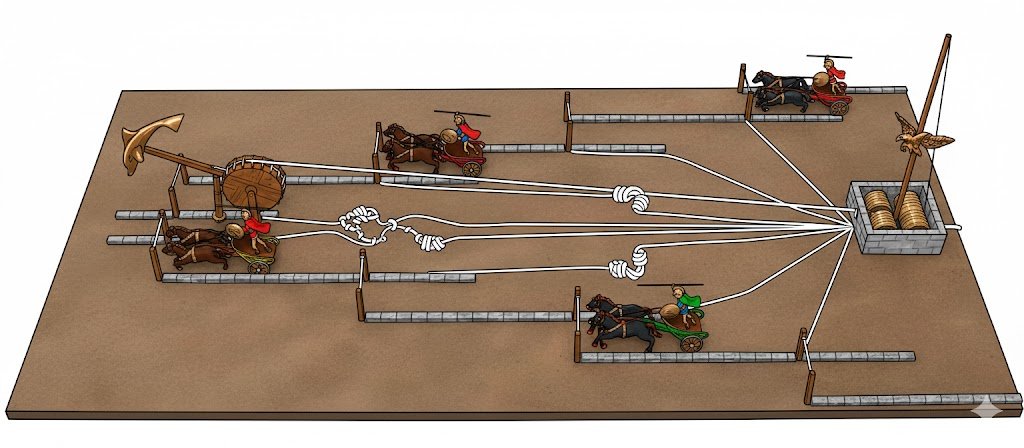
One of the most complex technological feats of the site was the starting mechanism known as the Hippaphesis, designed by the architect Kleoitas. The mechanism was shaped like the prow of a ship and utilized a sophisticated system of ropes and barriers.
 
Operating Mechanism
 
At the center of the starting line sat an altar dedicated to Poseidon Hippios, topped with a bronze eagle. To signal the start, the eagle was mechanically raised so it could be seen by everyone, while a bronze dolphin was simultaneously dropped to the ground. Chariots were released in a staggered fashion from the rear to the front, ensuring all participants reached the straightaway at the same time for a fair start

Myths, Victors, and Social Significance

The Founding Myth
 
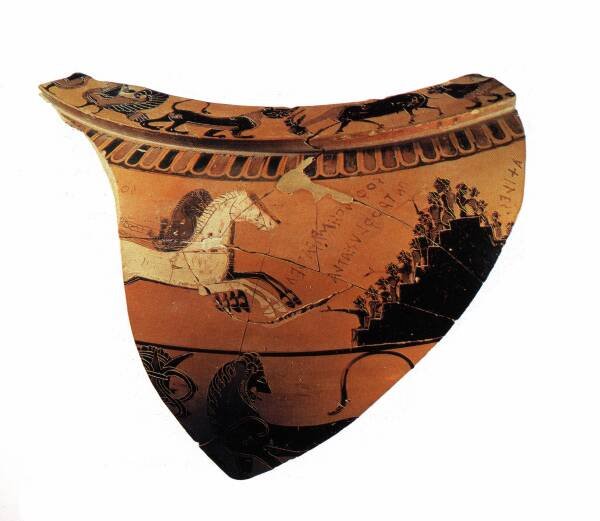
The equestrian tradition at Olympia is rooted in the myth of the chariot race between Pelops and Oenomaus, the King of Pisa. Pelops’ victory, which led to the founding of the Games, is immortalized in the East Pediment of the Temple of Zeus, which faces the direction where the Hippodrome races began.
 
Famous Protagonists
 
The Hippodrome hosted many famous historical figures, including:
Kyniska of Sparta: The first woman to be crowned an Olympic champion; her chariots won the race twice (396 and 392 BC).
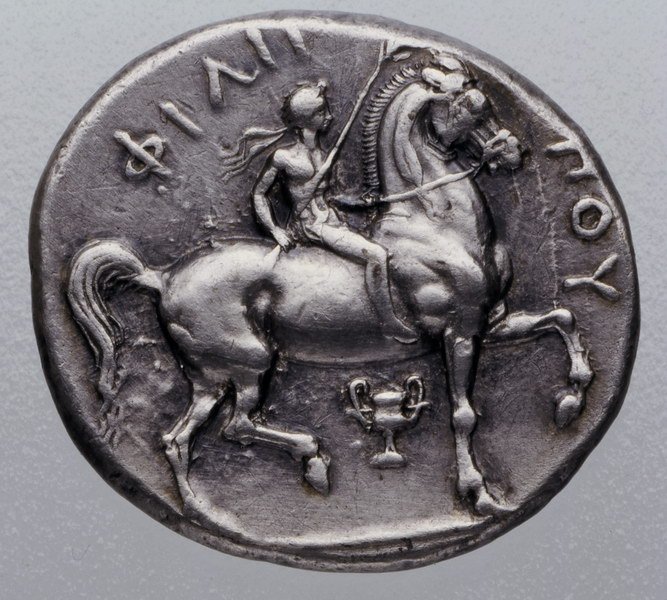
Philip II of Macedon: He achieved three Olympic victories in equestrian events.
Sicilian Tyrants: Rulers like Hieron I and Gelon dedicated magnificent monuments and commissioned odes from poets like Pindar to celebrate their racing triumphs

Modern Research and Current State

Archaeological Investigations
 
Locating the exact boundaries of the Hippodrome remains a significant challenge because it is buried under 5–7 meters of silt and rubble. Geophysical surveys conducted in 2008 and 2009 in the area east of the Stadium attempted to find structural remains, though no visible architectural traces have been uncovered yet.
 
The Landscape Today
 
Ancient authorities intentionally kept this large area free of permanent buildings to allow for the formation of horse teams and chariots at the start of races. Although the structure is lost to the landscape, the legacy of the Hippodrome survives through the vast collection of votive horse and chariot figurines (bronze and terracotta) now housed in the Archaeological Museum of Olympia.