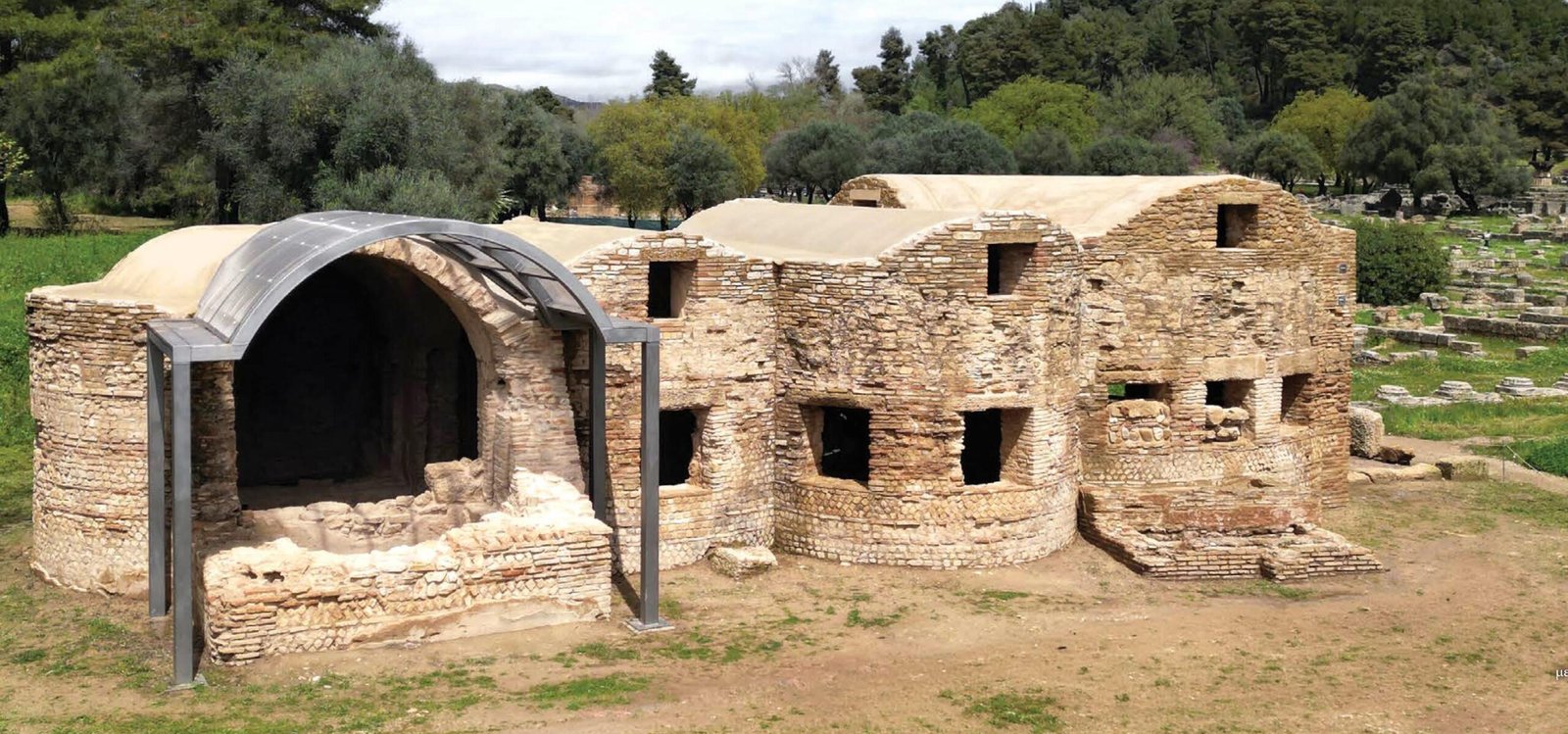
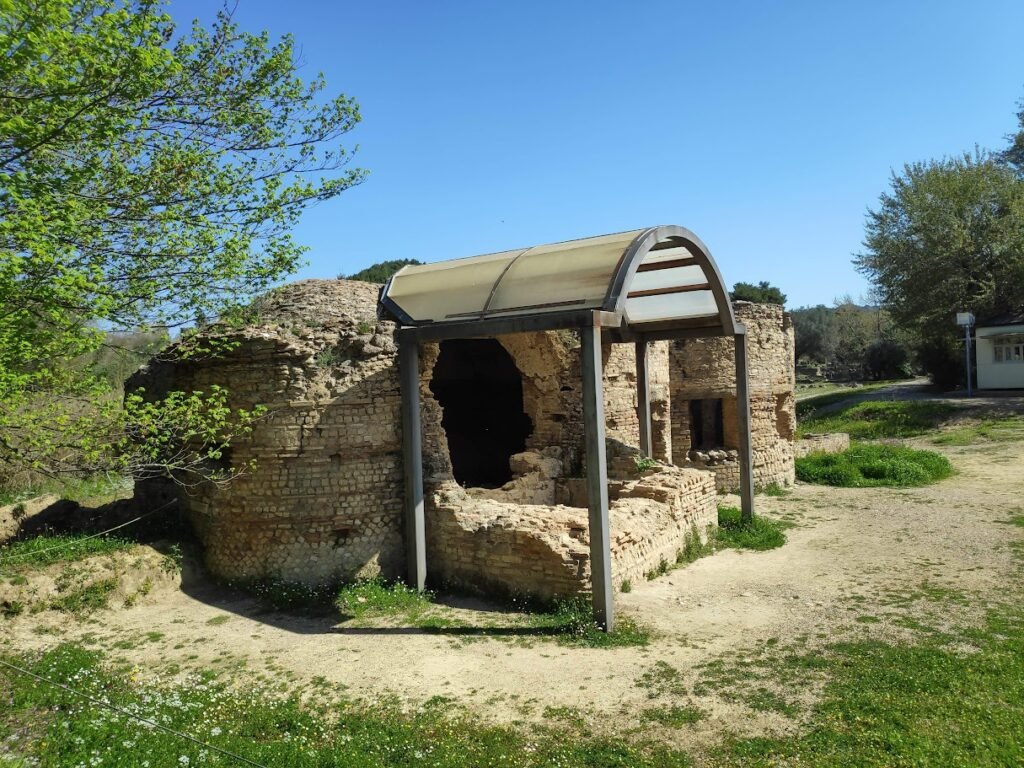
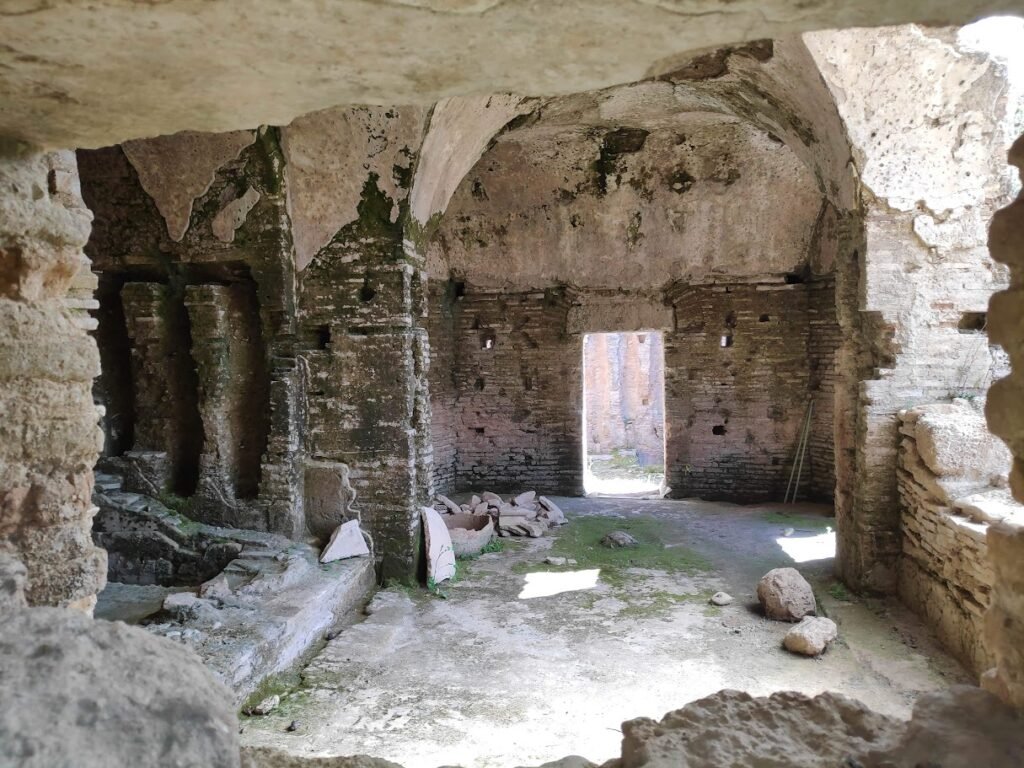
It is one of the most remarkable monuments in Olympia, which stands out as the only building in the area that retains its original height and its roof almost intact .
The complex consists of four small rooms with vaulted ceilings and features beautiful mosaic floors that remain visible to this day.
Of particular interest is its sophisticated hydraulic system and wall heating , which used a network of pipes to channel hot air into hollow walls.
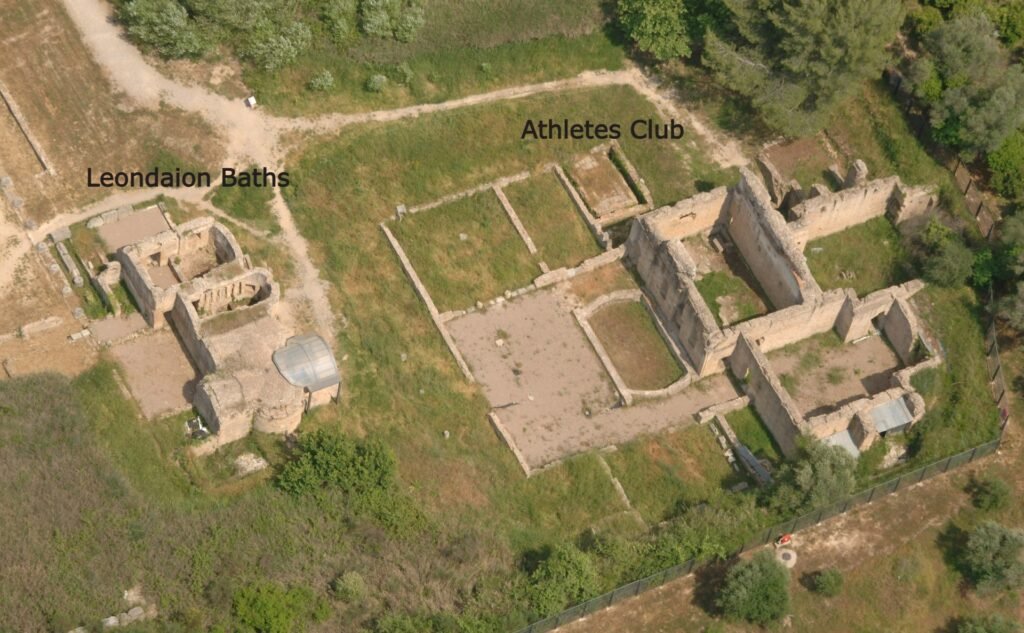
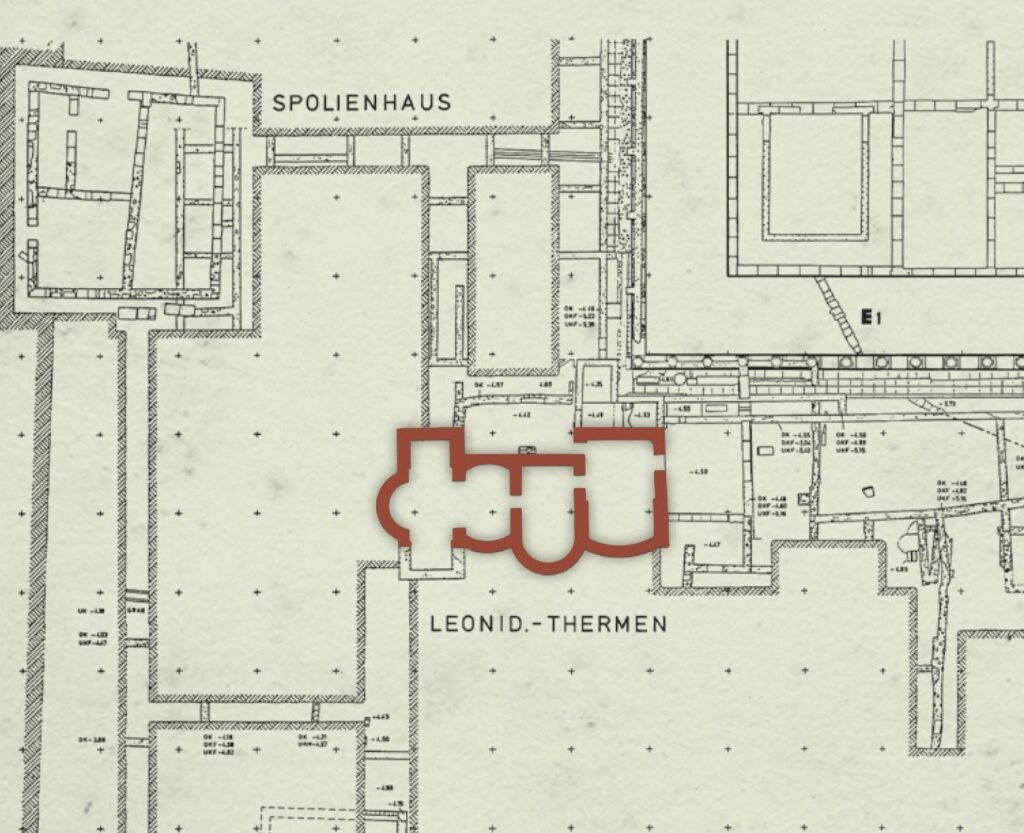
The baths were part of a large building complex, now mostly ruined, located north of the baths and west of the Leonidaion, which also included a guesthouse. The baths occupied the south wing.
The masonry of the building includes techniques such as opus testaceum and the use of reused material (spolia) , while the construction work is characterized as particularly meticulous in comparison to other baths in the area.
The thermae had sophisticated infrastructure for their time, including a complex hydraulic system and a sophisticated heating system. Heating of the spaces was achieved through a network of pipes that channeled hot air inside the hollow walls of the building.
In Late Antiquity, the function of the building changed significantly, reflecting the evolution of the settlement that developed on the ruins of the sanctuary.
During the 5th century AD, a section of the baths was converted into a wine press for wine production , while another room housed a glassmaking workshop, as evidenced by the discovery of a kiln.
This transformation is a typical example of the socio-economic transition of Olympia from an important religious center to a productive agricultural community.
Main Features of the Baths of Leonidaion
The Baths of Leonidaion were built in the 3rd century AD . They were part of a large building complex, which is now mostly destroyed, and was located north of the baths and west of Leonidaion.
They were designed to provide modern Roman comforts to distinguished guests and visitors to the sanctuary.
The complex represents the monumental transformation of the area during the Roman Imperial period.
Despite the renovations, the baths respected the layout and orientation of the older building.
The bath complex was wisely incorporated into the southeast corner of the huge peristyle of Leonidaion.
The spaces follow the typical thermal sequence: Frigidarium (cold), Tepidarium (lukewarm) and Caldarium (hot) .
The floors and walls were originally decorated with colorful marbles and elaborate mosaics .
The construction made extensive use of bricks and strong mortar , typical examples of Roman engineering.
Heating was provided through an extensive system of hypocausts that circulated warm air under the floors.
The floors were supported on small brick pillars (pilae) to create the necessary heating gap.
Sophisticated ceramic pipes and drainage channels were used to manage water and sewage.
Significant remains of the brick walls and arched passages survive to this day.
The infrastructure of the hypocausts is clearly visible, highlighting ancient thermal technology.
Parts of geometric mosaic floors have been preserved and are protected within the archaeological site.
“
The project includes work related to: