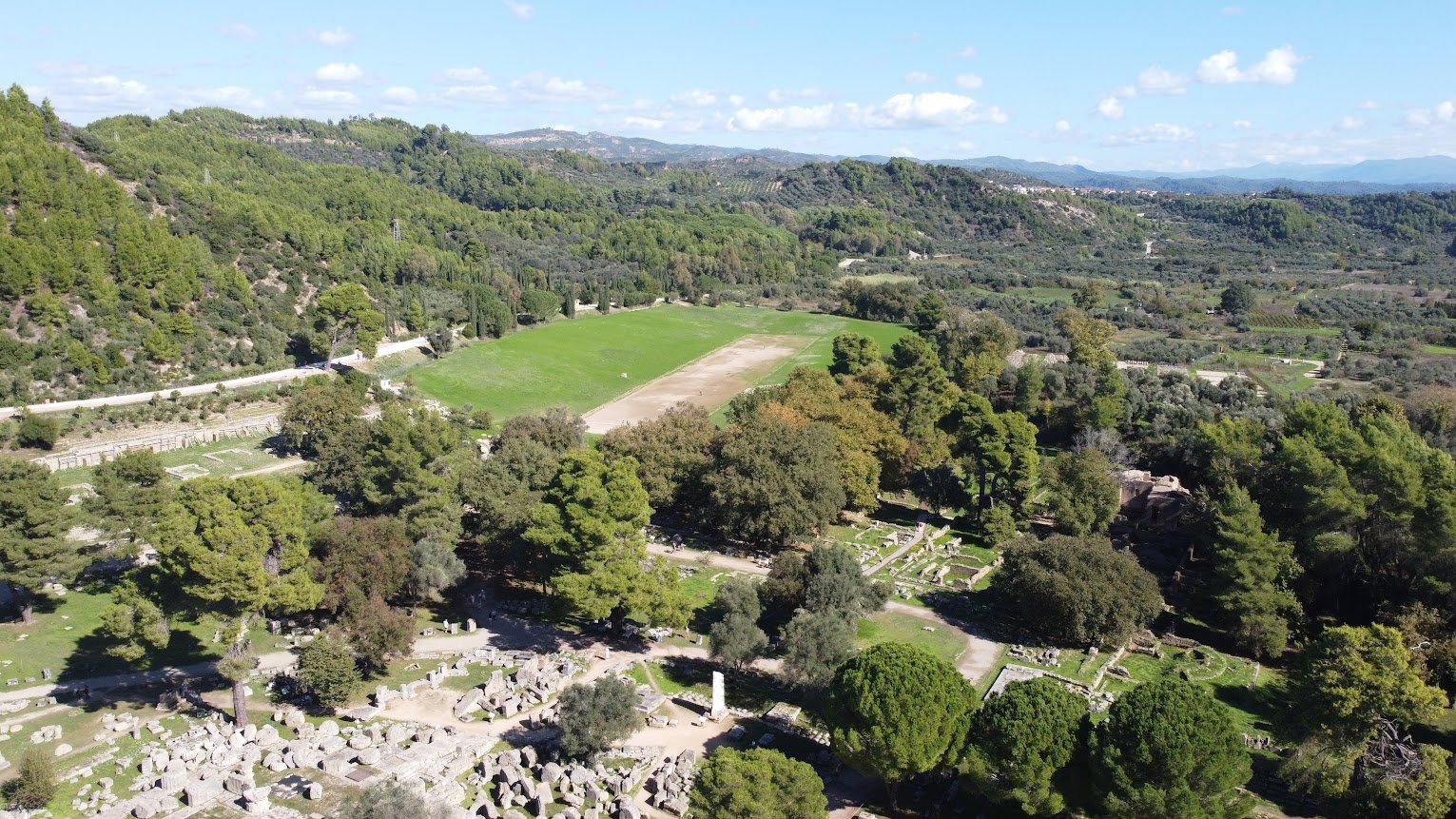
The Stoa of Echo, or Poikile Stoa (Painted Stoa), stands as one of the most distinctive and imposing architectural features of Ancient Olympia.
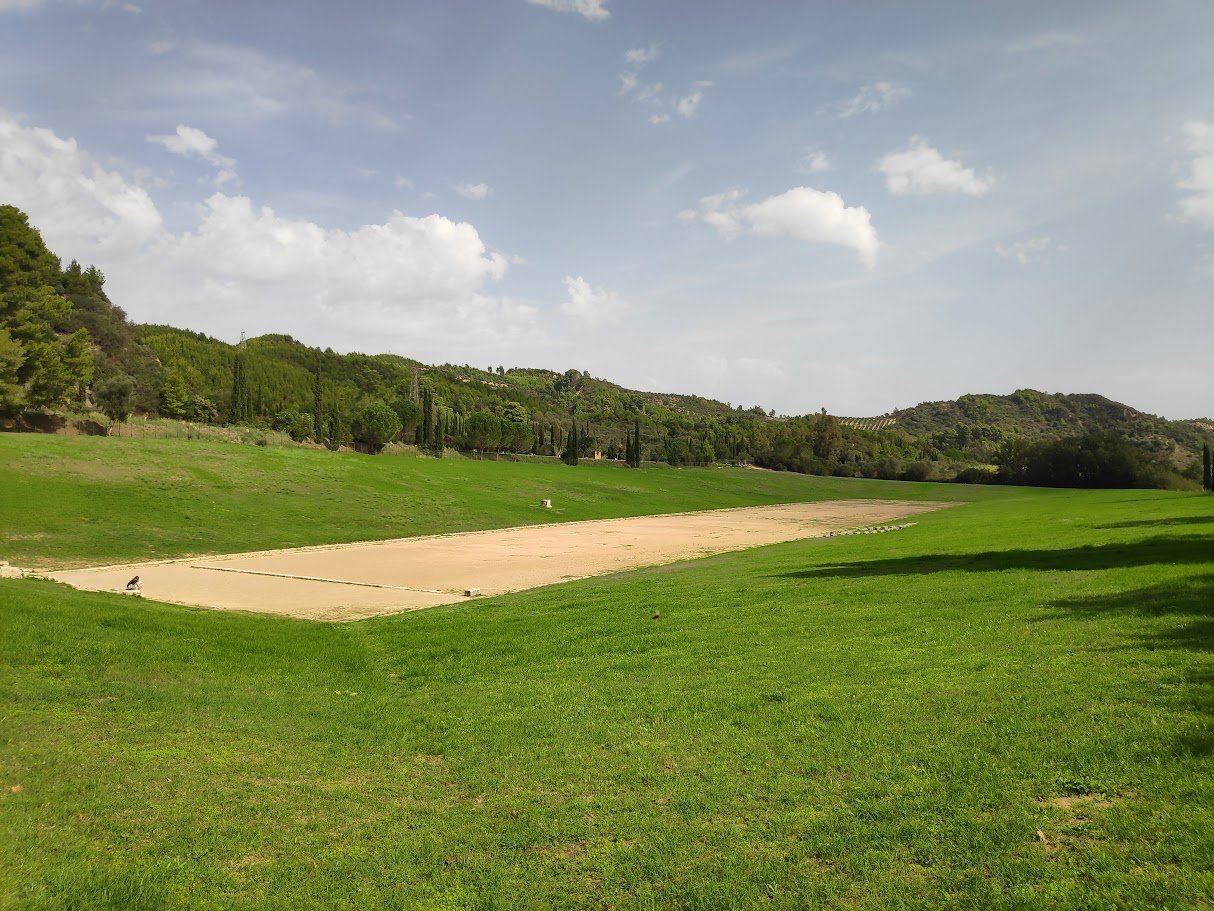
Constructed around 350 BC in the 4th century BC, this elongated structure created a necessary and monumental boundary, separating the sacred precinct of the Altis from the athletic Stadium.
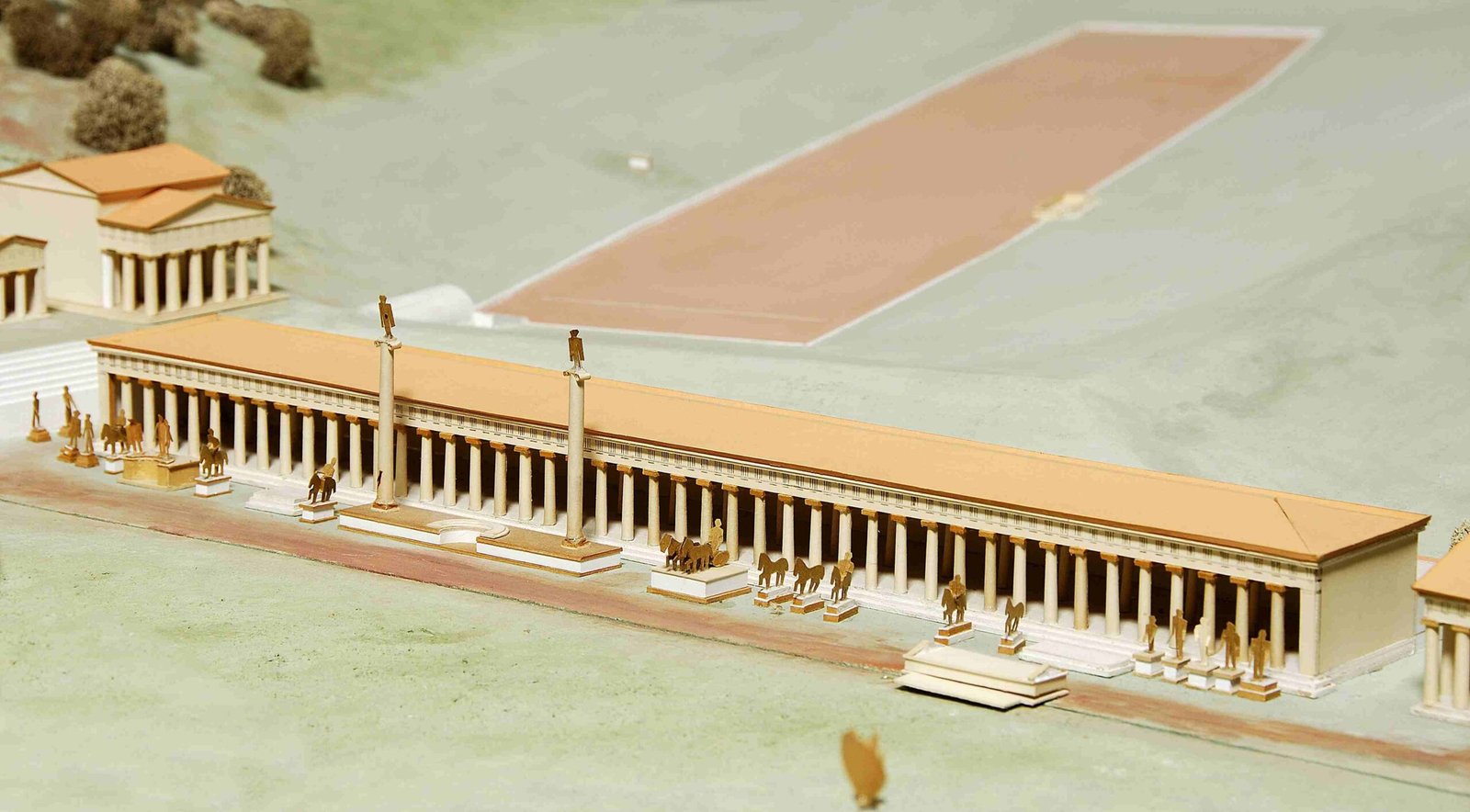
Stretching approximately 98 meters along the eastern edge of the sanctuary, the Stoa was one of the largest buildings in the complex.
Its primary and most famous distinction, however, was its acoustic property, which gave rise to its popular name: sounds produced within the colonnade would echo repeatedly, an effect that ancient visitors found both fascinating and mysterious.
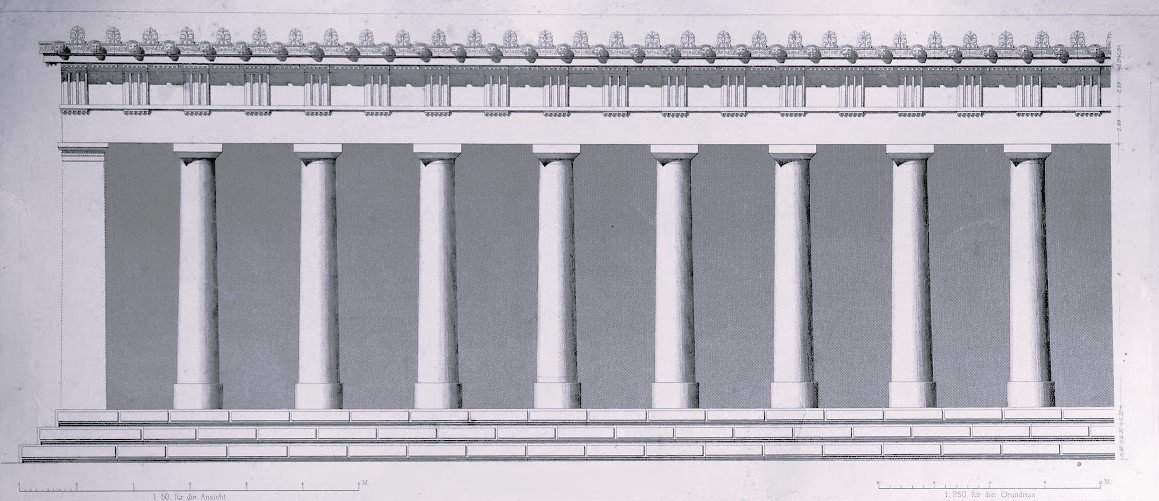
The design of the Stoa of Echo was defined by its elegant and practical double colonnade on the western facade, which faced the Altis. This dual row of columns provided deep shade and protection from the elements, creating a comfortable space for visitors.
Architecturally, it featured a classic combination of orders: the exterior row consisted of robust Doric columns, while the inner row, supporting the roof, featured more slender Ionic columns.
This combination created visual elegance and structural depth. The stoa’s eastern wall formed the boundary line of the Stadium itself.
The architecture of the portico presents similarities to that of the Philippeion, which leads researchers to the hypothesis that the two buildings may have been built during the same period.
Known as the Stoa of Echo (for its acoustics), the Poikile Stoa (meaning ‘Painted Stoa’ due to its frescoes), and Eptaechos (‘Seven-Sound’). It was built around 350 BC.
The Stoa served as the crucial monumental boundary separating the sacred precinct of the Altis from the Stadium. It was an imposing structure, approximately 98 meters long.
Its most remarkable characteristic was its acoustics: a sound or voice produced within the colonnade would famously echo seven or more times, earning it the name Eptaechos.
The design featured a double colonnade: the exterior row was composed of sturdy Doric columns, while the inner row featured more elegant Ionic columns, providing deep shade and protection.
Beyond its formal purpose, it functioned as a vital center of activity. It offered shaded viewing areas for the Stadium and transformed into a bustling marketplace for merchants, artists, and philosophers during the Olympic festival.
The building’s acoustic peculiarities were a source of great wonder throughout antiquity, leading to its alternate name, Eptaechos (Seven-Sound).
Ancient writers frequently noted that a single voice or sound produced inside the stoa would reverberate seven or more times, creating an almost supernatural effect.
This phenomenon contributed significantly to the stoa’s mystique. Some interpretations suggested that the echoes held a religious or divine significance, while others simply appreciated them as a clever, intentional architectural feature designed to impress and entertain guests.
Regardless of its origin or perceived meaning, the unique echo effect cemented the Stoa of Echo as a memorable element of the Olympic experience.
Beyond its fame as an acoustic wonder, the Stoa of Echo served vital practical functions during the great Olympic festival, transforming the colonnade into a center of life and commerce.
It offered shaded viewing areas where spectators could comfortably watch events in the Stadium, sheltered from the intense Greek sun.
Furthermore, the covered, accessible space became a vibrant, bustling marketplace.
Merchants, food vendors, and craftspeople set up temporary stalls, serving the needs of the thousands of visitors. This was also an intellectual hub: artists would display their works, and philosophers and sophists would gather students, making the stoa a crucial center for commercial and intellectual exchange.
This rich interior activity was set against a backdrop of colorful frescoes and artistic embellishments—now long since disappeared—which originally adorned the walls, giving the building its second name: the Poikile Stoa (Painted Stoa).
The combination of architectural grandeur, acoustic marvel, practical utility, and artistic beauty ensured the Stoa of Echo’s prominent place in the Olympic sanctuary. Its imposing form and central location made it an ideal site for monumental displays.
Testament to its prestige, the Stoa was later enhanced by significant dedicatory monuments. Notably, in the middle of the 3rd century BC, the grand monument dedicated to the Hellenistic rulers Ptolemy II Philadelphus and Arsinoe II was erected directly in front of the Stoa.
This dedication, comprising a large stone platform and two tall Ionic columns bearing their gold-plated statues, emphasized the Stoa’s role as a major focal point in the sacred precinct.