The Palaestra of Ancient Olympia, constructed in the 3rd century BC, stands as a profound testament to the ancient Greek commitment to athletic preparation and physical excellence.
Located west of the Altis enclosure, near the Kladeos river, this structure was a key component of the larger gymnasium complex. It served as the primary training ground for athletes preparing for the Olympic Games, specifically for practitioners of wrestling, boxing, and the pankration—the demanding ancient mixed martial art.
The enduring remains allow visitors today to imagine the countless hours of rigorous training that took place here.
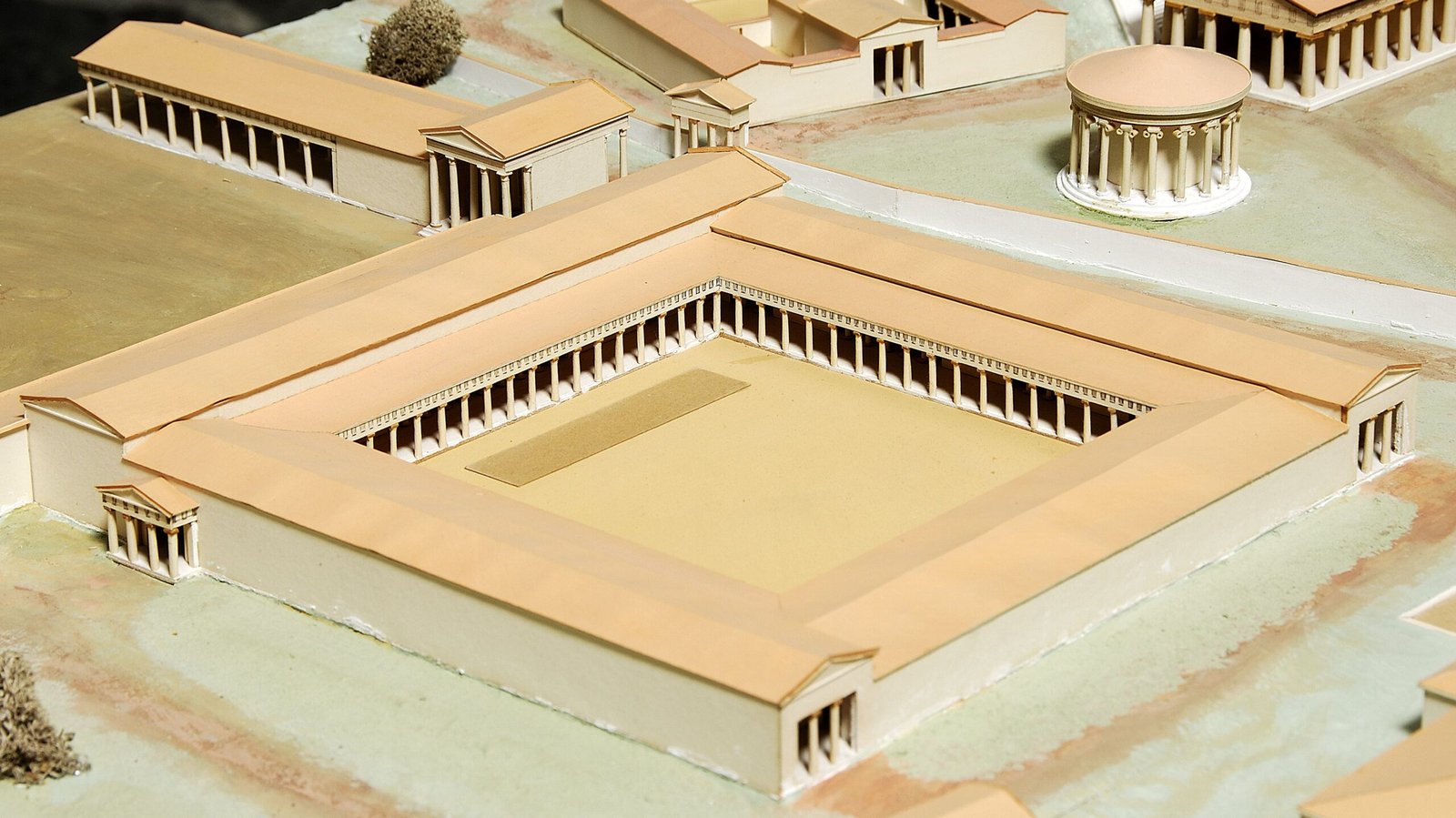
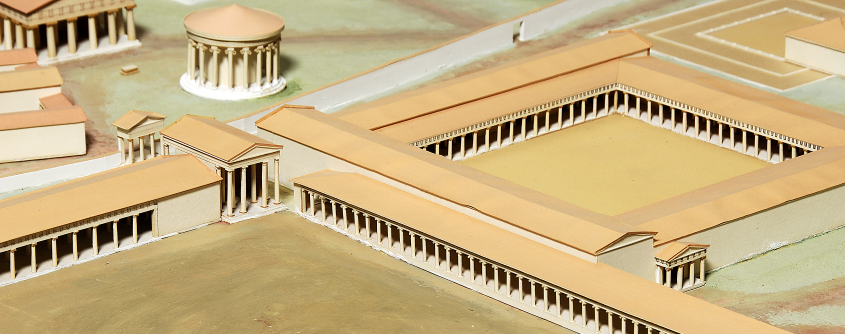
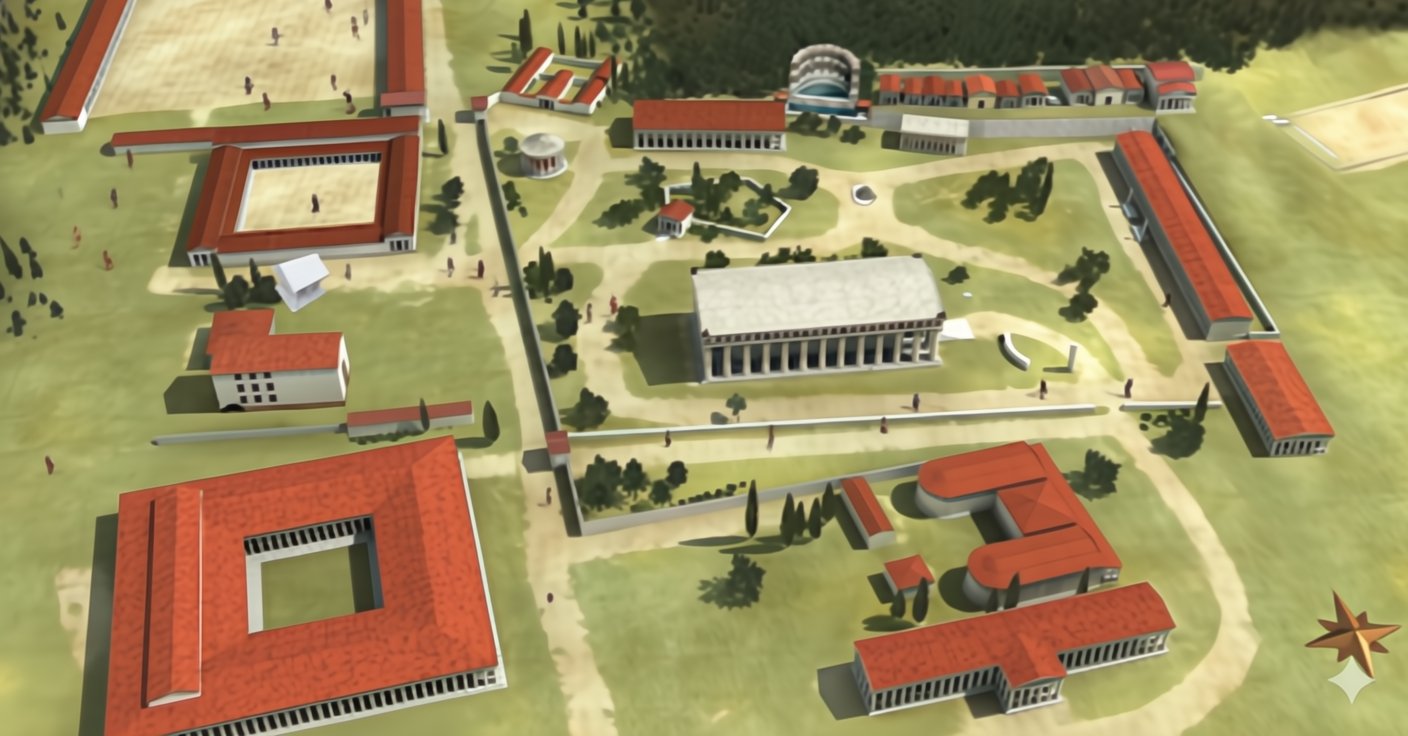
The Palaestra’s architectural layout, an almost square building measuring approximately 66.35 x 66.75 metres, beautifully reflects the sophisticated understanding the ancient Greeks had of athletic training requirements.
Its defining feature was the central open court, a vast space roughly forty-one metres square, surrounded by an elegant Doric colonnade of 72 columns. This courtyard, laid with fine sand, served as the open-air space where athletes practiced their techniques.
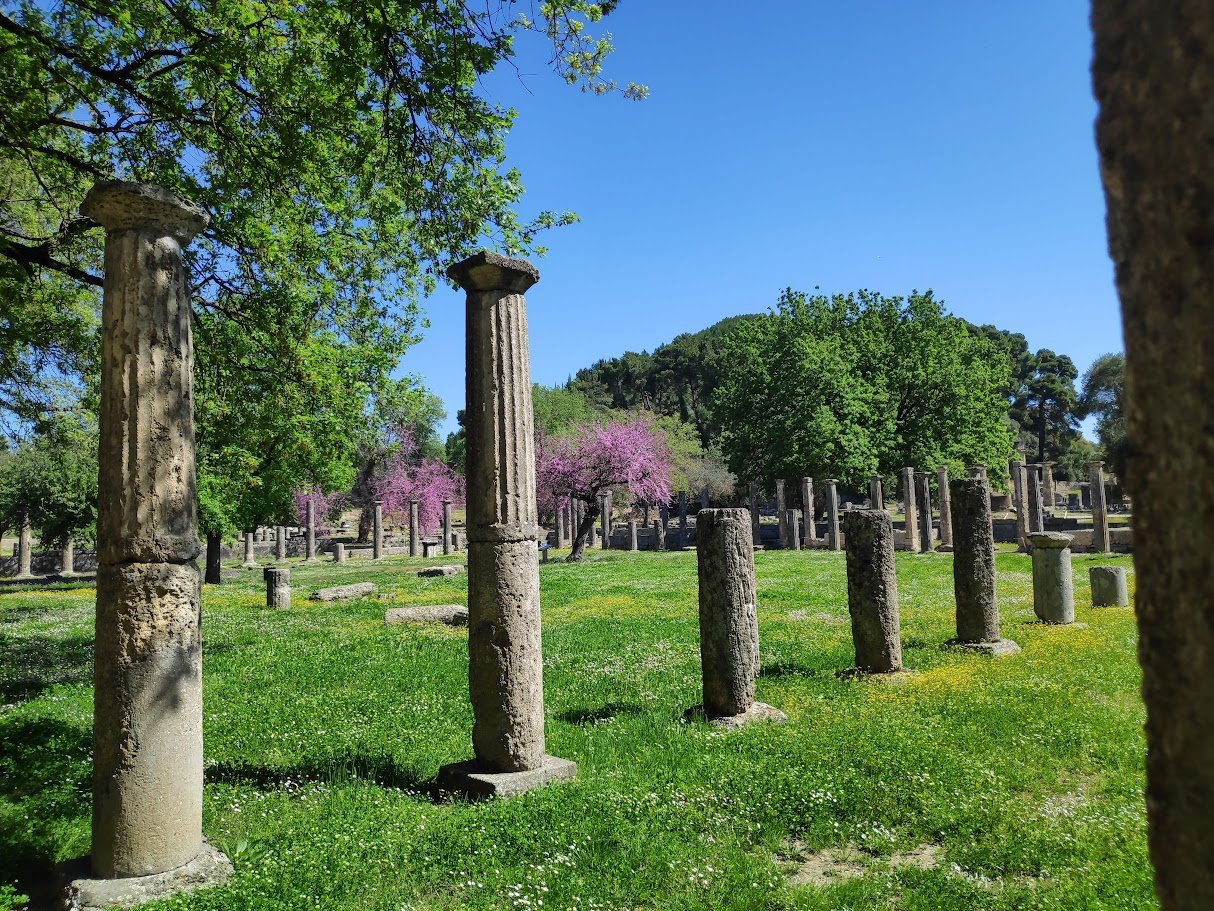
The materials used in its construction included stone for the lower courses of the walls and columns, brick for the upper walls, and wood for the entablature. Thirty-two of the original seventy-two columns of the internal peristyle have since been restored, offering a clearer picture of its former grandeur.
The Palaestra, built in the 3rd century BC, was an almost square structure measuring
approximately 66.35 × 66.75 metres. Its defining element was the central open courtyard
(around 41 m square) surrounded by 72 Doric columns. This sandy courtyard served as the
main outdoor training area for athletes.
The lower walls and columns were constructed of stone, the upper walls of brick, and
the entablature of wood. Thirty-two of the original seventy-two Doric columns have been
restored, helping to illustrate the building’s original grandeur. Ionic porches also
framed many of the surrounding rooms.
Surrounding the courtyard were specialised rooms supporting the athletes’ routines,
including changing spaces, equipment storage, the elaiothesion for oiling the body,
and the konisterion for dusting with powder. Washing areas and stone benches used for
lectures and theoretical instruction connected physical training with intellectual
development—a hallmark of Greek athletic culture.
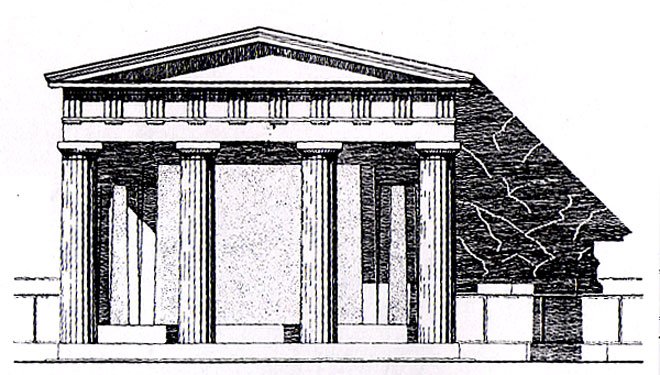
The original structure had two south-side entrances. A later Doric propylon with four
columns was added on the north side, becoming the main entrance. A smaller additional
doorway connected the Palaestra directly to the adjacent gymnasium complex.
Beyond its athletic function, the Palaestra served as a vibrant social centre. Athletes
from across the Greek world met here, shared techniques, and formed friendships. Its
location adjacent to the sacred Altis reinforced the unity of physical preparation and
spiritual context in the Olympic Games.
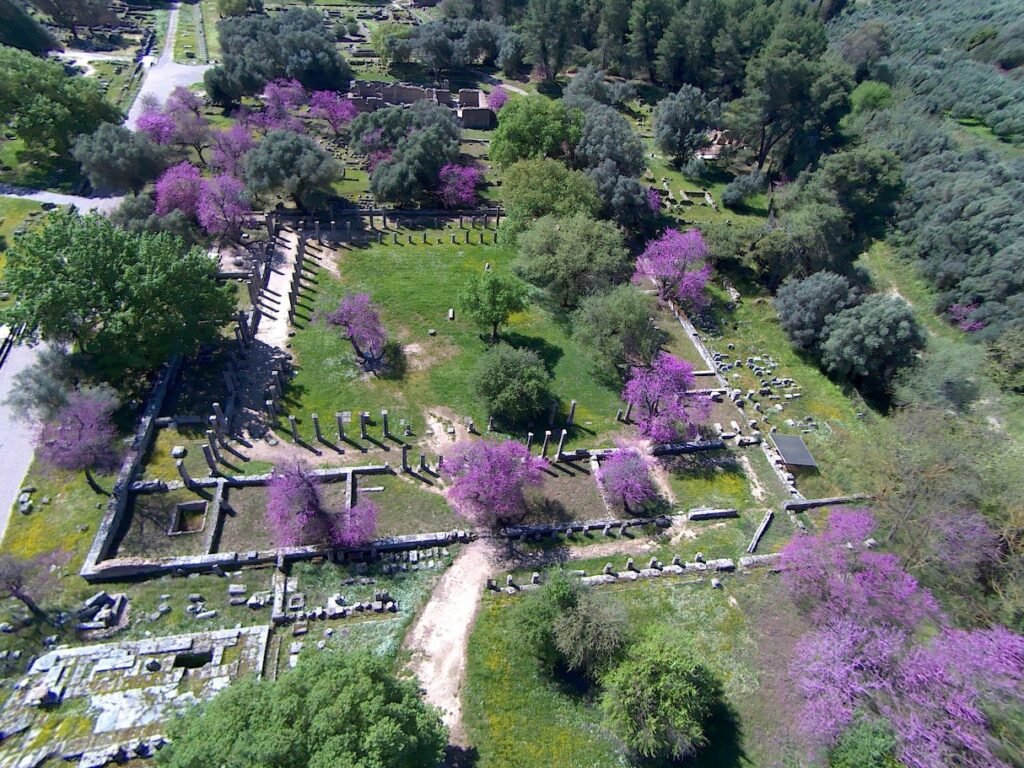
The site was excavated by the German School in recent years. Today, only the lower stone
sections and foundation walls survive, yet they still offer a vivid glimpse into the daily
training lives of ancient Olympic athletes.
Surrounding the central court were rooms of various sizes, many featuring Ionic porches, designed to facilitate the athletes’ daily routines.
These rooms housed essential functions, including:
Additionally, some rooms retained stone benches, serving as lecture rooms where the theoretical aspects of competition were discussed, and where orators and philosophers engaged in teaching and social intercourse.
This integrated the physical training with intellectual and spiritual development, a hallmark of ancient Greek culture. The south wing featured an Ionic colonnade lining an elongated space.
The original design of the Palaestra included two entrance doors on its south side. Later, a more formal Doric propylon with four columns on the façade was added to the north side, which became the main entrance to the building. A smaller doorway also on the north side provided convenient access to the adjacent gymnasium complex.
Beyond its practical function, the Palaestra served as a crucial social hub. It was a place where athletes from across the Greek world could meet, exchange training techniques, and form bonds of friendship, underscoring the building’s importance to the overall Olympic experience. Its close proximity to the sacred Altis and other athletic facilities emphasized the integrated nature of preparation for the Games.
The Palaestra was excavated and studied by the German School. Today, only the lower, stone-built parts and foundation walls are preserved along with many of the columns.
These remains offer a powerful glimpse into the daily routine of ancient competitors, reminding visitors that Olympic victory demanded not only natural talent but also dedicated preparation and rigorous training.