 The earliest evidence
 of human presence in Olympia consists of Neolithic pottery sherds from the 4th millennium BC, followed by Bronze Age finds from settlements and necropolises along the Alpheios river.
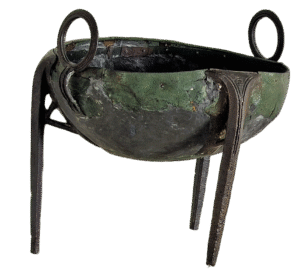
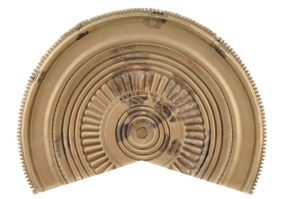
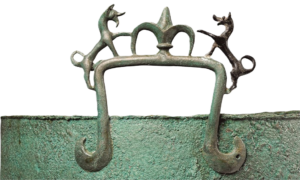
The transition to the site’s religious use is reflected in the vast collection of Geometric and Archaic votives, dominated by bronze and terracotta figurines of warriors, horses, and chariots, as well as monumental tripod cauldrons that attest to the sanctuary’s early prestige.
The art of this period, influenced by Orientalizing patterns, evolved from simple handmade forms to the monumental architecture of the first Treasuries and the Temple of Hera.
 The
The 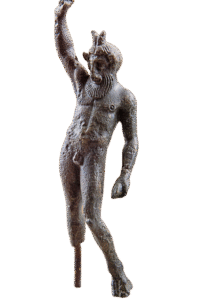 pinnacle of Greek artistic creation is reflected in the sculptures of the Temple of Zeus (470-456 BC), which serve as the ultimate example of the Severe Style.
The pediments depicting the chariot race of Pelops and Oenomaus and the Centauromachy, alongside the metopes of the Labours of Heracles, display unprecedented drama and anatomical precision.
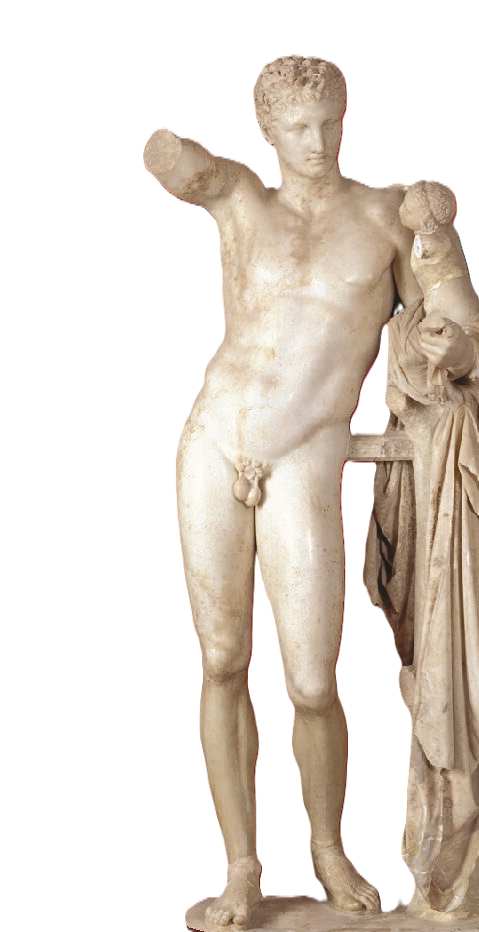
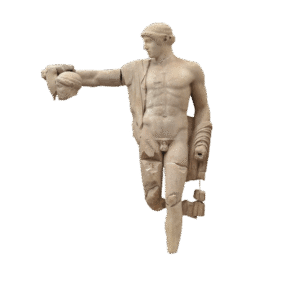
The Museum also houses masterpieces such as the winged Nike of Paionios, which appears to hover in mid-air, and the Hermes of Praxiteles, which introduces the serenity and elegance of the 4th century BC, marking the transition toward Hellenistic art.
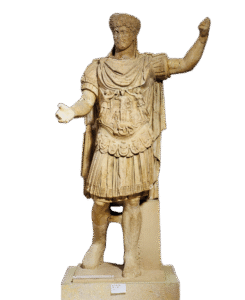 During the Hellenistic and Roman periods, art in Olympia shifted toward the self-promotion of rulers and emperors, exemplified by the circular Philippeion and the conversion of the Metroon into a space for the imperial cult of Augustus and his family.
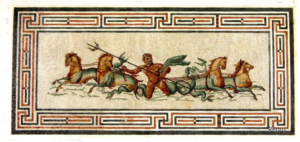
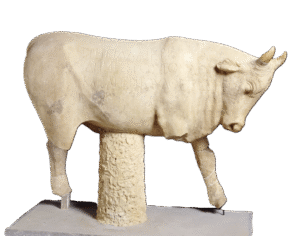 Roman marble statues and the elaborate mosaics of the baths bear witness to the luxury of the era. This trajectory concludes with the Early Christian period (5th-7th c. AD), when Pheidias’ workshop was converted into a Christian basilica and art was transformed into functional objects (lamps, jewelry) bearing Christian symbols such as the cross and the fish.